
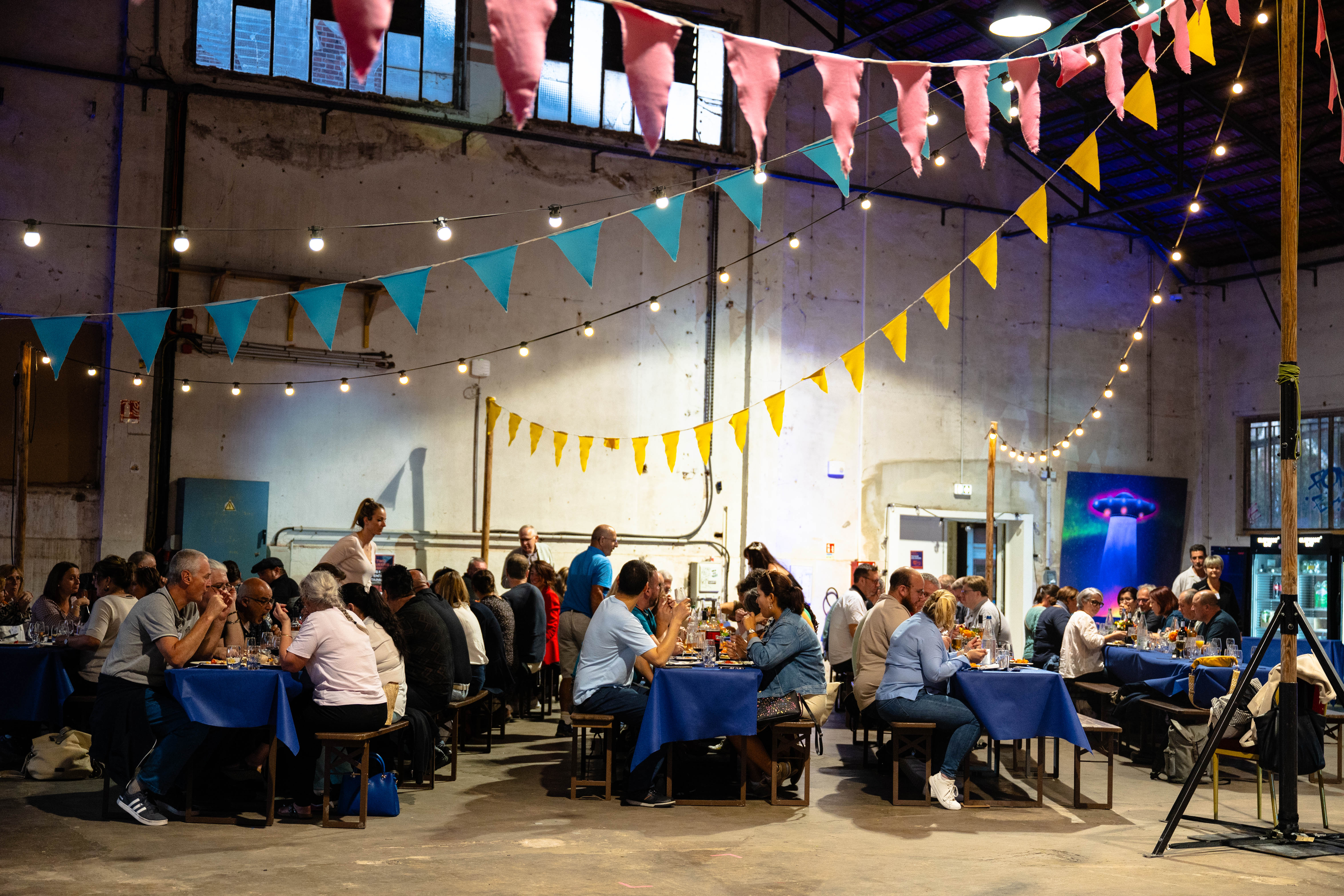
Team Dinner in Barcelona that runs on time, reflects your brand, and keeps teams engaged
INNOV'events designs and delivers Team Dinner formats in Barcelona for executive committees, HR, and internal communications—typically from 20 to 800 attendees. We manage the full chain: venue shortlisting, F&B, run-of-show, corporate event entertainment in Barcelona, suppliers, and on-site coordination.
You get a clear proposal (objectives, timing, costs, options), controlled risks (noise limits, transport, supplier load-in), and a dinner experience that supports leadership messages rather than competing with them.
Table of contents
Entertainment at a corporate dinner is not “extra”; it is the tool that shapes attention, energy, and informal conversations. When it is calibrated, it supports retention of key messages, reduces silo behaviour, and helps managers read the room—especially after a demanding quarter or a reorganisation.
Barcelona-based organisations usually expect operational precision: start and end times respected, seamless transitions between speeches and service, and content that works for multi-language teams. They also expect venues and suppliers that comply with local constraints (neighbourhood noise rules, access windows, mobility, and seasonal peak demand).
As an event agency in Barcelona, INNOV'events works with a stable local supplier network and a field-tested methodology. We plan with the discipline of a production team: technical recce, supplier briefings, a timed run-sheet, and an on-site manager empowered to make decisions in real time.
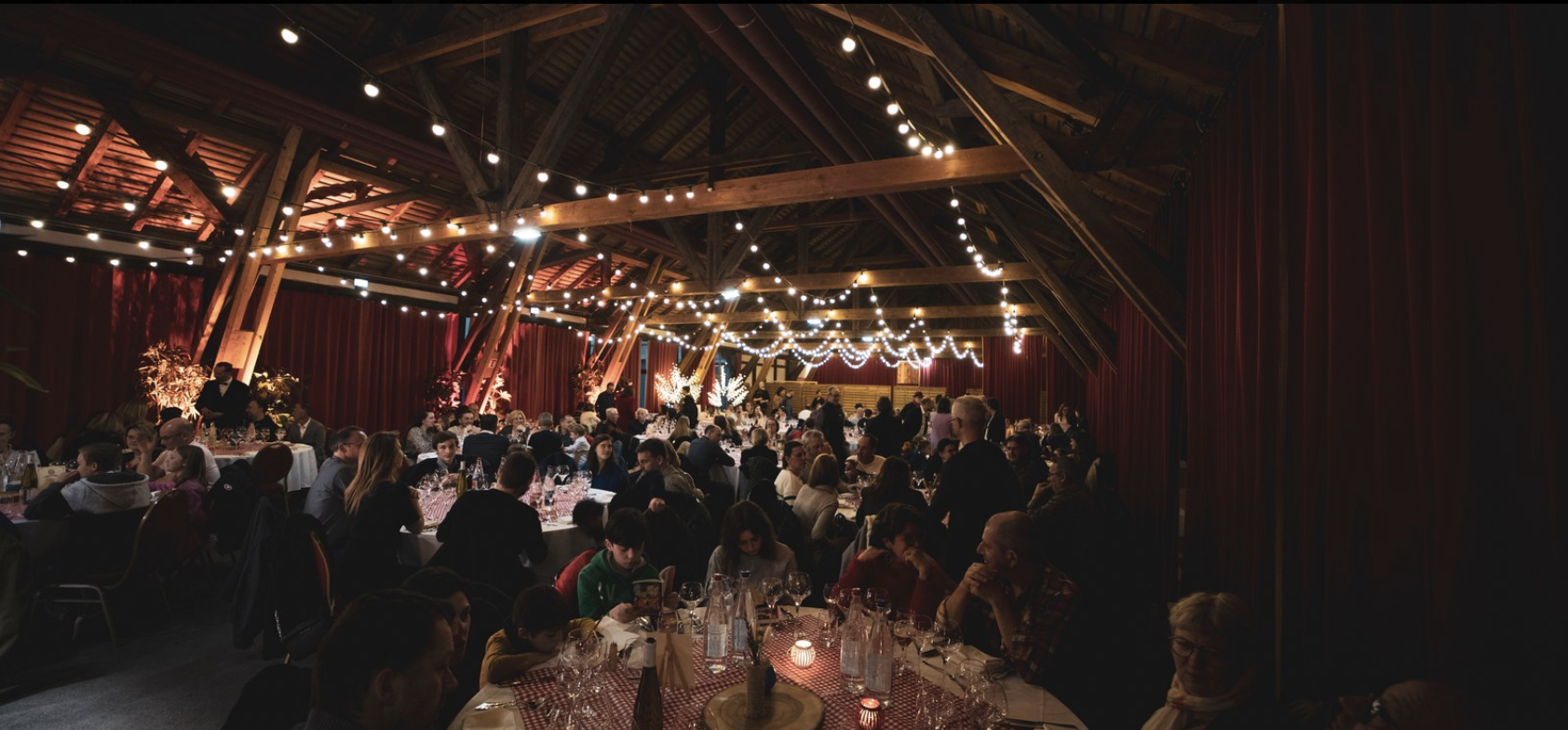
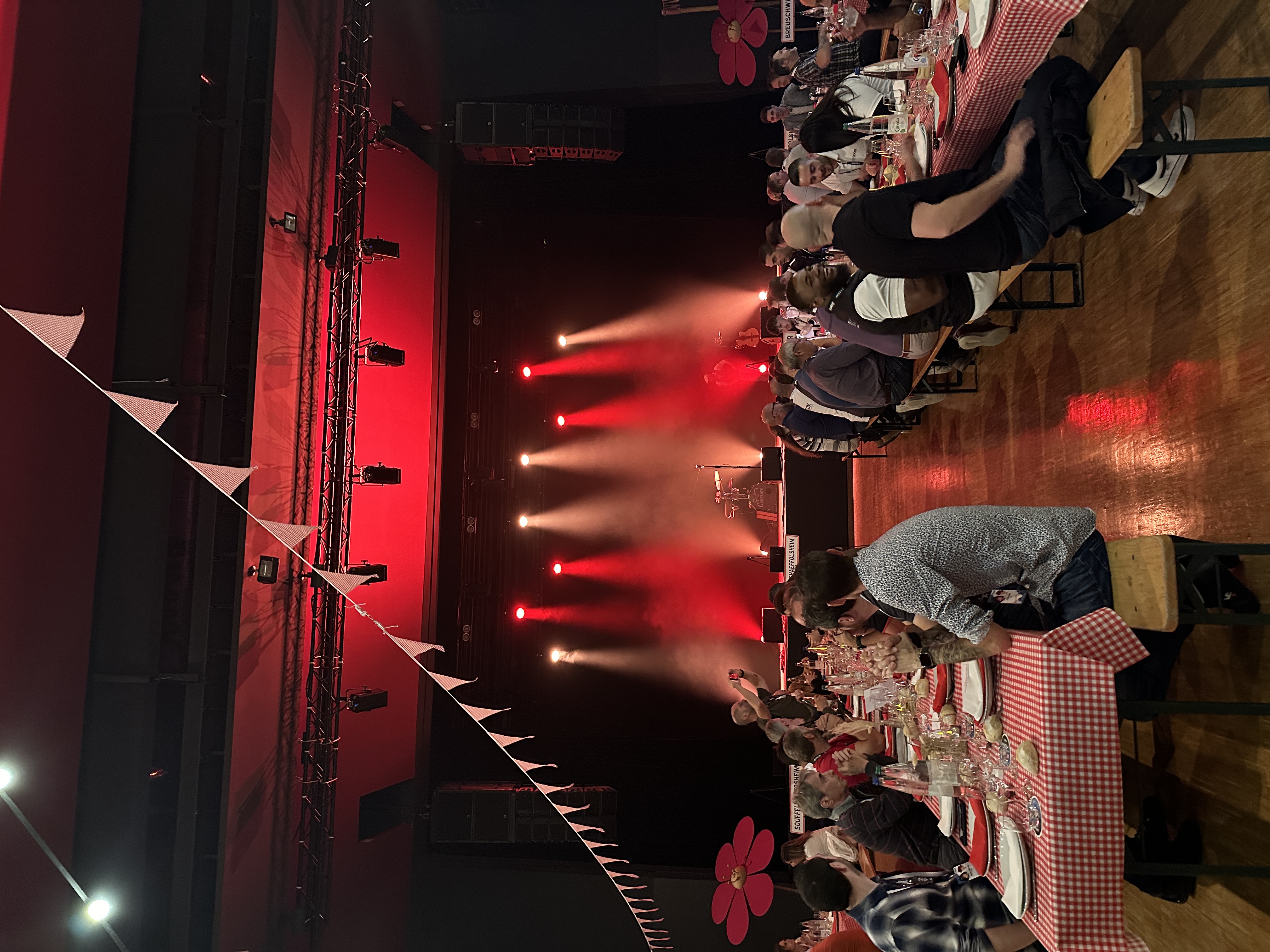
INNOV'events in numbers for Barcelona decision-makers
12+ years delivering corporate events across Spain with consistent production standards.
300+ corporate events produced (dinners, offsites, kick-offs, client nights) with multi-supplier coordination.
20 to 2,000 attendees managed per project depending on format and venue capacity.
48-hour turnaround for a first shortlist (venues + concept + indicative budget) when deadlines are tight.
Single point of contact from brief to event day, with an on-site lead and documented handover to your internal team.
How to organize a professional event in Barcelona?
- Define the objective (cohesion, announcement, fidelity, performance).
- Set date, format and size (20–1 000 people).
- Secure the venue and accommodation according to seasonality.
- Lock down technical, suppliers and logistics.
- Drive the day J (timing, scene, entrance, flow).
Barcelona references and recurring corporate accounts
In Barcelona, we support both local headquarters and international teams operating through the city—often with the same pattern: a key internal milestone (strategy update, annual results, post-merger integration, talent retention push) and little tolerance for improvisation on the day.
You mentioned providing company names for references; integrate them here once shared. In practice, we frequently work with groups that renew year after year because they value predictable delivery: one HR/Comms lead can keep the same agency while leadership messages, headcounts, and venues change. This continuity reduces internal workload, protects brand image, and makes budgeting easier because cost drivers are known and documented.
When asked by directors to justify supplier choice, we provide: a clear scope of work, risk controls (access, sound, contingency), and an explicit production plan—so your stakeholders see that the dinner is managed like a project, not a “night out”.
We send you a first proposal within 24h.
What a Team Dinner changes for leadership teams in Barcelona
A Team Dinner in Barcelona is often the most efficient “low-friction” format to align teams without the weight of a full seminar. People accept the invitation, conversations happen naturally, and you can still structure the evening to deliver messages, recognition, and connection—provided the flow is engineered.
Retention and engagement: a well-paced dinner reduces churn signals after demanding cycles. In practice, we see better cross-team interaction when seating strategy, service rhythm, and a short interactive moment are planned rather than left to chance.
Leadership visibility without over-formality: executives can move between tables and create genuine contact. We build a run-of-show that gives them time in the room, not just at the microphone.
Change management support: post-merger or re-org contexts benefit from guided mixing. We propose light facilitation (short prompts, table missions, or curated storytelling) that feels natural—no forced “games”.
Employer brand in a talent-competitive city: in Barcelona’s market, teams compare how companies treat internal moments. A coherent venue choice, menu, and tone signals professionalism and care—especially for international hires.
Internal communication efficiency: the dinner can carry a message (strategy, values, recognition) with higher attention than an email campaign—if speeches are limited, well-produced, and placed at the right time (typically before dessert or immediately after first course).
Barcelona’s economic culture combines international standards with strong local identity (food, neighbourhoods, design, hospitality). A dinner that respects both—professional execution and genuine local anchoring—lands better with teams and reflects well on leadership.
How Barcelona’s corporate reality impacts your Team Dinner plan
Planning a Team Dinner in Barcelona is not only about finding a “nice restaurant”. Operationally, the city has patterns that affect cost, feasibility, and guest experience.
Seasonality and lead times: April–June and September–early December are high-demand periods for corporate dining and venue privatisation. For groups of 80+, the best venues and entertainment slots can require 6–10 weeks of anticipation; for 200+, it is safer to plan 10–14 weeks ahead, especially if you need AV, branding, or exclusive hire.
Access and mobility: depending on district (Eixample, Poblenou, Ciutat Vella, Montjuïc), bus access, loading windows, and parking vary widely. We often design arrival plans that mix taxis/ride-hailing, shuttle loops from offices/hotels, and clear walking guidance for central areas—because a 15-minute arrival drift easily becomes a 45-minute programme delay.
Noise and neighbourhood constraints: some venues have strict sound limitations or earlier cut-offs. This matters when you want a DJ, live set, or awards moment. We address it upfront by choosing the right room, validating licensing, and adapting the entertainment format (e.g., acoustic sets, silent-disco, or staged transitions).
International teams: Barcelona-based companies frequently host multilingual groups. We plan bilingual hosting, signage, and a speech format that remains inclusive (e.g., short translated key points on screen, or an MC briefed to recap in a second language).
Brand sensitivity: many organisations here operate with global brand guidelines. We align menus, décor, and entertainment tone to your brand posture—premium, tech-forward, sustainability-led, or people-centric—without turning the dinner into a marketing set.
Which entertainment formats work best for a Team Dinner in Barcelona
Entertainment creates engagement when it is designed around your audience and the room’s constraints. For a Team Dinner, our rule is simple: protect conversation first, then add a controlled peak moment, then offer an optional after-dinner extension for those who want more energy.
Interactive animations in Barcelona
Table-led “conversation architecture”: curated prompts linked to your year’s priorities (customer focus, safety, innovation, collaboration). It sounds simple, but when the prompts are well-written and time-boxed (2–3 rounds of 6 minutes), executives consistently report better cross-team discussions.
Fast awards with production cues: short categories, pre-validated winners, music stings, and a strict timing (e.g., 20–25 minutes total for 6–8 awards). This avoids the classic drift where each winner speaks too long and service gets blocked.
Interactive quiz with Barcelona content: done via mobile, bilingual if needed, and paced between courses. We use it when you want light competition without moving people around. We keep it short to avoid “meeting fatigue”.
Leadership “AMA” segment: moderated Q&A for 10–12 minutes, with pre-filtered questions collected before the dinner. Useful after re-orgs or when leadership wants transparency without losing control of time and tone.
Art animations in Barcelona
Acoustic trio or jazz set: ideal for venues with sound limits or when conversation is the priority. We position them during cocktail or early dinner, then stop cleanly before speeches.
Contemporary flamenco with restraint: when international teams expect a local signature, we propose a short, high-quality performance (typically 12–18 minutes), staged so it feels premium rather than touristic.
Close-up magic at tables: effective for mixed groups because it creates micro-moments without interrupting the room. Requires tight coordination with service so artists do not block staff routes.
DJ + curated playlist handover: we often start with a lounge playlist during dessert, then transition to a DJ set only if the venue and audience profile justify it.
Innovative animations in Barcelona
Menu design with operational clarity: we favour menus that are elegant but serviceable at scale (avoiding overly complex plating that slows the kitchen). For 150+ guests, simplification often improves perceived quality because plates arrive together.
Local pairing moments: short guided tastings (e.g., Catalan sparkling wine, olive oil, chocolate) placed during cocktail to avoid disrupting dinner. Works well for visiting teams and supports Barcelona anchoring without clichés.
Late-night corner: if you extend after dinner, a discreet “recena” (mini sandwiches, sweet bites) prevents the energy crash and reduces unplanned bar overconsumption.
Gourmand animations in Barcelona
Silent-disco after dessert: a practical solution in districts with noise constraints. It also allows mixed preferences (two channels, different music styles), and people can remove headsets to talk.
Micro-content studio: a small filming corner where teams record 20–30 second messages (recognition, commitments, learnings). Internal comms can reuse content post-event; we manage consent and brand framing.
Data-driven “mood pulse”: a short anonymous check-in on team sentiment (3–5 questions) displayed as aggregated results. Useful for HR when they need feedback but want a lighter moment than a formal survey.
Projection mapping as a timed highlight: only when the venue supports it. Used for a 3–5 minute brand-aligned reveal (values, milestones) rather than a long show that competes with the dinner.
Whatever the format, we align the entertainment with your brand image and internal culture. A conservative financial group and a creative tech scale-up can both have a successful Team Dinner in Barcelona, but the pacing, humour tolerance, sound level, and visual identity must match the organisation—not the supplier’s catalogue.
How to choose a Barcelona venue that fits your Team Dinner objective
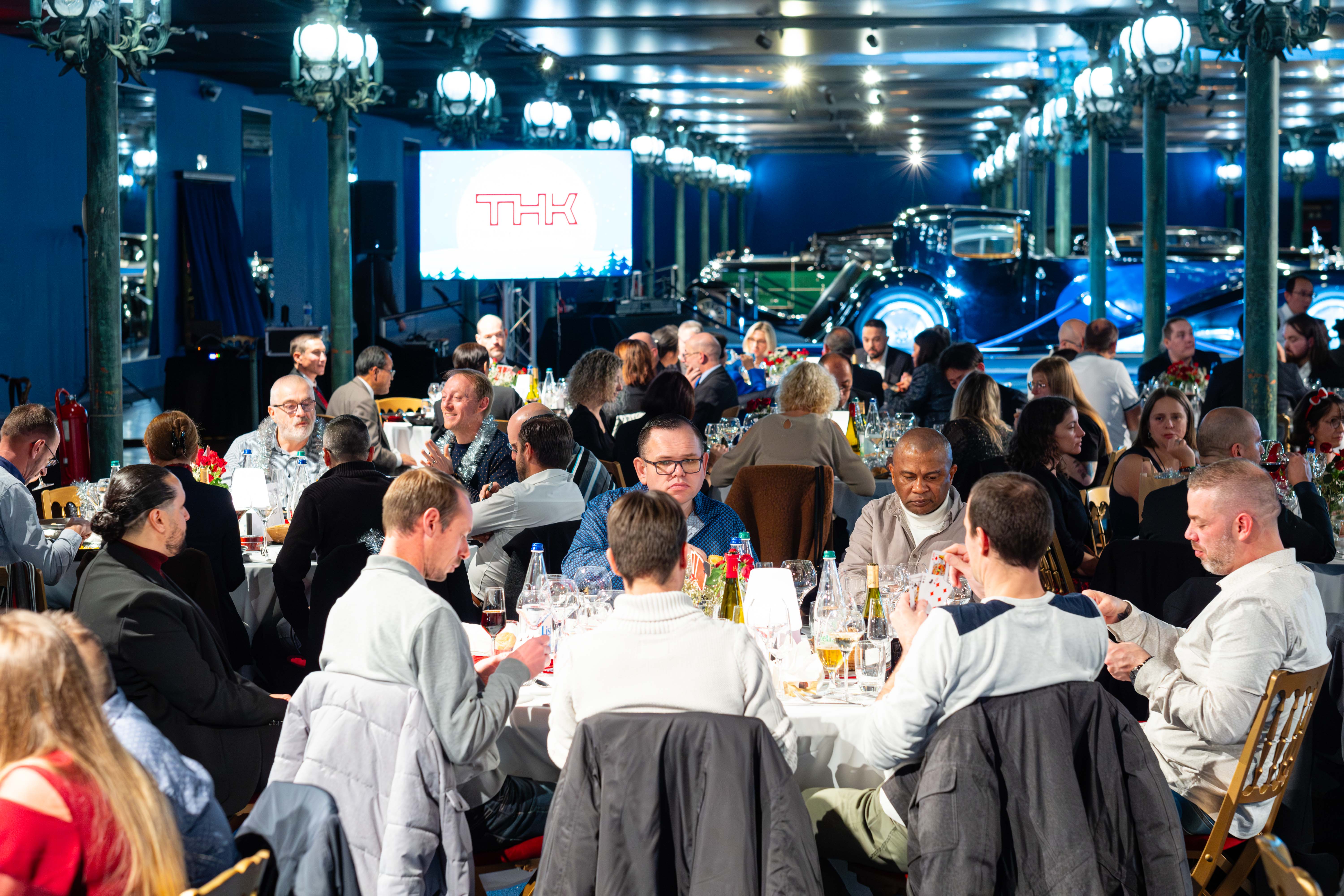
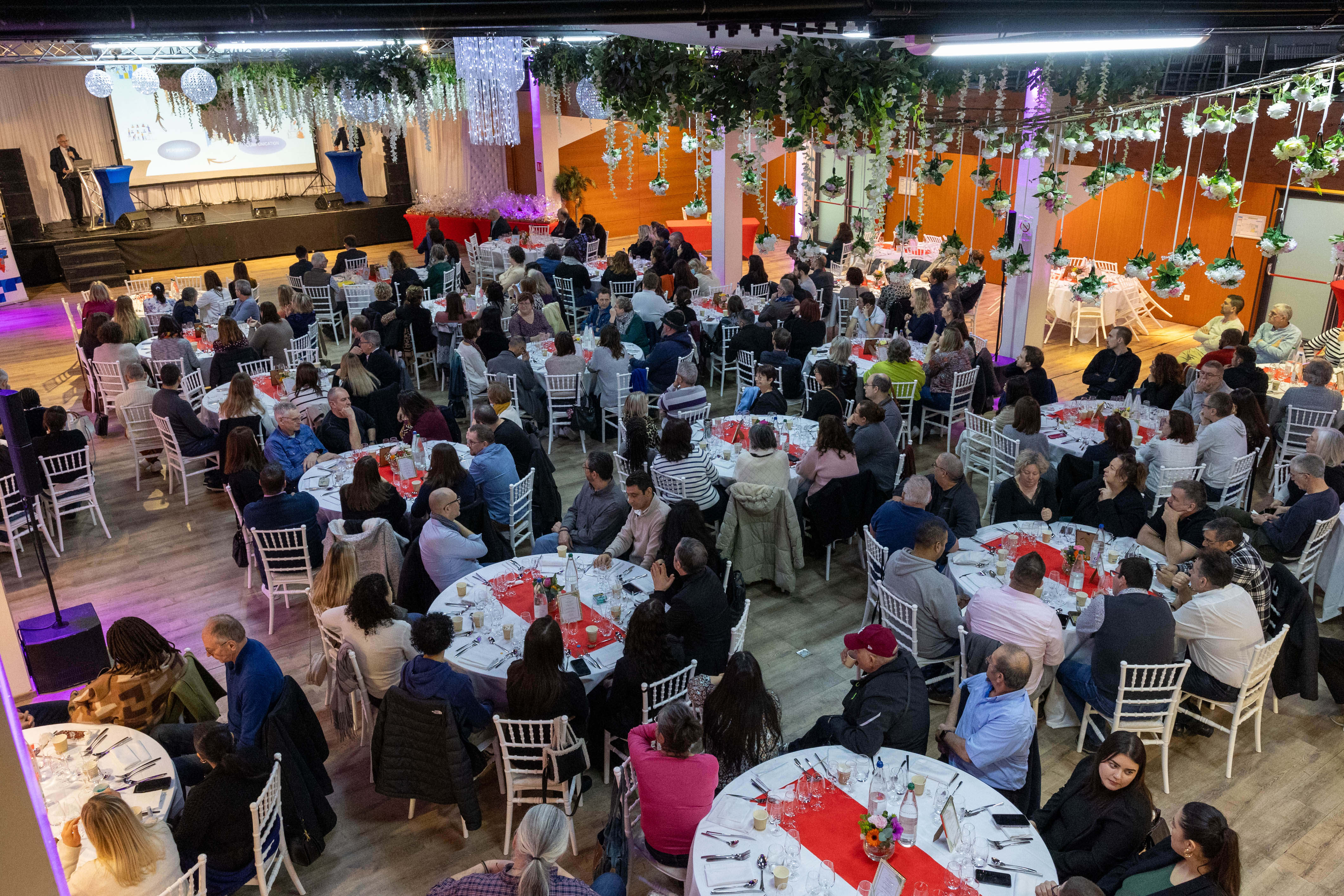
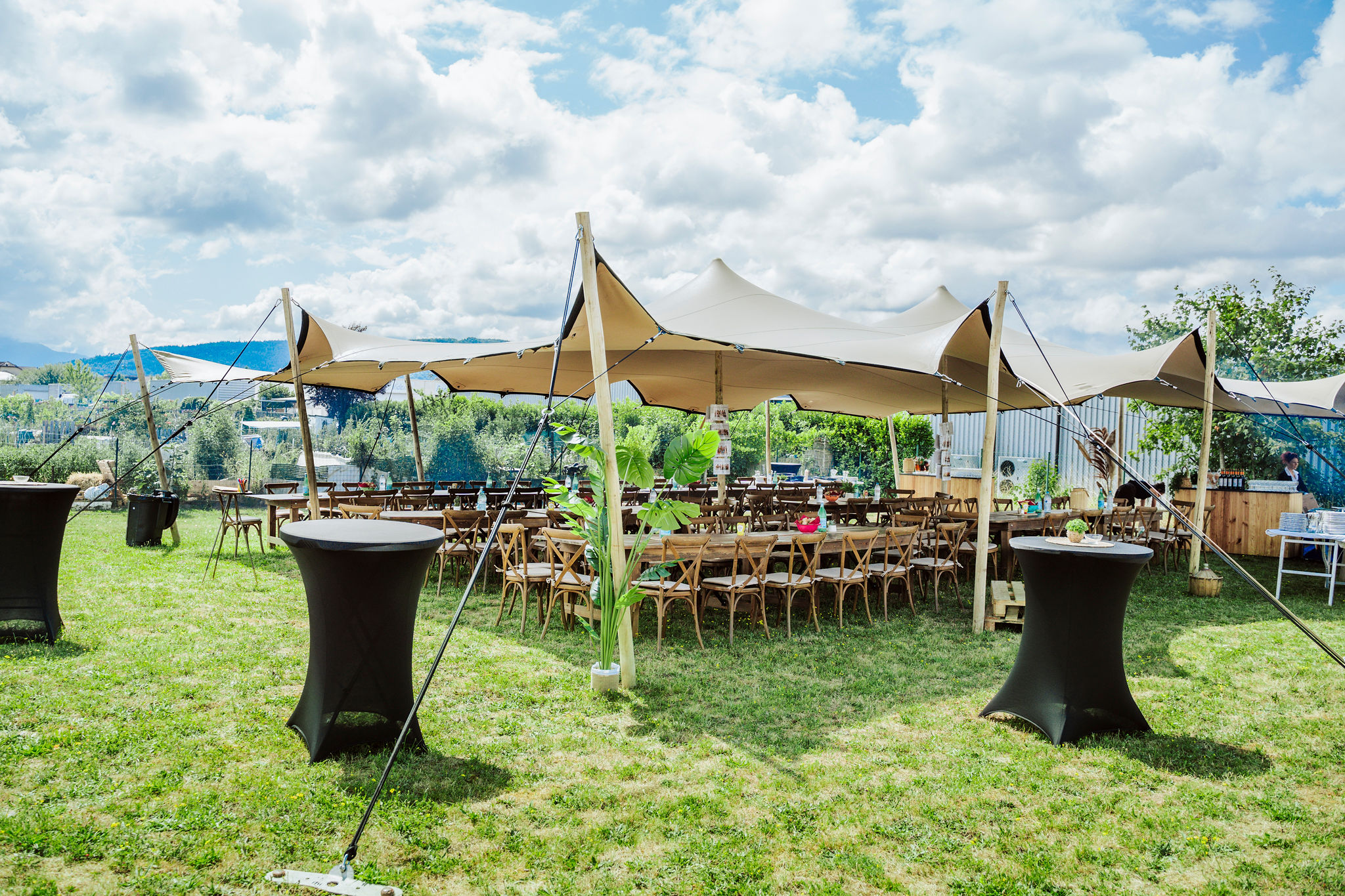
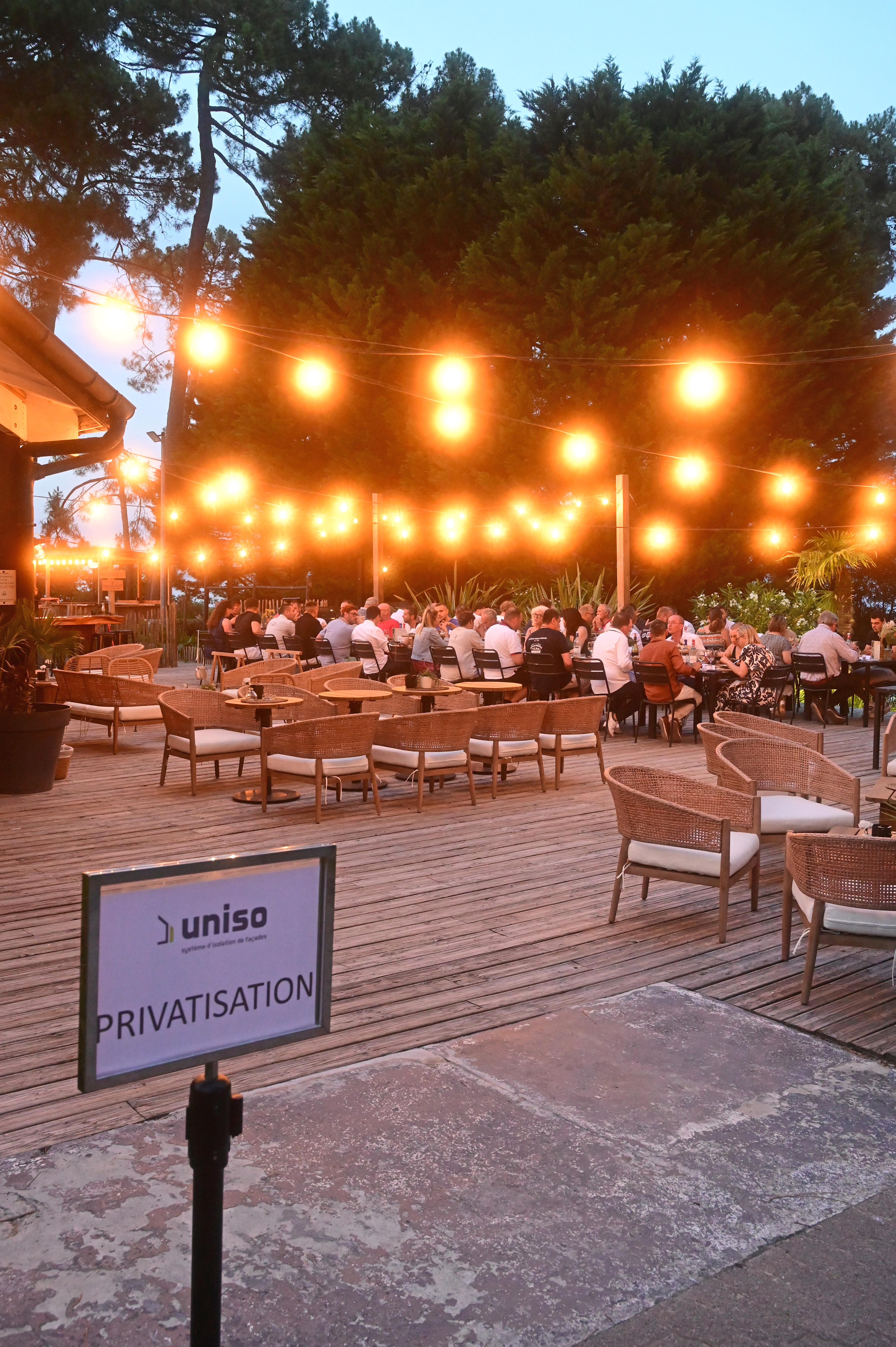
The venue is a strategic decision because it dictates arrival logistics, acoustic comfort, service speed, and how “premium” the evening feels before anything happens. In Barcelona, the same headcount can feel completely different depending on ceiling height, table density, and neighbourhood access.
| Venue type | For which objective? | Main strengths | Possible constraints |
|---|---|---|---|
Privatised restaurant in central Barcelona | Efficient team bonding for 20–120 guests with strong food focus | Service know-how, warm atmosphere, easy to manage speeches with light AV | Sound limits, limited branding/AV, tight access for coaches in some areas |
Hotel ballroom / conference dining room | High control for 120–600 guests, with stage, awards, and AV needs | Reliable production, accessibility, predictable timelines, easier contingency plans | Can feel corporate if décor and lighting are not upgraded; F&B add-ons can increase costs |
Industrial-chic venue in Poblenou / creative districts | Brand-forward dinners for innovation, product, or international teams | Strong identity, flexible layout, works well with DJ/lounge zones | Requires more production (power, acoustics, permits); load-in timing must be managed tightly |
We systematically recommend a site visit (or a documented technical recce when time is short). In Barcelona, two venues that look similar online can differ massively in acoustics, kitchen throughput, and access. A 45-minute visit often prevents the most expensive problems: delayed service, unusable speech moments, or last-minute AV workarounds.
What a Team Dinner budget looks like in Barcelona (and why it varies)
The cost of a Team Dinner in Barcelona depends on headcount, venue model (restaurant vs. exclusive hire), F&B level, and the production you need to protect timing and brand image. The quickest way to lose budget control is to decide entertainment and AV late, after the venue is locked.
Headcount and table plan: per-person F&B drives the baseline, but layout impacts staffing, service speed, and room comfort. For example, a tighter plan may reduce venue rental but increases noise and reduces perceived quality.
Venue privatisation and minimum spend: many attractive venues in Barcelona work on minimum consumption rather than rental. We clarify what is included (room, staff, basic sound) and what is not (AV technician, stage, extra security, cloakroom).
Food & beverage level: cocktail + 3-course dinner + open bar is structured differently from a tasting menu with pairings. We also factor dietary complexity; a high number of special meals increases kitchen load and risk of mistakes unless planned carefully.
Entertainment and technical production: a close-up magician is not the same cost profile as a live band with monitors, lighting, and sound engineering. We build options with clear scope: duration, set-up time, technical rider, and whether rehearsal is required.
Branding and content: if you need screens, videos, stage management, and a presenter, budget needs to include content checks, cueing, and backups (duplicate laptops, adapters, clickers).
Logistics: transport (shuttles), hostesses, security, photographer/videographer, and late-night catering. These are often underestimated and then added last minute at premium rates.
Risk buffers: weather plan (if terrace is involved), contingency for supplier delays, and insurance requirements depending on venue.
From a leadership perspective, the ROI is rarely about “one night”. It is about protecting executive time, reinforcing culture, and avoiding reputational damage from operational failures. A controlled budget with clear options lets you choose where to invest: higher culinary level, stronger production, or a short entertainment peak that improves energy without extending the schedule.
Why using a Barcelona-based agency reduces risk on event day
For a corporate dinner, the main risk is not creativity—it is operational failure under time pressure. A local team in Barcelona reduces risk because we can verify venues, know supplier performance, and react quickly when something changes (a VIP schedule shift, a weather constraint, an access issue).
We also protect your internal team. HR and Comms should not be coordinating kitchen timings, chasing technicians, or negotiating last-minute changes with a venue manager. Our job is to absorb complexity and keep your stakeholders confident.
- Reliable supplier network: entertainers, AV, photographers, hostesses, and transport partners who are used to corporate constraints (punctuality, dress code, discretion, invoicing discipline).
- Venue knowledge beyond aesthetics: we assess kitchen throughput, acoustic comfort, access windows, and staff-to-guest ratios—details that do not appear in brochures.
- Faster decision-making: local recce and shortlisting reduces your procurement cycle. We provide comparable options with true inclusions/exclusions.
- On-site authority: an experienced producer who can make calls in real time—without escalating every issue to your executives.
From a leadership perspective, the ROI is rarely about “one night”. It is about protecting executive time, reinforcing culture, and avoiding reputational damage from operational failures. A controlled budget with clear options lets you choose where to invest: higher culinary level, stronger production, or a short entertainment peak that improves energy without extending the schedule.













Examples of Team Dinner delivery in Barcelona across different contexts
Our Team Dinner projects in Barcelona vary widely, and the differences matter. A dinner for a tech hub with international teams is not managed like a dinner for an industrial group closing the year with union-sensitive dynamics.
We have delivered, for example:
Post-merger team dinner (150–220 guests): seating plan designed to mix legacy entities, a short moderated segment to clarify priorities, and entertainment positioned after the main course to avoid splitting attention during the “message” window.
Sales recognition dinner (80–140 guests): awards engineered for speed (music cues, fixed handovers, pre-checked names), with a photographer briefed on “stage + candid” to feed internal comms the next morning.
Executive and leadership dinner (25–60 guests): high privacy requirement, discreet service, controlled arrival, and a conversation-first environment with a single short artistic moment rather than a show.
International offsite dinner (200–400 guests): bilingual hosting, shuttle plan from multiple hotels, and an AV setup sized for clarity (speech intelligibility is usually the first failure point in large rooms).
Across these scenarios, our constant is the same: a production plan that respects people’s time, the company’s image, and the operational reality of the venue.
Common Barcelona Team Dinner mistakes that create avoidable stress
Choosing a venue before defining the run-of-show: you then discover there is no place for a stage, no reliable sound system, or service timing conflicts with speeches.
Overloading entertainment: long performances during dinner often reduce conversation and increase perceived noise; we recommend a short peak moment plus optional after-dinner energy.
Underestimating arrival logistics: if 30% of guests arrive late, the whole night shifts. This is common in central Barcelona if transport guidance is not explicit.
Not locking technical responsibilities: “the venue has a microphone” is not a technical plan. We define who provides AV, who cues music, who manages screen content, and who is on headset.
Inadequate dietary and allergy management: without a proper list and labelling process, the kitchen improvises and errors happen. We implement a structured collection and service brief.
No contingency plan: weather, access delays, or VIP timing changes happen. Without buffers and decision rules, executives end up handling operational issues.
INNOV'events’ role is to prevent these risks with method: documented assumptions, supplier confirmations, rehearsal where needed, and an on-site lead who protects your team from last-minute firefighting.
Why Barcelona clients renew with INNOV'events for team dinners
Clients come back when the event day is calm for internal stakeholders and outcomes match expectations. For HR and Comms, the real success metric is often simple: leadership is satisfied, teams feel considered, and nobody has to apologise the next morning.
70–80% of our annual activity comes from repeat clients and internal referrals (varies by year depending on project cycles).
1 run-sheet, 1 owner: one accountable producer and one version-controlled schedule shared with all suppliers to prevent misalignment.
Post-event debrief within 5 working days including what worked, what to improve, and cost reconciliation for easier future budgeting.

Loyalty is not about habit; it is a proof of delivery under pressure. When you plan multiple internal moments across the year in Barcelona, having a partner who already knows your approval paths, brand tone, and risk tolerance is a tangible operational advantage.
Our production process for a Team Dinner in Barcelona
👉 Barcelona brief alignment and non-negotiables
We start with a structured call (30–45 minutes) to confirm objective, audience profile, headcount range, tone, preferred neighbourhoods, dietary realities, and internal constraints (procurement steps, brand guidelines, legal/compliance). We also identify non-negotiables: end time, sound level tolerance, executive speaking window, privacy needs, and whether guests must be transported.
👉 Venue shortlist and feasibility check in Barcelona
We deliver a shortlist with comparable options (capacity, layout, inclusions, access, sound constraints, indicative F&B). We validate feasibility against your run-of-show, not only against photos. If needed, we organise site visits and conduct a technical recce to confirm power, rigging points, and screen sightlines.
👉 Dinner architecture and entertainment selection
We design the evening’s flow: arrival buffer, seating, service timing, speech placement, and one peak entertainment moment. We propose 2–3 entertainment options with clear scope (duration, technical needs, set-up time, and cost). For each option, we explain operational impact: noise, staff movement, and attention management.
👉 Supplier contracting and production plan
We contract and brief suppliers with one consolidated document: run-of-show, technical requirements, dress code, arrival times, and contact chain. We create a version-controlled schedule, floor plan, and cue sheet. We also coordinate content checks for slides/videos to avoid last-minute compatibility issues.
👉 Event-day coordination in Barcelona
On the day, we manage load-in, sound checks, room reset, and vendor timing. We run the evening from a single command point, cueing speeches, music, and service. Your internal hosts can focus on people and messages while we handle timing, supplier management, and real-time problem solving.
👉 Post-event reconciliation and debrief
Within days, we deliver a clear debrief: what worked, what to adjust, final attendee count reconciliation, and consolidated invoices. For HR/Comms, we can also provide a short internal recap structure and asset delivery plan (photos, video snippets) aligned with your communication calendar.
FAQ sobre la organización Team Dinner en Barcelona
How far ahead should we book a Team Dinner in Barcelona?
For 20–60 guests, plan 3–6 weeks ahead. For 80–200, aim for 6–10 weeks. For 200+ or if you need a high-demand venue, AV, and entertainment, target 10–14 weeks, especially in April–June and September–December.
What is a realistic per-person budget in Barcelona?
In Barcelona, many corporate dinners land between €90 and €180 per person for venue + dinner + basic drinks. Add €20–€60 per person if you include stronger entertainment/AV and extended open bar. Exclusive venues, premium menus, or complex production can go beyond these ranges.
Which Barcelona areas work best for corporate team dinners?
It depends on your guest origins and logistics. Central areas (e.g., Eixample) are efficient for mixed transport and after-dinner options; Poblenou works well for modern brand positioning and flexible spaces; Montjuïc can support larger controlled formats. We shortlist based on coach access, sound constraints, and your desired end time.
Can we do entertainment without making it feel forced?
Yes—by keeping it short, high-quality, and well-placed. For a Team Dinner, we typically recommend a 10–20 minute artistic or interactive peak after the main course, plus optional after-dinner music. This protects conversation and avoids “mandatory fun”.
How do you manage dietary restrictions at Barcelona dinners?
We collect requirements in advance (form or HR list), consolidate a final matrix, and brief the venue with named or coded seating where appropriate. On site, we implement a service confirmation step so special meals are delivered correctly. For groups of 100+, this process materially reduces errors and delays.
Request a Barcelona proposal with clear options and controlled timing
If you are comparing agencies for a Team Dinner in Barcelona, we suggest starting with three inputs: your headcount range, preferred date window, and the objective (alignment, recognition, integration, or executive hosting). With that, INNOV'events can build a short, decision-ready proposal: venue shortlist, recommended dinner architecture, entertainment options, and an indicative budget with transparent cost drivers.
Contact us early—especially for peak months—so you can secure the right venue and avoid last-minute compromises on service quality, sound constraints, or transport. We will come back with practical solutions, not vague promises, and we will tell you upfront what is feasible in Barcelona for your timeline and budget.
INNOV'events Barcelona Agency
Cyril Azevedo is the manager of the INNOV'events Barcelona office. Reach out directly by email at cyril@innov-events.es or via the contact form.
Contact the Barcelona agencyAll our services & entertainment Barcelona
Discover our event services
Discover our event entertainment available in the España
- Event Hostess Barcelona
- Escape Game Barcelona
- MasterChef Cooking Workshop Barcelona
- Magician Barcelona
- Marquee Rental Barcelona
- Color Analysis Workshop Barcelona
- Inflatable Games Barcelona
- Valet Parking Service Barcelona
- Football Simulator Barcelona
- LED Furniture Rental Barcelona
- Light Branding Barcelona
- Unique Dining Experience Barcelona
- Light Painting Barcelona
- Murder Mystery Party Barcelona
- Prize Contest Barcelona
- Promotional Displays (POS) Barcelona
- Virtual Reality Barcelona
- Molecular Gastronomy Workshop Barcelona
- Halloween Entertainment Barcelona
- Fireworks Show Barcelona
- Giant Games Challenge Barcelona
- Event Host / MC Barcelona
- Photo Booth Animation Barcelona
- Santa Claus Entertainment Barcelona
- Kids Entertainment Barcelona
- Guided Tour Barcelona
- Urban Rally Barcelona
- Ball Pit Barcelona
- Flight Simulator Barcelona
- Food Truck Rental Barcelona
- World Record Challenge Barcelona
- Surf Simulator Barcelona
- Wine Casino Barcelona
- Makeover Workshop Barcelona
- Perfume Creation Workshop Barcelona
- Acting Workshop Barcelona
- CSR Activities Barcelona
- Archery Barcelona
- Security Staff Barcelona
- Wine Tasting Barcelona
- Mime Performer Barcelona
- TV Game Show Barcelona
- Funfair Barcelona
- Crisis Management Workshop Barcelona
- Crisis Negotiation Workshop Barcelona
- Arcade Games Barcelona
- Indoor Skydiving Simulator Barcelona
- Ski Simulator Barcelona
- Racing Circuit Experience Barcelona
- Introductory Flight Experience Barcelona
- Tasting Experience Barcelona
- Build Your Own Foosball Workshop Barcelona
- 2CV Rally Barcelona
- LEGO Challenge Barcelona
- Casino Night Barcelona
- Interpreter / Translator Barcelona
- Promotional Giveaways Barcelona
- Shuttle Transport Barcelona