
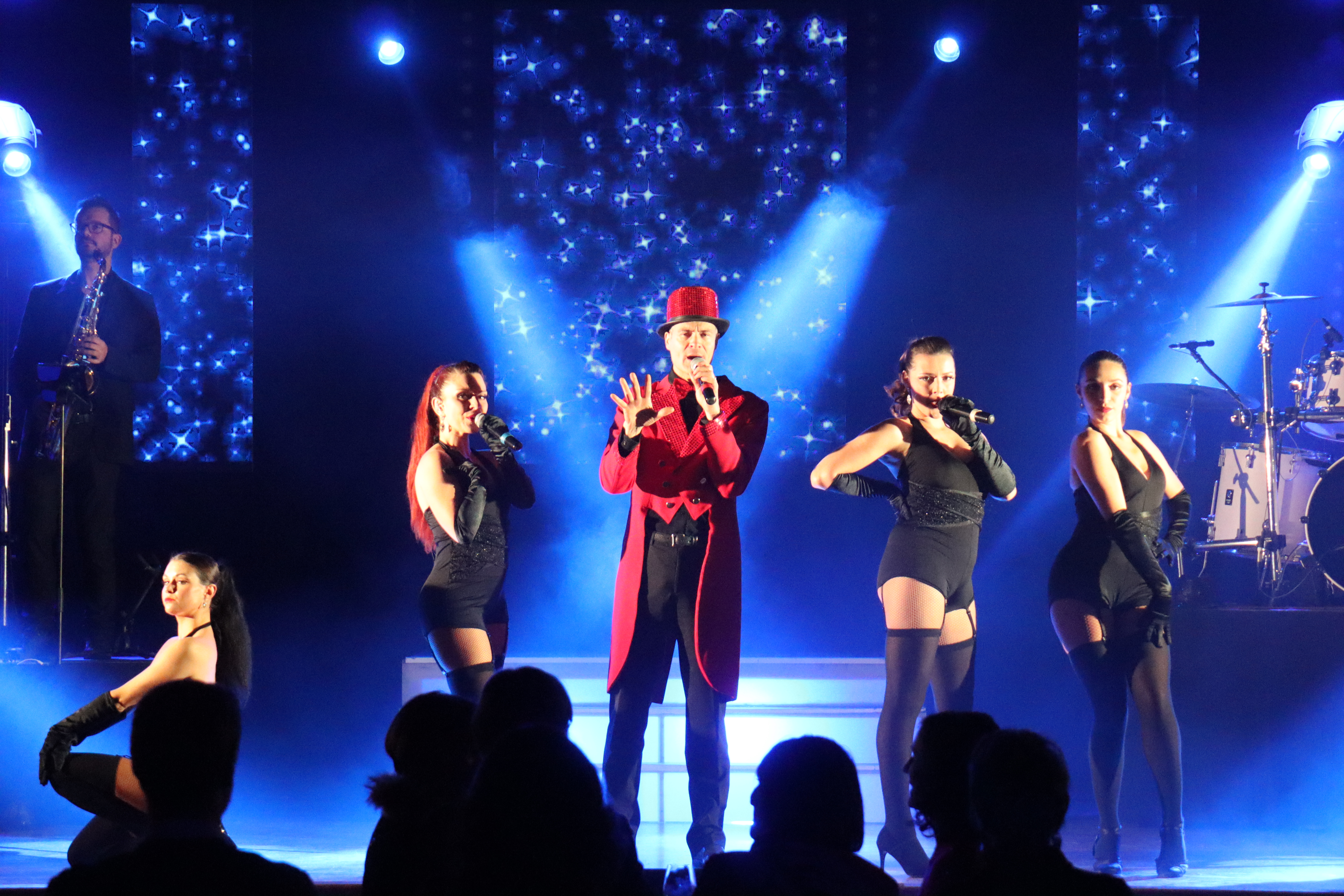
Corporate Show in Barcelona that protects your message and your schedule
INNOV'events produces Corporate Show formats in Barcelona for 80 to 2,000+ attendees, from executive dinners to convention plenaries. We manage concept, casting, staging, technical production, and on-site coordination so your teams stay focused on business outcomes.
Whether you need a tight 12-minute opener or a full evening program, we deliver with rehearsal discipline, safety compliance, and predictable run-of-show—because the real KPI is what the room does after the show.
Table of contents
In a corporate event, entertainment is not “the fun part”; it is a tool to earn attention, land key messages, and control energy in the room. A well-built Corporate Show in Barcelona helps you structure the agenda: opening impact, transitions, and a closing moment that anchors priorities without extending the schedule.
Local organizations expect professional execution: crisp timing, discreet technical setup, bilingual hosting when needed, and a style that fits Barcelona’s international audience. HR and Comms teams also expect strict brand alignment, clear approvals, and zero reputational surprises on stage.
We are an events agency with operational teams and partner networks on the ground in Barcelona. That local presence matters for venue access, technical sourcing, rehearsal logistics, and fast contingency response—especially when your show must coexist with tight venue windows and city-center constraints.
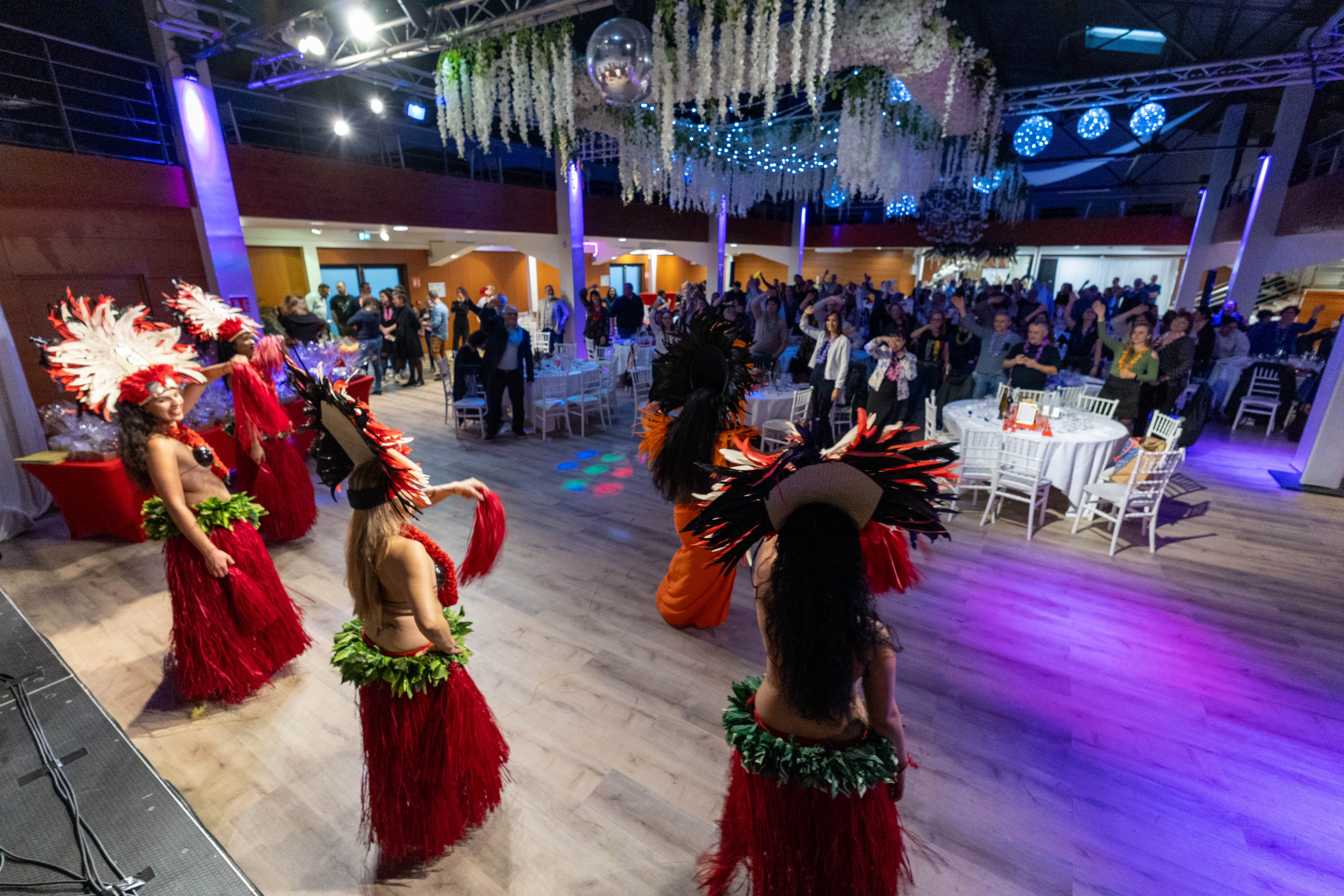
Proven delivery capacity in Barcelona: numbers that matter
12+ years producing corporate events and stage programs across Spain, with recurring annual conventions and executive formats.
250+ corporate events delivered nationally (conventions, kick-offs, awards, product reveals, gala dinners), including show elements and complex run-of-show.
80–2,000+ attendees: from board-level dinners requiring ultra-discreet entertainment to high-energy plenaries with strict cues and technical riders.
48-hour response target for a first scoped proposal (objective, venue, format, and budget range), so you can compare agencies quickly.
On-site staffing designed for control: 1 stage manager + 1 technical lead + 1 client-facing producer as a minimum on show-driven programs (scaled by complexity).
How to organize a professional event in Barcelona?
- Define the objective (cohesion, announcement, fidelity, performance).
- Set date, format and size (20–1 000 people).
- Secure the venue and accommodation according to seasonality.
- Lock down technical, suppliers and logistics.
- Drive the day J (timing, scene, entrance, flow).
Barcelona references and long-term client habits we recognize
We support organizations that operate in and around Barcelona, including headquarters teams, regional hubs, and international groups using the city for European meetings. Many of our collaborations renew year after year because the pressure points are always the same: leadership wants message discipline, HR wants participation without discomfort, and Comms wants a clean brand footprint across stage, visuals, and social content.
Typical repeat patterns we handle locally include: annual sales kick-offs hosted in Barcelona to leverage flight connectivity; leadership town halls paired with show openings to reset attention; and awards dinners where entertainment must be elegant, short, and perfectly synchronized with service timing. We also regularly coordinate with internal procurement and compliance workflows—NDAs with artists, insurance certificates, and contractual clauses around image rights—so your internal validations do not become a last-minute fire drill.
If you share a shortlist of internal constraints (brand do’s/don’ts, sensitive topics, union or safety requirements, languages), we’ll map them into the show design from day one, rather than patching issues during rehearsal.
We send you a first proposal within 24h.
Why book a Corporate Show in Barcelona for business impact
A corporate show is strategic when it serves a managerial purpose: unifying narratives, rewarding performance, and creating a controlled emotional peak that helps people remember what leadership needs them to do next. In Barcelona, where many audiences are mixed (local teams, visiting regions, international stakeholders), a staged format is often the most efficient way to create shared context in a short time.
Attention control in high-density agendas: A well-timed opener or mid-session intervention resets focus better than another slide deck, without adding “dead time” between sessions.
Message anchoring for executives: We design show beats to reinforce 2–3 leadership messages (strategy shift, cultural priorities, transformation roadmap) so the room retains them beyond the event.
HR leverage without forcing participation: Interactive moments can be designed as opt-in (mobile voting, guided applause cues, micro-challenges by table) to avoid awkwardness while still building engagement.
Employer brand and internal pride: Recognition segments and artistic moments help convert “company meeting” into “we belong to something,” which is valuable after reorganizations, mergers, or intense quarters.
Operational predictability: A structured show reduces improvisation. That means fewer on-the-day decisions for your teams, lower reputational risk, and better control over overtime with venues and technicians.
Barcelona’s economic culture values execution, design quality, and international standards. A show that is tight, aesthetically coherent, and respectful of time signals managerial seriousness—especially in front of visiting leadership or external partners.
What Barcelona audiences and venues demand from a corporate show
In Barcelona, expectations are shaped by a mature event ecosystem: modern venues, strong audiovisual suppliers, and audiences accustomed to professional staging. This raises the bar—small details become visible, and “almost ready” is not acceptable.
Time discipline is a local reality. Many venues enforce strict load-in/load-out windows due to shared spaces or neighborhood regulations. We plan technical setup around real constraints: dock access, lift dimensions, back-of-house routes, noise restrictions, and the reality of city traffic for trucking and artist call times.
International mix is common: visiting teams, global leadership, and multilingual audiences. We advise on bilingual or dual-language staging (Catalan/Spanish/English depending on context), supertitles when relevant, and hosts who can handle corporate terminology without sounding like entertainment-only MCs.
Brand and reputation sensitivity is high for HQs and listed companies. That means content screening, lyric checks for music, visual review of costumes and props, and clarity on what can be filmed. We build approval checkpoints so Comms does not end up negotiating stage content during rehearsals.
Which corporate entertainment options work best in Barcelona today
Engagement comes from relevance and rhythm. A Corporate Show can be built as a short “stage punctuation” (8–15 minutes) or as a full program (60–120 minutes), but the principle is the same: keep transitions tight, make participation easy, and ensure every element supports your brand tone.
Interactive animations in Barcelona
Audience-driven show cues (mobile voting): Quick polls that influence the next song, the order of awards, or a short improvisation. Works well for mixed audiences because participation is simple and trackable.
Table challenges with controlled exposure: 3-minute micro-briefs per table (e.g., “build the best customer promise in 60 seconds”), with a host selecting 2–3 outputs to share. This avoids forcing shy participants on stage while still creating momentum.
Interactive brand quiz with compliance guardrails: A fast-paced quiz about product knowledge, safety rules, or transformation milestones. We align content with Legal/Comms so no sensitive numbers or unapproved claims appear on screen.
Art animations in Barcelona
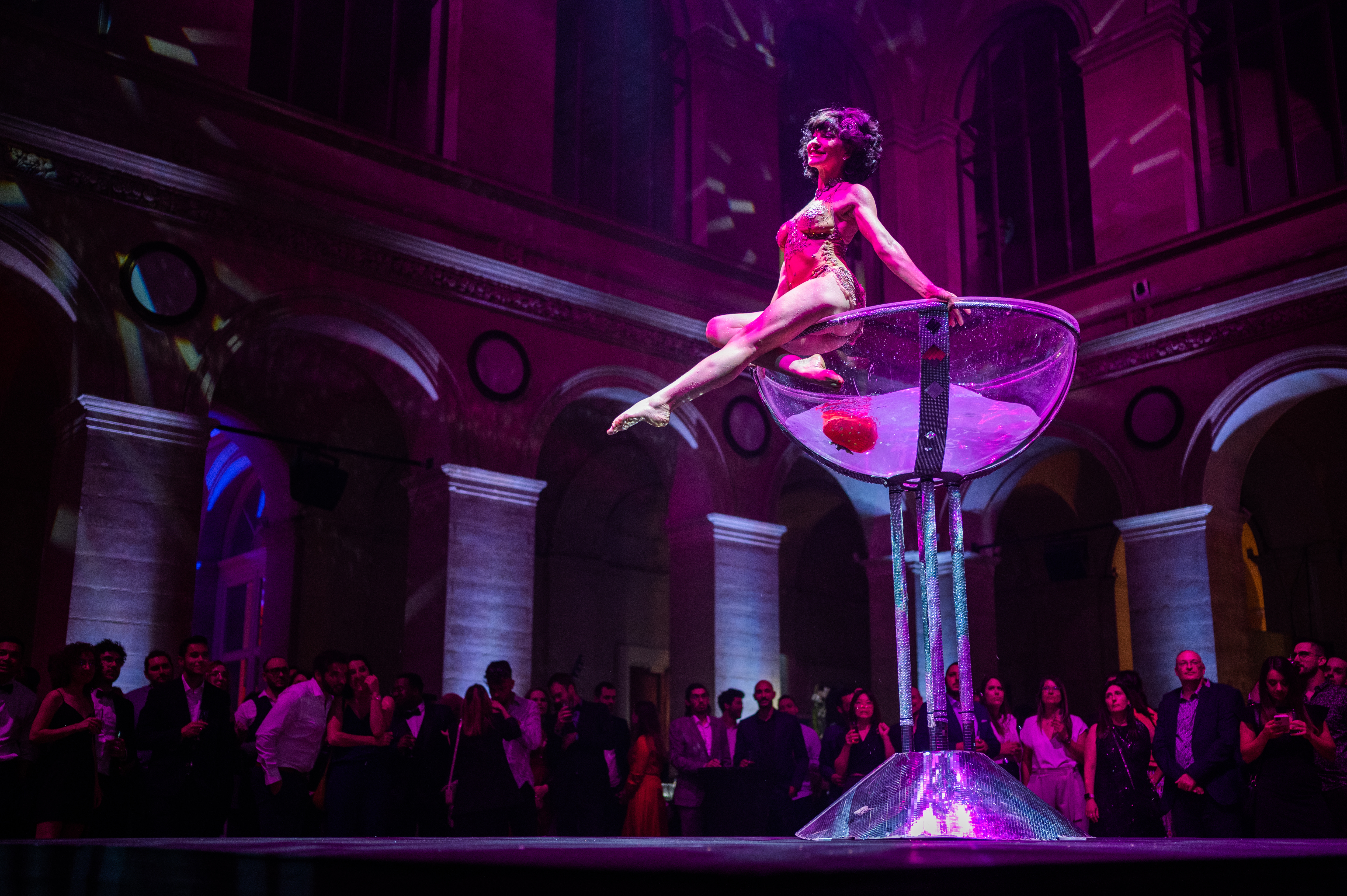
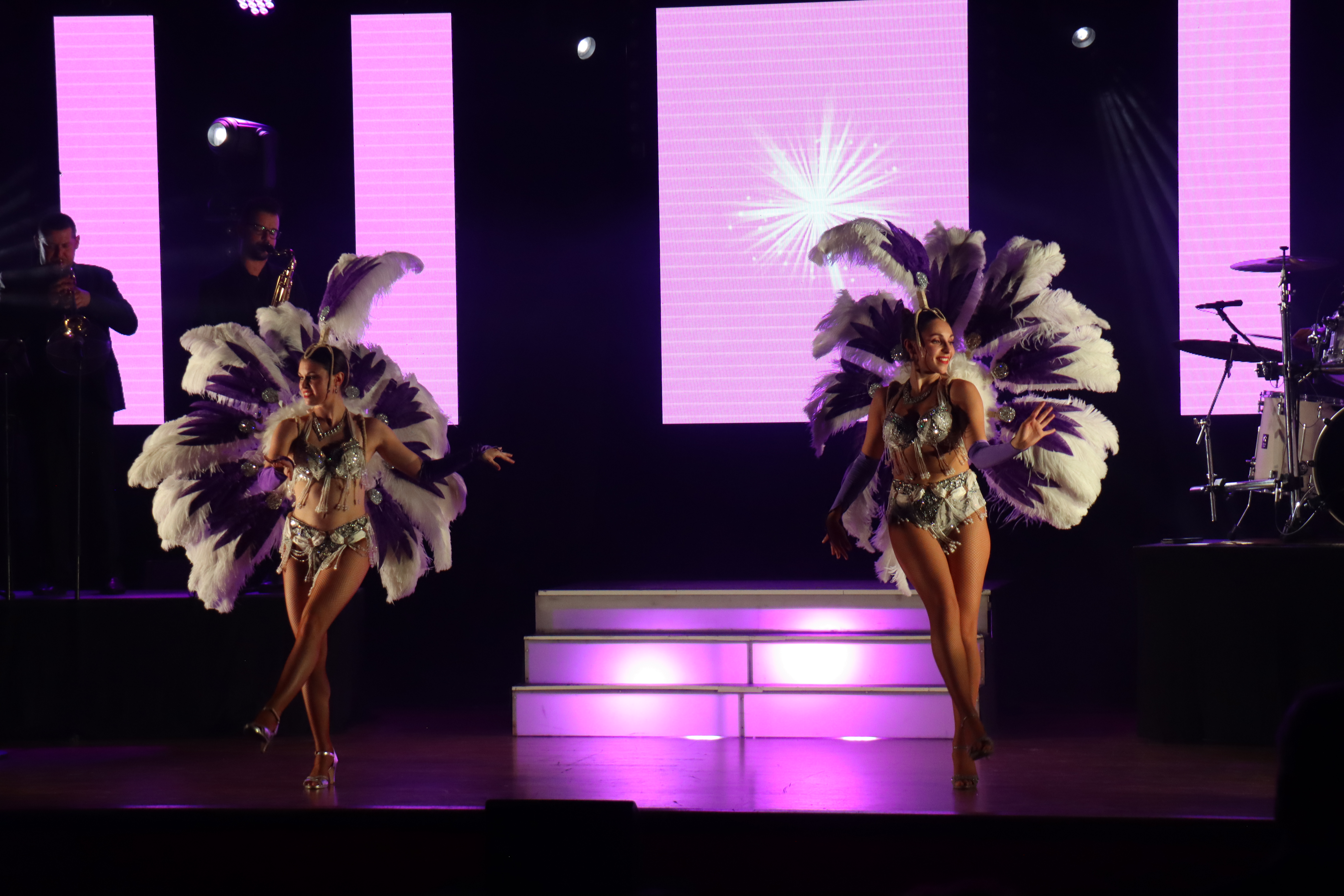
Contemporary dance with corporate narration: A short piece built around your transformation story (before/after, friction/solution). We keep it abstract enough to avoid “literal corporate theatre” while still delivering a clear message arc.
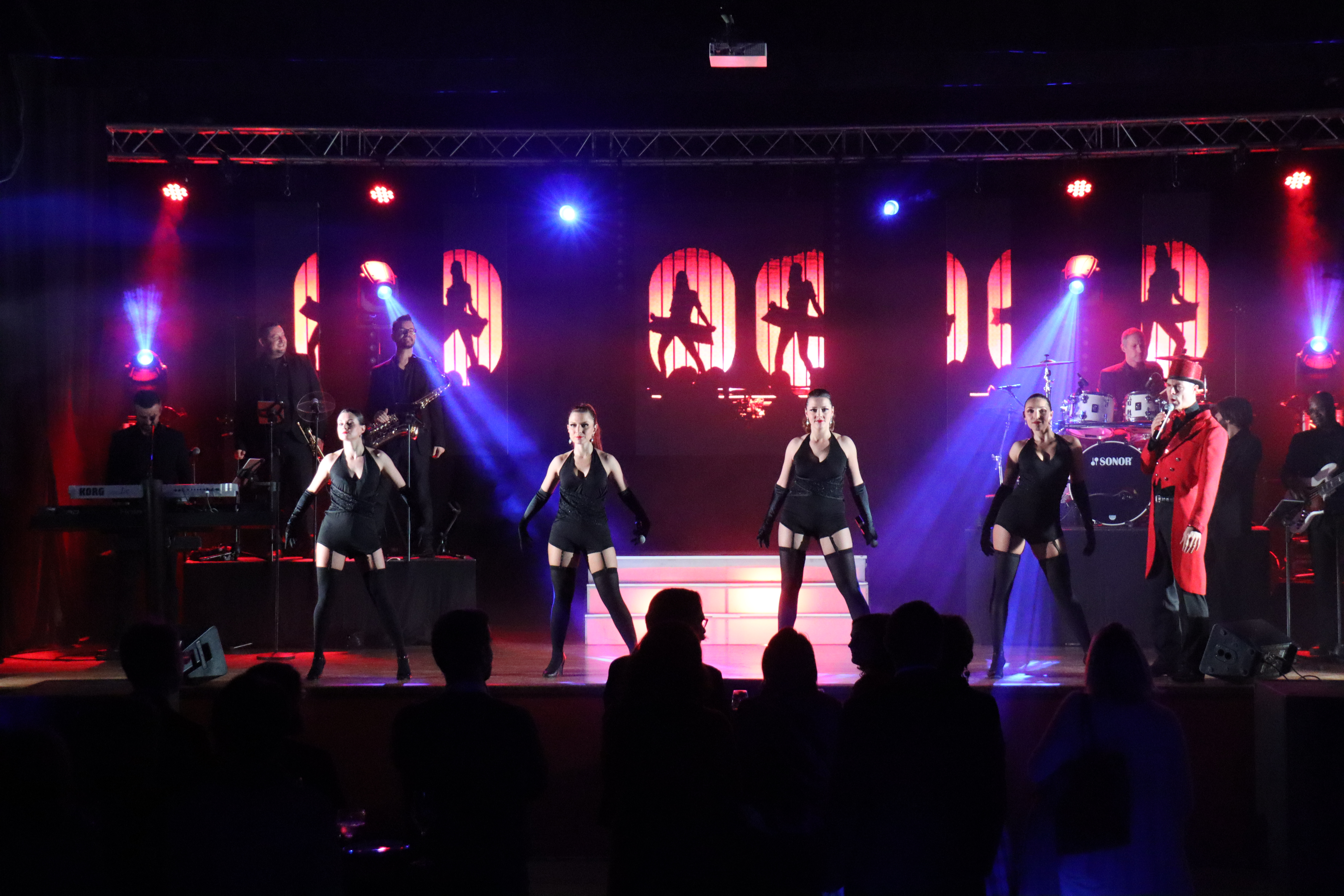
Live music with controlled setlist: We propose artists based on audience demographics and brand positioning, then lock a setlist and key transitions. For executive audiences, a tight 20–30 minute set often outperforms a long concert.
Comedy with pre-approved boundaries: If you want humor, we treat it as a risk-managed segment: topic exclusions, brand vocabulary, and a rehearsal read-through. This prevents the classic issue of jokes landing badly in diverse teams.
Innovative animations in Barcelona
Show synchronized with service: For gala dinners, we design “beats” around starter/main/dessert to avoid performers competing with plates and staff movement—crucial in high-end Barcelona venues.
Mixology or tasting led by a professional host: A structured tasting (non-alcoholic options included) can be a strong mid-evening engagement tool when the audience is senior and networking-focused.
Chef’s stage moment: A short intervention from the chef or culinary team to explain a concept aligned with your theme (sustainability, local sourcing, innovation). It feels authentic when kept brief and well-staged.
Gourmand animations in Barcelona
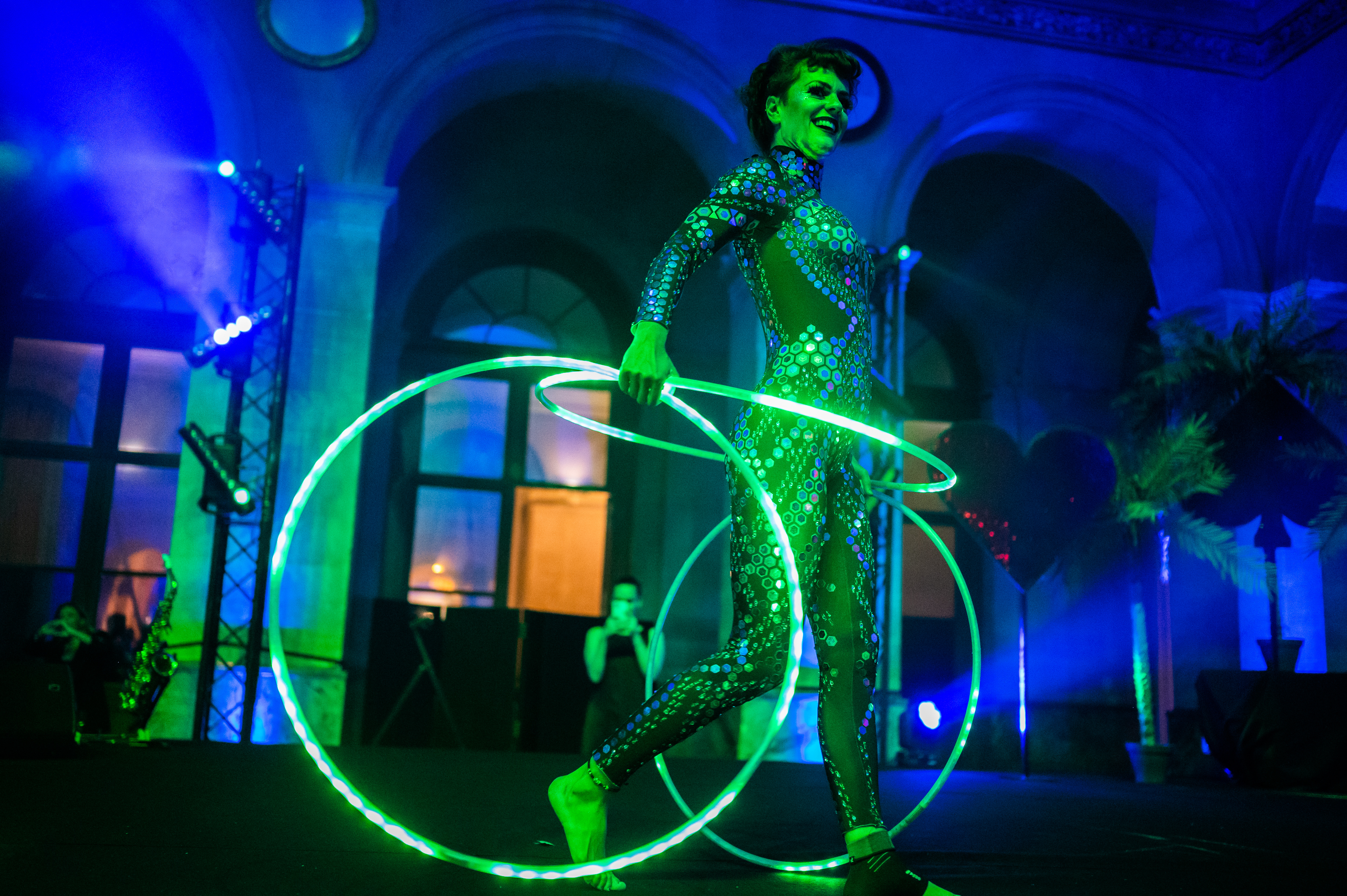
Immersive content with LED and mapped visuals: High-impact openings using motion design, sound design, and lighting. We ensure the venue’s rigging capacity and screen specs can deliver the intended effect (no surprises on pixel pitch or brightness).
AI-assisted personalization (responsibly): For internal events, we can create short, controlled content modules based on approved data (e.g., regional achievements). We avoid using personal data without explicit consent and align with GDPR practices.
Hybrid-ready show design: If some attendees join remotely, we plan for broadcast audio, speaker monitoring, and camera blocking so remote viewers aren’t “second-class.” This is often overlooked until it is too late.
Whatever the format, alignment with brand image is non-negotiable. We translate brand guidelines into concrete show decisions: wardrobe palette, music style, staging materials, language register, and filming rules—so the entertainment feels like an extension of your company, not an external add-on.
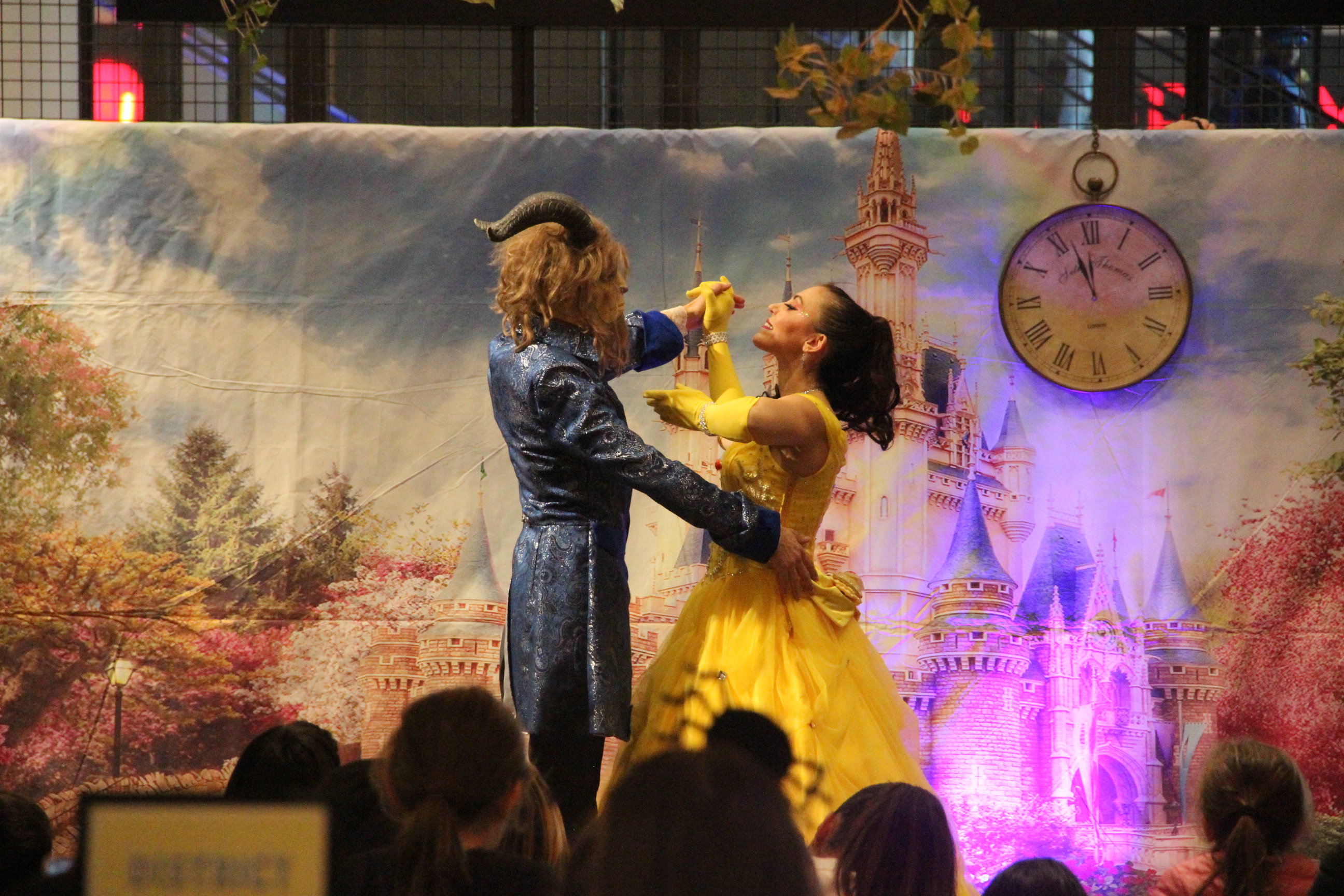
How to choose a venue in Barcelona for a Corporate Show
The venue dictates what is feasible: ceiling height, rigging points, backstage space, neighbor constraints, and the time you realistically have for technical setup. In Barcelona, the right venue choice often saves more budget than negotiating artist fees, because it reduces technical workarounds and overtime.
| Venue type | For which objective? | Main strengths | Possible constraints |
|---|---|---|---|
Convention center / auditorium | Plenary + staged opener/closing with strict cues | Professional stage infrastructure, strong AV capacity, seating visibility, backstage areas | Fixed technical providers, tight access windows, higher costs for additional rehearsal time |
Hotel ballroom (4–5*) | Gala dinner with short show segments and awards | Integrated catering + accommodation, efficient guest flow, reliable comfort level | Ceiling height and rigging limits, sound restrictions, stage size can be constrained |
Industrial / design venue (repurposed spaces) | Brand-forward reveal, creative set design, networking-first evening | Strong aesthetic impact, flexible layouts, distinctive Barcelona identity | More technical build required (power, acoustics, backstage), permits and neighbor noise sensitivity |
We insist on a site visit (or at minimum a technical walk-through with venue plans) before locking the show concept. It is the fastest way to validate stage sightlines, loading logistics, and backstage practicality—and to avoid spending budget on fixes that could have been prevented by choosing a better-fitting room.
What a Corporate Show budget looks like in Barcelona
Pricing for a Corporate Show in Barcelona depends on technical needs, rehearsal time, casting, and the level of production control you require. Two shows with the same audience size can have very different budgets if one requires custom visuals, multiple cues, and union-compliant setup windows.
Format length and complexity: a 10–15 minute staged opener is not priced like a 90-minute program with transitions, awards, and multiple acts.
Artist casting level: emerging performers vs. recognized names; number of artists; travel and accommodation; exclusivity clauses if your brand requires it.
Technical production: lighting design, sound reinforcement, video playback, LED screens, stage decking, special effects. We price based on specs, not guesses.
Rehearsal and run-of-show time: the biggest hidden cost is often additional venue hours, crew overtime, and last-minute changes that expand rehearsal.
Risk and compliance: insurance requirements, safety staff, rigging certifications, pyrotechnics restrictions (often avoided), image rights for recording and distribution.
Audience participation tools: voting platforms, QR flows, data capture constraints, and moderation needs if you want live comments displayed.
We frame budget discussions around ROI: fewer minutes wasted between agenda blocks, stronger message retention, and fewer on-the-day incidents. A controlled show is also a cost-control tool—because it reduces overtime, rework, and reputational risk that can dwarf the initial production fee.
Why choose an event agency in Barcelona for corporate entertainment
For show-driven events, local presence is not a comfort; it is a control mechanism. Working with an event agency in Barcelona means faster venue coordination, reliable technical sourcing, and a team that can be physically on-site for walkthroughs and rehearsals without turning every decision into a remote negotiation.
We know the operating realities of Barcelona venues: access hours, neighborhood noise rules, typical loading constraints, and which suppliers are consistently strong for corporate-grade delivery. This allows us to anticipate issues before they affect your agenda—like insufficient backstage space for costume changes, or a stage that cannot support the required screen format.
Local coordination also improves accountability. When a speaker request changes at 18:00 the day before the event, you need a producer who can adapt cue sheets, re-brief the technical team, and reroute rehearsal priorities on-site—not a chain of emails across time zones.
- Faster technical validation with on-site checks and real measurements (not assumptions).
- Better supplier performance thanks to established working habits and clear escalation paths.
- Lower logistical friction: transport timing, artist call times, last-minute rentals, and city-center restrictions handled proactively.
- More predictable delivery because we build schedules that reflect Barcelona’s operational constraints.
We frame budget discussions around ROI: fewer minutes wasted between agenda blocks, stronger message retention, and fewer on-the-day incidents. A controlled show is also a cost-control tool—because it reduces overtime, rework, and reputational risk that can dwarf the initial production fee.










Corporate show scenarios we deliver in Barcelona and beyond
Our experience covers a wide range of corporate show configurations. For a technology group hosting a European leadership meeting in Barcelona, the priority was a short, high-impact opener that would not overshadow the CEO’s message: we built a 12-minute staged sequence with controlled lighting cues, custom motion design, and a bilingual host handoff—engineered to end exactly on time and flow into the keynote without a reset.
For a retail organization running an awards dinner, the challenge was rhythm: awards, dinner service, and entertainment were competing. We restructured the run-of-show into three clean blocks aligned with courses, added a simple audience voting mechanic for one category, and used a stage manager to coordinate service timing with technical cues. The result was not “more entertainment,” but fewer dead minutes and a room that stayed engaged until the final recognition.
We also support sensitive internal contexts: post-merger town halls, transformation announcements, and safety-driven industrial meetings. In these cases, we avoid anything that feels like distraction. We use entertainment as framing—short musical or visual segments that regulate energy and keep attention—while protecting tone, language, and executive credibility.
Common Corporate Show mistakes we prevent in Barcelona
Overrunning the agenda: adding “just one more act” without recalculating rehearsal, transitions, and speaker buffers. We build a timed cue-to-cue plan and enforce it.
Choosing entertainment before defining the objective: the show becomes random. We start from what leadership needs the room to feel and do, then select formats that serve that goal.
Ignoring technical riders: last-minute discoveries (microphone shortages, inadequate monitoring, poor sightlines) create stress and extra cost. We validate specs early with the venue and AV.
Risky content for diverse audiences: humor, lyrics, or visuals that land poorly across cultures or internal sensitivities. We implement content reviews and boundaries.
No clear chain of command on show day: multiple stakeholders giving instructions leads to mistakes. We define roles: who approves, who calls cues, who speaks to artists.
Filming without rights clarity: internal comms want content; artists have usage constraints. We align image rights, music licensing, and distribution scope upfront.
Our role is to make the show operationally boring for you: no surprises, no rushed approvals, no technical panic. The audience should feel energy; you should feel control.
Why Barcelona clients renew with INNOV'events
Clients come back when an agency consistently protects time, brand, and internal workload. In corporate shows, trust is earned by anticipating friction: approvals, technical constraints, speaker changes, and the reality of decision-making under pressure.
60–70% of our yearly activity comes from repeat clients and multi-event partnerships (typical range; varies by year).
Recurring formats we manage: annual conventions, quarterly town halls, awards dinners, and client events with consistent brand staging requirements.
Stakeholder coverage: we routinely coordinate with Executive Assistants, HRBPs, Internal Comms, Procurement, Legal and venue teams to reduce cross-department friction.

Loyalty is not about long contracts; it is about predictable delivery. When your leadership team expects the same standard every year, repeat collaboration becomes the simplest risk-management choice.
Our production process for a Corporate Show in Barcelona
👉 Barcelona briefing and constraint mapping
We run a structured briefing with HR/Comms and an executive sponsor when possible. Outputs: objective statement, audience profile, non-negotiables, brand tone, languages, filming policy, and a first timing skeleton. We also identify approval owners to avoid last-minute escalation.
👉 Concept and show architecture (timed, not just creative)
We propose 2–3 concepts with clear durations, participation level, and message linkage. Each concept includes a draft run-of-show, stage layout intent, and the technical implications (screen needs, mic plan, rehearsal requirement). This is where we prevent “beautiful but impossible” ideas.
👉 Casting and technical design
We shortlist performers and hosts based on corporate suitability: clarity, reliability, language capability, and stage discipline. In parallel, we lock technical design: lighting looks, sound reinforcement, playback system, cue list, and redundancy plan (especially for video and audio).
👉 Production planning and approvals
We convert the plan into production documents: cue sheets, stage plot, hospitality schedule, call times, risk assessment, and image rights terms. Comms receives content review checkpoints (scripts, lyrics, visuals). Procurement receives clean scopes and supplier documentation.
👉 Rehearsal and show day execution in Barcelona
We schedule rehearsal to match real venue access. On-site, our stage manager calls cues; our technical lead manages AV; your producer is your single point of contact. We maintain a live run-of-show with timecodes and a contingency plan for overruns, speaker delays, or technical incidents.
👉 Post-event wrap and learning loop
Within days, we deliver a concise debrief: what worked, what to improve, and technical notes for the next edition. For recurring events, we maintain a “show bible” so future Barcelona editions start faster and with fewer risks.
FAQ sobre la organización Corporate Show en Barcelona
How far in advance to book a Corporate Show in Barcelona?
Plan 6–10 weeks for a standard corporate show (casting + technical + approvals). For peak periods (May–July, September–November) or headline talent, target 10–16 weeks. A simpler 10-minute stage opener can sometimes be delivered in 3–4 weeks if the venue and approvals are fast.
What budget range is typical for Barcelona corporate entertainment?
For corporate contexts in Barcelona, a well-produced segment often starts around €6,000–€15,000 (one act + basic tech integration). Multi-act programs with custom visuals and higher technical demands frequently land in the €20,000–€60,000+ range. Venue restrictions and rehearsal hours can materially move the number.
Can you run a bilingual show in Barcelona (English/Spanish/Catalan)?
Yes. We propose hosts and show formats that handle bilingual delivery without slowing the rhythm. In practice, we define a primary language and use the second language for key moments (welcome, safety notes, award announcements), or we use visual support (titles/supertitles) when that is cleaner.
How do you avoid reputational risk with a Corporate Show in Barcelona?
We implement content controls (script review, topic exclusions for humor, lyric checks), operational controls (rehearsal, cue calling, technical redundancy), and legal controls (insurance, image rights, supplier contracts). The goal is a show that is safe, on-brand, and predictable under executive scrutiny.
Do Barcelona venues limit sound, rigging, or special effects?
Often yes. Constraints vary by venue type and neighborhood: noise curfews, limited rigging points, ceiling height limits, and restrictions on haze/pyro. We validate these during technical advance and adapt the show (lighting design, stage layout, act selection) so the final result still looks premium without violating venue rules.
Request a Corporate Show quote in Barcelona with clear scopes
If you are comparing agencies, we can make your decision easier: share your event date, venue (or shortlist), attendee count, and the purpose of the show (energize, awards, launch, leadership message). We will reply with a structured proposal: recommended format, timing, technical needs, risk considerations, and a budget range you can defend internally.
For Barcelona events, earlier planning directly improves quality and cost control because it secures rehearsal windows, avoids technical workarounds, and keeps approvals calm. Contact INNOV'events to scope your Corporate Show in Barcelona and lock a run-of-show that finishes on time.
INNOV'events Barcelona Agency
Cyril Azevedo is the manager of the INNOV'events Barcelona office. Reach out directly by email at cyril@innov-events.es or via the contact form.
Contact the Barcelona agencyAll our services & entertainment Barcelona
Discover our event services
Discover our event entertainment available in the España
- Event Hostess Barcelona
- Escape Game Barcelona
- MasterChef Cooking Workshop Barcelona
- Magician Barcelona
- Marquee Rental Barcelona
- Color Analysis Workshop Barcelona
- Inflatable Games Barcelona
- Valet Parking Service Barcelona
- Football Simulator Barcelona
- LED Furniture Rental Barcelona
- Light Branding Barcelona
- Unique Dining Experience Barcelona
- Light Painting Barcelona
- Murder Mystery Party Barcelona
- Prize Contest Barcelona
- Promotional Displays (POS) Barcelona
- Virtual Reality Barcelona
- Molecular Gastronomy Workshop Barcelona
- Halloween Entertainment Barcelona
- Fireworks Show Barcelona
- Giant Games Challenge Barcelona
- Event Host / MC Barcelona
- Photo Booth Animation Barcelona
- Santa Claus Entertainment Barcelona
- Kids Entertainment Barcelona
- Guided Tour Barcelona
- Urban Rally Barcelona
- Ball Pit Barcelona
- Flight Simulator Barcelona
- Food Truck Rental Barcelona
- World Record Challenge Barcelona
- Surf Simulator Barcelona
- Wine Casino Barcelona
- Makeover Workshop Barcelona
- Perfume Creation Workshop Barcelona
- Acting Workshop Barcelona
- CSR Activities Barcelona
- Archery Barcelona
- Security Staff Barcelona
- Wine Tasting Barcelona
- Mime Performer Barcelona
- TV Game Show Barcelona
- Funfair Barcelona
- Crisis Management Workshop Barcelona
- Crisis Negotiation Workshop Barcelona
- Arcade Games Barcelona
- Indoor Skydiving Simulator Barcelona
- Ski Simulator Barcelona
- Racing Circuit Experience Barcelona
- Introductory Flight Experience Barcelona
- Tasting Experience Barcelona
- Build Your Own Foosball Workshop Barcelona
- 2CV Rally Barcelona
- LEGO Challenge Barcelona
- Casino Night Barcelona
- Interpreter / Translator Barcelona
- Promotional Giveaways Barcelona
- Shuttle Transport Barcelona