Open House Event in Barcelona that converts visits into trust and leads
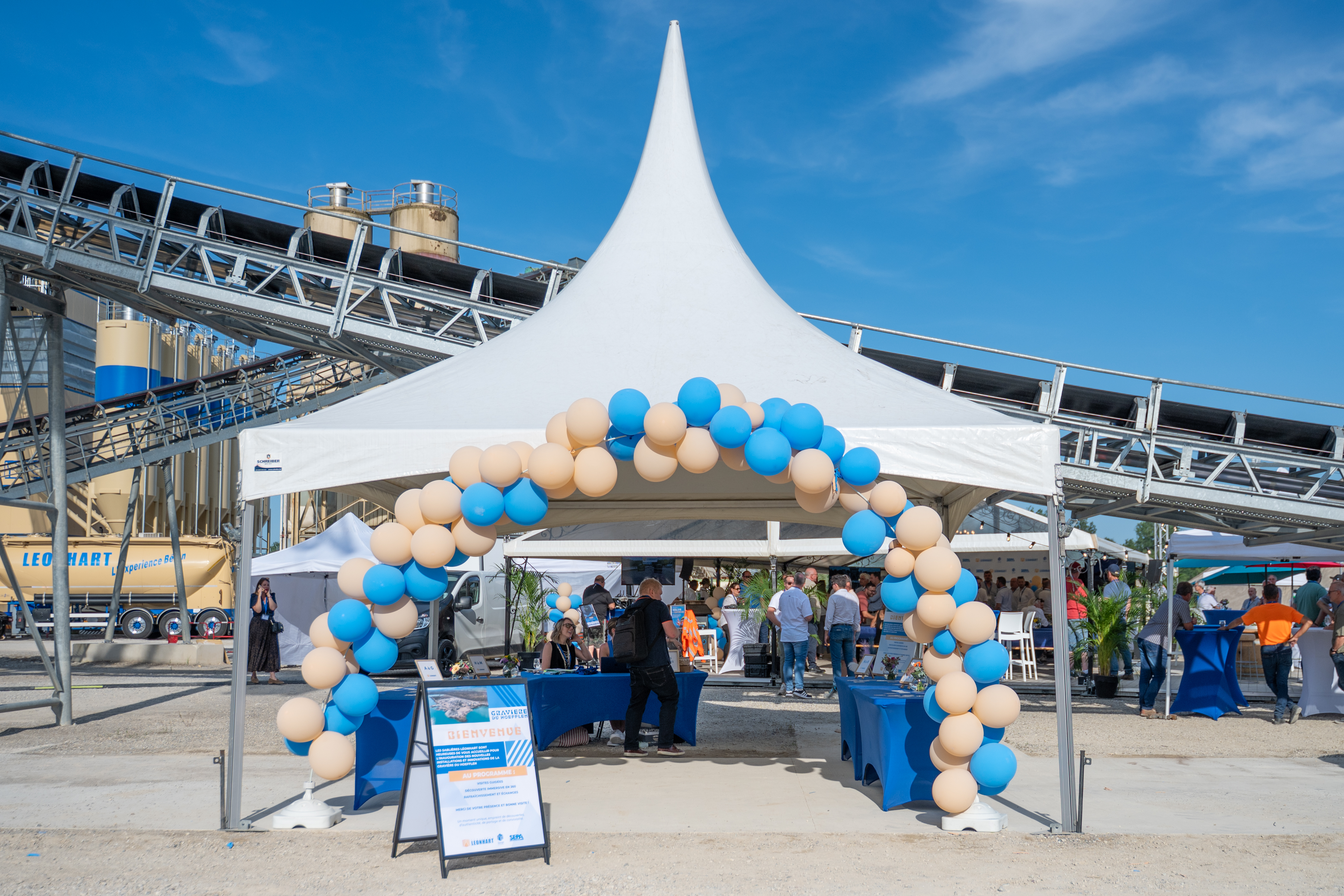
INNOV'events designs and delivers Open House Event formats in Barcelona for executives, HR and communication teams who need a professional, measurable result—not improvisation. Typical attendance ranges from 50 to 800 guests depending on your site capacity and invitation strategy. We handle the full chain: concept, permits, production, guest journey, staffing, AV, security and reporting.
Table of contents
In a corporate context, entertainment is not a “nice-to-have”: it is the mechanism that keeps visitors moving, listening and interacting at the right moments. In an Open House Event, the priority is to create enough attention and comfort so people actually absorb your messages, speak with your teams and leave their details with confidence.
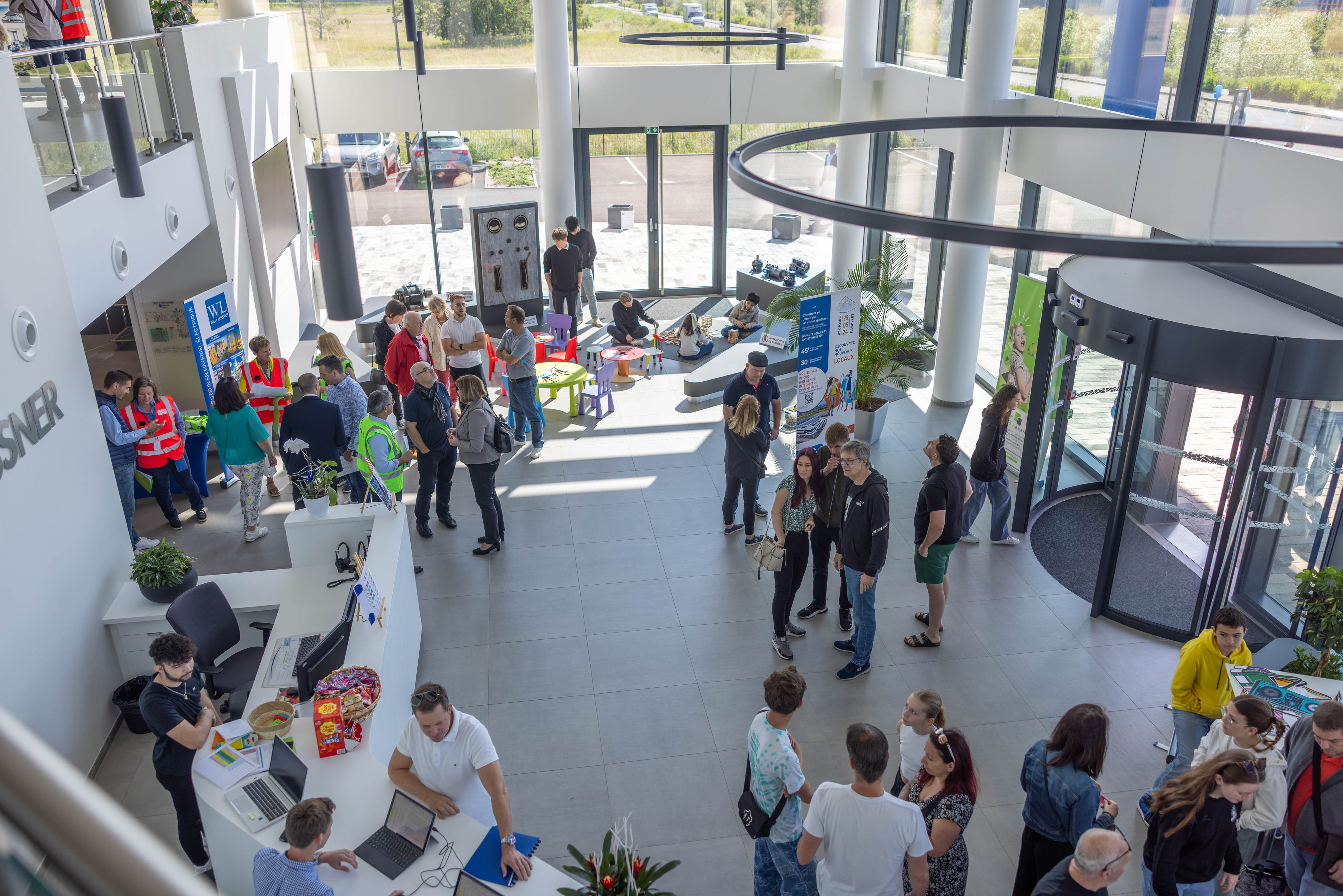
Organizations in Barcelona usually expect three things at once: brand-level execution, strict time management (especially for executives hosting), and a smooth guest experience for mixed audiences (clients, partners, candidates, public institutions, neighbors). The entertainment must support that complexity: guiding people, reducing waiting lines, and creating “reasons to stay” without turning the event into a show detached from business objectives.
As a local team, we work with Barcelona venues, suppliers and municipal constraints every week. We know the realities of last-minute weather plans, access restrictions, sound limitations and multilingual audiences. Our role is to anticipate operational friction so your leadership team can focus on hosting, relationships and outcomes.
INNOV'events track record in Barcelona you can verify quickly
10+ years delivering corporate events across Spain, with a dedicated production network in Barcelona for staffing, AV, catering and logistics.
200+ corporate events produced in the last 24 months across formats (open days, inaugurations, employer branding, client showcases, internal communication).
Operational capacity from 50 to 1,500 attendees, with scalable team structures (producer, regie, FOH lead, security lead, AV lead, hospitality lead).
Standard planning includes risk assessment, run-of-show, signage plan and on-site reporting to protect brand image and executive time.
How to organize a professional event in Barcelona?
- Define the objective (cohesion, announcement, fidelity, performance).
- Set date, format and size (20–1 000 people).
- Secure the venue and accommodation according to seasonality.
- Lock down technical, suppliers and logistics.
- Drive the day J (timing, scene, entrance, flow).
Companies in Barcelona that trust us with recurring open days
In Barcelona, many open house projects are not one-off: they repeat because the site becomes a strategic touchpoint for clients, talent and the local ecosystem. At INNOV'events, we often support organizations that come back year after year to refine the visitor journey, improve lead capture, and make operations smoother for internal teams.
We regularly work alongside local stakeholders: building management, neighborhood representatives, security teams, and facility directors. That coordination matters in Barcelona, where access, noise, and traffic management can quickly impact the perceived quality of your event.
We can share relevant references and similar projects during a call (sector, audience type, and event objectives), and we will always align the reference selection with your real constraints: site type, required permits, expected audience mix, and brand positioning.
We send you a first proposal within 24h.
What a Barcelona Open House Event changes for leadership teams
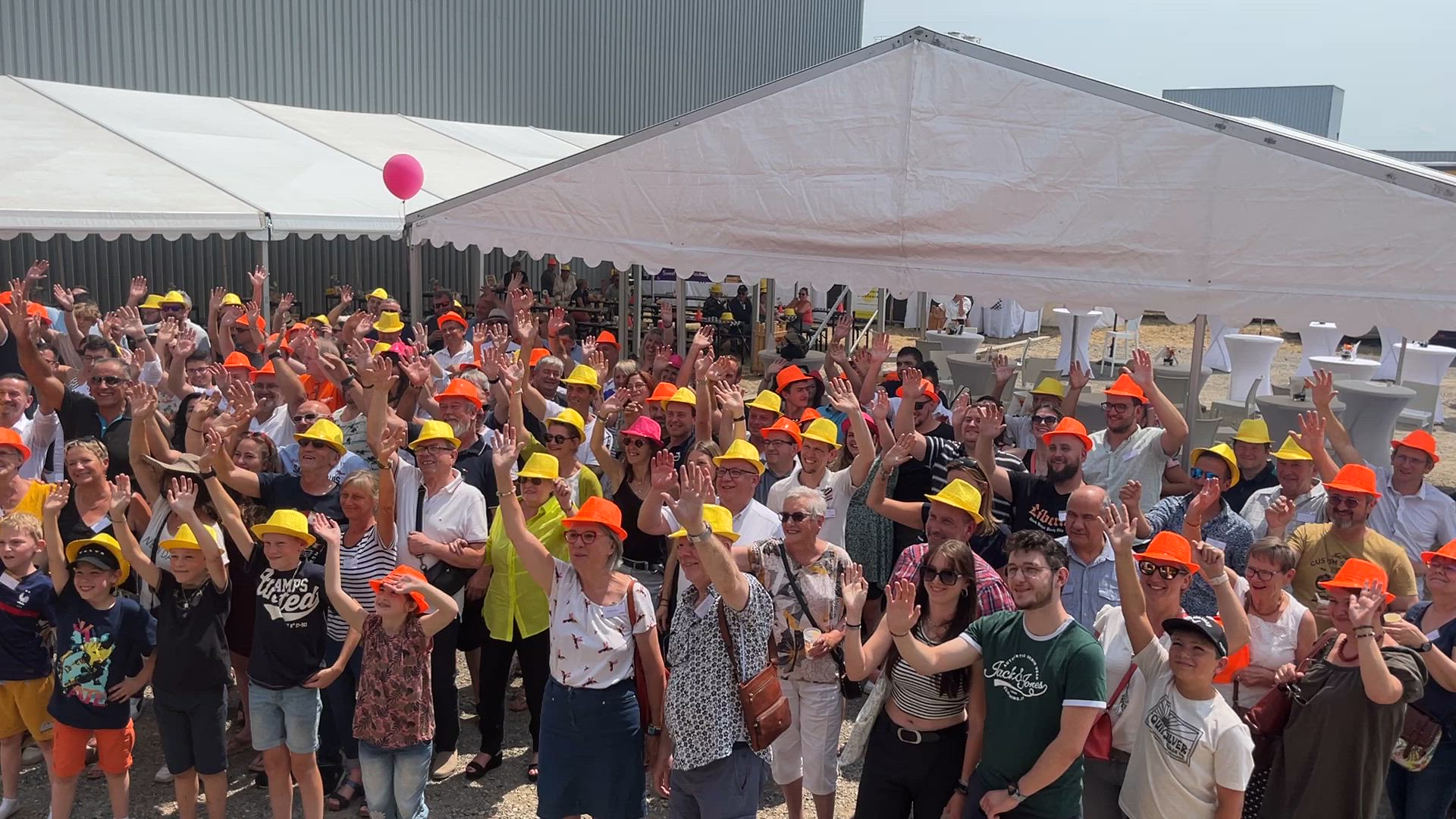
A well-structured Open House Event in Barcelona is a managerial tool: it turns a location, a project or a team into a tangible story. Executives use it to accelerate trust with clients, shorten sales cycles, stabilize employer branding and reinforce stakeholder relationships—all in a format where “seeing the reality” is more persuasive than any deck.
Pipeline acceleration for B2B: when prospects walk the site, meet the operational team and see processes, objections drop. We design talk tracks and demo points so sales doesn’t “wing it” and the visitor leaves with clear next steps.
Employer branding with proof: HR can show culture through real interactions, not slogans. We build candidate-friendly flows (short tours, Q&A corners, manager meet-ups) and capture opt-in data for follow-up.
Internal alignment: opening your doors forces clarity—who says what, which values are demonstrated, which processes are showcased. We structure briefings so every spokesperson delivers consistent messages.
Stakeholder management: for projects involving neighborhood impact, logistics or public authorities, an open day in Barcelona can reduce friction. The right guided narrative and safety framing are essential to keep discussions constructive.
Brand confidence under scrutiny: communication teams gain controlled visibility (photo/video points, press-friendly timing, branded touchpoints) without risking operational disruption.
Barcelona’s economic culture is pragmatic and design-sensitive at the same time: decision-makers appreciate operational substance, but they also judge execution details. A successful open house here must be both credible on the ground and clean in production quality.
How Barcelona audiences judge an Open House Event in 10 minutes
In Barcelona, many guests are experienced event-goers: they notice immediately whether the host company is in control. The first ten minutes—arrival, signage, check-in, and the first human interaction—set the tone for trust.
We frequently see mixed audiences: corporate guests, talent, partners, institutional representatives and sometimes neighbors. That mix creates competing needs: executives want a curated experience; HR needs time for conversations; operations wants to protect production; and guests simply want clarity (where to go, what they will see, how long it takes).
Local constraints are concrete. Access and mobility can be challenging depending on the district; deliveries must be timed; some venues face sound limitations; and the weather plan is not optional if you use terraces, patios or partial outdoor areas. Barcelona also means multilingual realities (Spanish, Catalan, English). We plan signage and hosting accordingly, including scripts and staffing ratios so no audience feels “second class.”
Finally, the standard here is visual discipline: a tech company in 22@, an industrial site near the port, or a corporate HQ in Eixample all require different staging choices. We avoid over-decoration and focus on what protects your image: coherent branding, clean wayfinding, controlled lighting and a calm, confident front-of-house team.
Which entertainment options work best for an Open House Event in Barcelona
Entertainment in an Open House Event in Barcelona is effective when it supports three outcomes: keep the pace, trigger conversations, and make your value proposition easy to understand. We select formats that respect your environment (noise, safety, brand tone) and that do not compete with the visit itself.
Interactive animations in Barcelona
Guided micro-demos (6–8 minutes) repeated every 20 minutes: perfect when you need consistency across multiple guest groups. We help script the demo so it stays operationally accurate and commercially relevant.
Interactive Q&A corner with a facilitator: a structured space where guests can ask “hard questions” without hijacking the tour. Useful with institutional stakeholders or technical audiences.
Digital check-in + segmented follow-up: QR-based registration and interest tagging (solutions, careers, partnerships). This is not “gimmicky”; it is a way to create a usable post-event CRM output.
Team spotlight stations: short, human explanations by the people who do the work (operations, engineering, customer success). Done properly, it strengthens employer brand and client confidence.
Art animations in Barcelona
Acoustic trio or low-volume DJ set for networking zones: selected for sound control and brand fit, avoiding interference with speeches and tours.
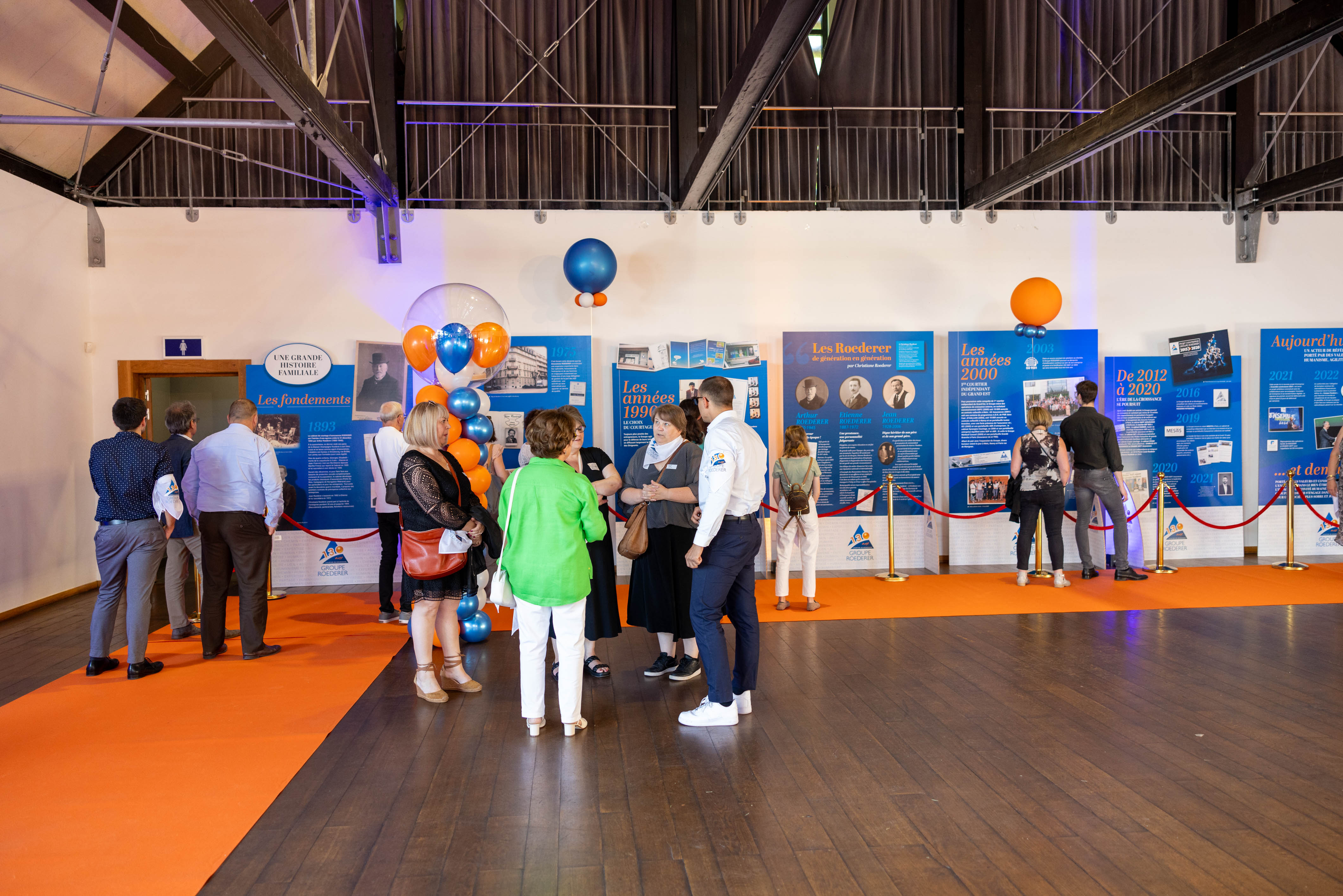
Live illustration / graphic recording: captures key messages in real time, producing a visual asset you can reuse internally and on LinkedIn. Works well for leadership messaging and transformation narratives.
Short-format spoken-word hosting for transitions: a professional bilingual host can keep timing tight, introduce executives cleanly, and avoid awkward gaps that dilute perceived professionalism.
Innovative animations in Barcelona
Timed tasting stations (coffee, local pastries, tapas-style bites) aligned with tour waves: reduces queue peaks and keeps guests energized without a full sit-down meal.
Allergen and dietary management: clearly labeled options and pre-identified VIP preferences. In Barcelona, international guests often expect this standard; missing it is a reputational detail that HR and Comms will notice.
Service design for conversations: we avoid setups that force guests to queue for long periods. The objective is to maximize meaningful interactions, not to showcase catering quantity.
Gourmand animations in Barcelona
AR/overlay content on site: show “before/after” of a transformation project, sustainability metrics, or a production process step that cannot be seen live. Useful when parts of the site are confidential or unsafe.
Silent audio system for tours (wireless headsets): ideal in noisy environments or when you must respect sound limits. It improves comprehension and reduces the need to shout—an immediate signal of professionalism.
Mini content studio for leadership and team interviews: 3–5 minute recorded segments during the event, planned with a tight schedule. Provides controlled content instead of relying on random guest footage.
Every entertainment choice must reinforce your brand image. If your positioning is premium and discreet, we prioritize flow, lighting, and hosting discipline over “big” performances. If your priority is talent attraction, we create moments where candidates can speak to real managers. The best entertainment is the one that makes your objectives easier to achieve.
How to choose the right venue in Barcelona for an Open House Event
The venue is not just a backdrop; it determines how credible, comfortable and safe the experience feels. In Barcelona, the wrong layout quickly creates bottlenecks at the entrance, poor acoustics for speeches, and stress for your internal teams.
| Venue type | For which objective? | Main strengths | Possible constraints |
|---|---|---|---|
Company HQ / showroom in Barcelona | Brand credibility, executive hosting, client reassurance | Authenticity, control of messaging, direct access to teams and products | Capacity limits, security zoning, visitor flow needs strict planning |
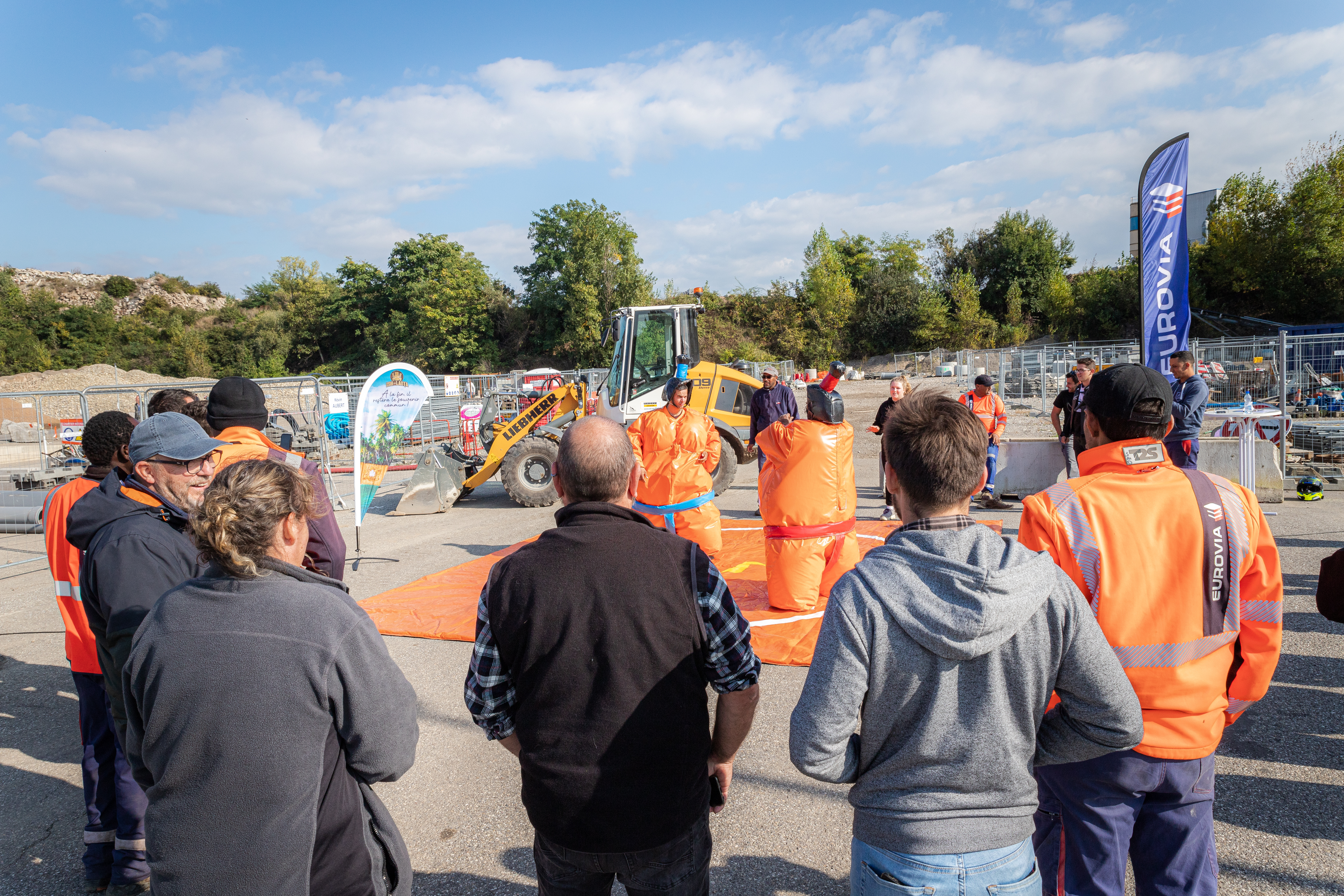
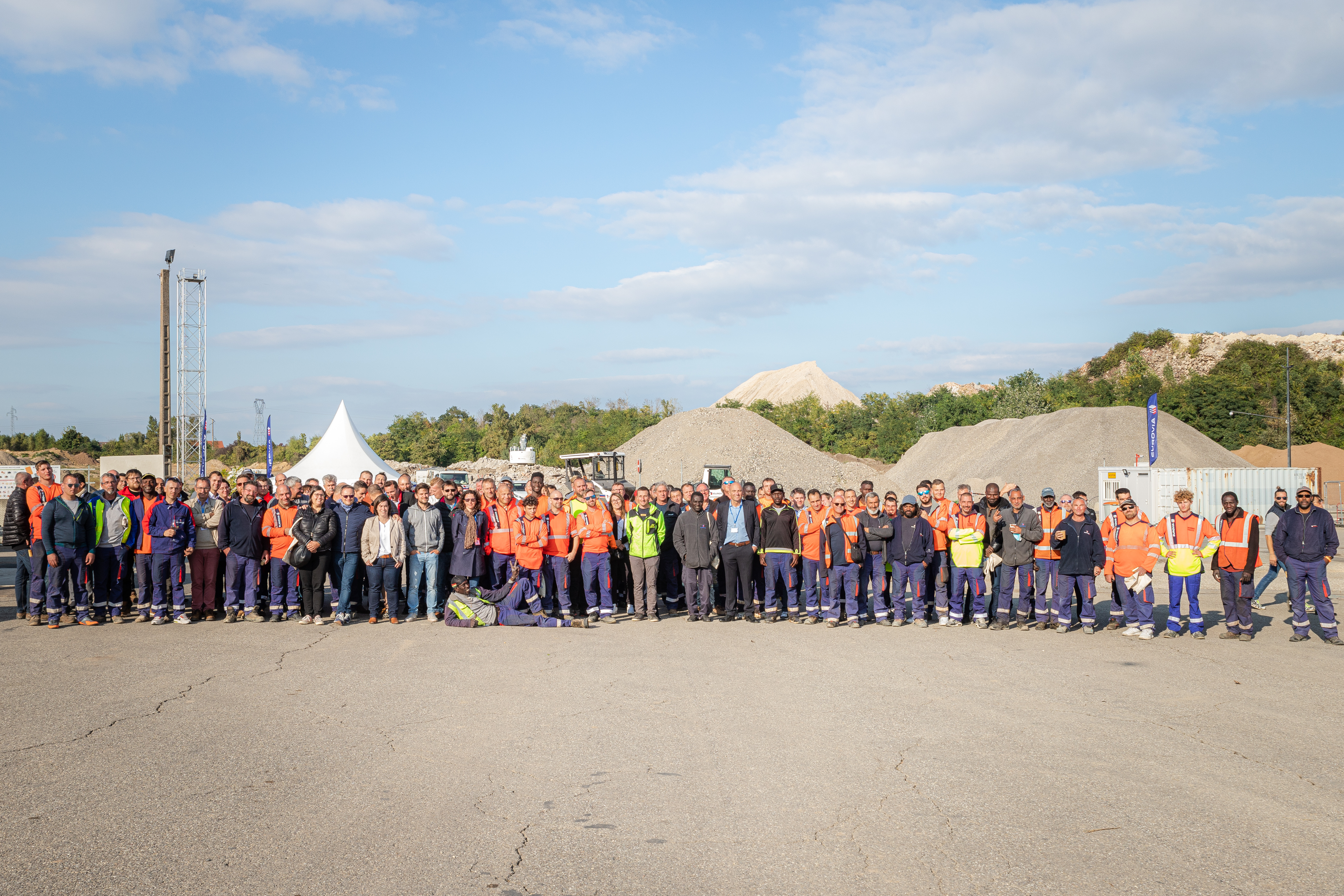
Industrial site / logistics platform (metropolitan area) | Operational proof, process transparency, stakeholder trust | High-impact “real life” demonstration, strong for B2B and institutions | Safety/PPE, noise, restricted areas, transport coordination |
Partner venue near 22@ (event space) | Lead generation + keynote + networking in one controlled environment | Professional AV, better acoustics, scalable capacity, easier branding | Less “real site” authenticity, rental costs, time restrictions for setup |
We strongly recommend site visits with your internal stakeholders (operations, security, comms) before final validation. Small details—loading access, elevator size, power availability, neighbor constraints—are what determine whether the event feels effortless or chaotic on the day.
What an Open House Event budget looks like in Barcelona
Budgeting for a corporate open day is mainly a question of scope and risk management. Prices vary based on attendance, venue constraints, technical needs and the level of hosting expected by your brand. In Barcelona, access logistics and supplier availability can also shift costs depending on season and location.
Attendance and format: a 80-guest curated visit with guided tours and a networking cocktail is not the same as a 600-guest open day with multiple entry waves and security zoning.
Venue readiness: if the site already has AV, furniture and compliant access, production is lighter. If we need to bring staging, lighting, generators or additional restrooms, costs rise quickly.
Staffing ratios: hosts, registration team, security, technical operators, runners, cleaning. Understaffing is the most expensive “saving” because it impacts guest experience and brand image.
AV and content: microphones, speakers, screens, translation needs, live streaming, content capture (photo/video). We budget redundancy where failure is not acceptable (executive speech, demo area).
Compliance and safety: signage, barriers, PPE, crowd management, emergency coordination. For operational sites, this is non-negotiable.
Catering strategy: coffee reception vs. cocktail vs. seated lunch, service style, dietary management, and service timing aligned with tour waves.
Branding and wayfinding: exterior signage, interior route markers, branded touchpoints that are clean and reusable, not disposable clutter.
We build budgets with ROI in mind: leads captured, meetings created, recruitment pipeline, stakeholder sentiment, and reusable content assets. A well-structured Open House Event can pay back if it shortens sales cycles or improves retention and attraction—provided you measure the right indicators from day one.
Why hiring a Barcelona event agency reduces risk on open day
For an Open House Event in Barcelona, local execution is not a convenience; it is risk control. When you open your doors, you expose your brand, your people and sometimes your operations. A local agency can anticipate the practical issues that remote planning often misses: supplier timing, access constraints, municipal habits, and the real time needed for on-site installation and rehearsals.
At INNOV'events, we operate with Barcelona-based partners we can mobilize quickly and hold accountable. If a delivery is delayed, a microphone fails, or a weather plan must be activated, the difference is measured in minutes, not explanations.
If you are comparing providers, we recommend choosing an event agency in Barcelona that can demonstrate a clear production structure, not only creative ideas.
- Faster on-site coordination: technical checks, venue walkthroughs, and rehearsals without inflated travel time and costs.
- Supplier performance: local AV and staffing partners used to corporate standards, with clear SLAs and backup options.
- Better anticipation of constraints: access, loading, neighborhood sensitivity, sound limitations, and traffic conditions.
- Calmer event day for executives: one accountable production lead on the ground, with decision-making authority and escalation paths.
We build budgets with ROI in mind: leads captured, meetings created, recruitment pipeline, stakeholder sentiment, and reusable content assets. A well-structured Open House Event can pay back if it shortens sales cycles or improves retention and attraction—provided you measure the right indicators from day one.






Open House Event projects delivered in Barcelona across sectors
Our open house projects in Barcelona span different realities: tech and innovation hubs in 22@, corporate headquarters welcoming clients and partners, and operational sites where safety and confidentiality are central. The common denominator is always the same: the event must serve business objectives while respecting the environment and the people who work there.
We adapt the architecture of the event to your constraints. For example, when a company cannot stop operations, we design tour “windows” that avoid peak activity and we separate visitor routes from production zones. When the audience includes VIP clients and candidates at the same time, we create parallel journeys with different messaging depth, different hosts, and different pacing.
We also handle the “invisible” complexity that directors care about: who has access to which areas, how badges are coded, how confidential conversations are protected, how to keep the CEO schedule intact, and how to capture outcomes without turning the event into a data-collection exercise that feels intrusive.
Common Open House Event mistakes we prevent in Barcelona
Underestimating check-in time: one desk and a printed list creates queues and frustration. We design check-in by arrival waves, pre-badging where relevant, and clear escalation for VIPs.
Trying to show everything: long tours dilute the message. We help you choose “proof points” and build a route that supports them.
No clear hosting scripts: different teams say different things, creating confusion or reputational risk. We prepare talk tracks and briefing packs.
AV planned too late: speeches become inaudible, demos fail, and the event looks amateur. We lock technical needs early and run rehearsals.
Ignoring safety and confidentiality: visitors end up near restricted zones, photos happen where they shouldn’t, or PPE is inconsistent. We implement zoning, signage and staff control.
Catering that blocks circulation: queues in narrow areas destroy flow. We plan service points based on route and occupancy.
No measurement plan: teams leave with “good feelings” but no usable output. We set up lead capture, meeting scheduling and post-event reporting.
Our role is to protect your event day from avoidable risks. When executives and communication teams are under pressure, prevention is what makes the difference between a controlled open house and a stressful day that drains internal credibility.
Why Barcelona clients renew with INNOV'events year after year
Client loyalty in Barcelona is earned through operational consistency. Many of our recurring clients renew because they do not want to “re-teach” their business reality to a new provider every year, and they value partners who understand internal constraints, approval processes and brand sensitivities.
Typical planning cycles we see: 6–12 weeks for standard open days, 12–20 weeks when multiple stakeholders, press, or complex venues are involved.
Common operational structure on event day: 1 production lead, 1 FOH lead, 1 technical lead + scaled teams based on attendance and zoning.
Most frequent KPI set used by our clients: attendance rate, tour completion, leads captured, meetings scheduled, candidate opt-ins, content assets produced.

Loyalty is not about habit; it is proof that the event delivered measurable outcomes while reducing internal workload. That is the standard we aim for every time.
Our Barcelona delivery process for an Open House Event
👉 Step 1 (Barcelona) – Objective mapping and stakeholder alignment
We start with a structured working session with executive sponsors, HR and communication teams. We clarify the primary objective (sales enablement, recruitment, stakeholder relations, internal engagement) and define what “success” means with concrete KPIs. We also map stakeholders who can block execution: building management, security, operations, legal, brand. Output: validated objectives, audience segmentation, initial timeline, and approval workflow.
👉 Step 2 (08) – Site audit, zoning and flow design
We conduct a site visit to identify access points, capacity, bottlenecks, restricted areas, emergency routes, and technical constraints. We design visitor flow: entry waves, tour duration options, demo points, and networking zones. Output: zoning plan, draft route map, staffing model, and a first risk assessment adapted to the venue realities.
👉 Step 3 (Barcelona) – Content, scripting and brand control
We structure the narrative: what guests should understand, in what order, and who says it. We create talk tracks for hosts and spokespersons, including bilingual needs when relevant. We define moments for leadership presence without putting executives in operational complexity. Output: run-of-show, briefing documents, signage/branding plan, and content capture plan (photo/video points, interview slots).
👉 Step 4 (08) – Production booking and technical validation
We lock suppliers: AV, staging, furniture, catering, security, hosts, cleaning. We validate power, acoustics, lighting, and connectivity, and we design redundancy for critical moments (executive speech, key demo). Output: production schedule, delivery plan, supplier contact list, and contingency plan (including weather if any outdoor areas are used).
👉 Step 5 (Barcelona) – Event-day operations and command structure
On the day, we run a clear command structure with decision-making authority on site. We manage check-in, timing, transitions, VIP handling, and escalation. We keep internal teams focused on their role (hosting, demos, conversations) rather than logistics. Output: smooth execution, documented incidents (if any), and real-time adjustments based on crowd behavior.
👉 Step 6 (08) – Post-event reporting and follow-up activation
Within agreed timelines (often 48–72 hours for first insights), we deliver reporting: attendance vs. RSVPs, lead and interest segmentation, key questions raised, and recommendations for the next edition. We also support follow-up actions: email sequences, meeting scheduling, content publishing plan, and internal debrief with actionable improvements.
FAQ sobre la organización Open House Event en Barcelona
How early should we plan an Open House Event in Barcelona?
Plan for 6–12 weeks for a standard corporate open day. If you need press, multiple tour routes, or a complex operational site, target 12–20 weeks to secure venue slots, permits (if needed), and senior availability.
What is a realistic budget range in Barcelona for 200 guests?
For 200 guests, a realistic range is often €18,000–€55,000, depending on venue readiness, AV complexity, staffing, security needs, and catering style. We can narrow this quickly after a site audit and a clear scope definition.
How do you manage visitor flow in busy Barcelona locations?
We use timed entry waves, segmented routes (short vs. full), clear wayfinding, and staffing at decision points. If noise or crowding is a risk, we add guided tour systems (e.g., headsets) and separate networking areas from transit zones.
Can we combine recruitment and client visits in Barcelona?
Yes, if you separate journeys. We typically run parallel tracks with different hosts, messaging depth, and pacing, then converge audiences only for shared moments (welcome, keynote, networking). This avoids candidates feeling ignored and clients feeling slowed down.
What KPIs should we track after an Open House Event in Barcelona?
Common KPIs: attendance rate, tour completion, leads captured and qualified, meetings scheduled within 2–4 weeks, candidate opt-ins, and content assets produced (usable photos/videos/interviews). We align KPIs with your initial objective to avoid vanity metrics.
Get a Barcelona quote and a practical plan for your Open House Event
If you are considering an Open House Event in Barcelona, involve us early—before invitations and internal communications are locked. The biggest gains usually come from flow design, zoning, and clear messaging, not last-minute decoration.
Contact INNOV'events with your target date, estimated attendance, venue type and primary objective. We will propose a concrete plan (format, staffing model, technical needs, and a budget range) and highlight the key risks to address so your leadership team can host with confidence.
INNOV'events Barcelona Agency
Cyril Azevedo is the manager of the INNOV'events Barcelona office. Reach out directly by email at cyril@innov-events.es or via the contact form.
Contact the Barcelona agencyAll our services & entertainment Barcelona
Discover our event services
Discover our event entertainment available in the España
- Event Hostess Barcelona
- Escape Game Barcelona
- MasterChef Cooking Workshop Barcelona
- Magician Barcelona
- Marquee Rental Barcelona
- Color Analysis Workshop Barcelona
- Inflatable Games Barcelona
- Valet Parking Service Barcelona
- Football Simulator Barcelona
- LED Furniture Rental Barcelona
- Light Branding Barcelona
- Unique Dining Experience Barcelona
- Light Painting Barcelona
- Murder Mystery Party Barcelona
- Prize Contest Barcelona
- Promotional Displays (POS) Barcelona
- Virtual Reality Barcelona
- Molecular Gastronomy Workshop Barcelona
- Halloween Entertainment Barcelona
- Fireworks Show Barcelona
- Giant Games Challenge Barcelona
- Event Host / MC Barcelona
- Photo Booth Animation Barcelona
- Santa Claus Entertainment Barcelona
- Kids Entertainment Barcelona
- Guided Tour Barcelona
- Urban Rally Barcelona
- Ball Pit Barcelona
- Flight Simulator Barcelona
- Food Truck Rental Barcelona
- World Record Challenge Barcelona
- Surf Simulator Barcelona
- Wine Casino Barcelona
- Makeover Workshop Barcelona
- Perfume Creation Workshop Barcelona
- Acting Workshop Barcelona
- CSR Activities Barcelona
- Archery Barcelona
- Security Staff Barcelona
- Wine Tasting Barcelona
- Mime Performer Barcelona
- TV Game Show Barcelona
- Funfair Barcelona
- Crisis Management Workshop Barcelona
- Crisis Negotiation Workshop Barcelona
- Arcade Games Barcelona
- Indoor Skydiving Simulator Barcelona
- Ski Simulator Barcelona
- Racing Circuit Experience Barcelona
- Introductory Flight Experience Barcelona
- Tasting Experience Barcelona
- Build Your Own Foosball Workshop Barcelona
- 2CV Rally Barcelona
- LEGO Challenge Barcelona
- Casino Night Barcelona
- Interpreter / Translator Barcelona
- Promotional Giveaways Barcelona
- Shuttle Transport Barcelona