
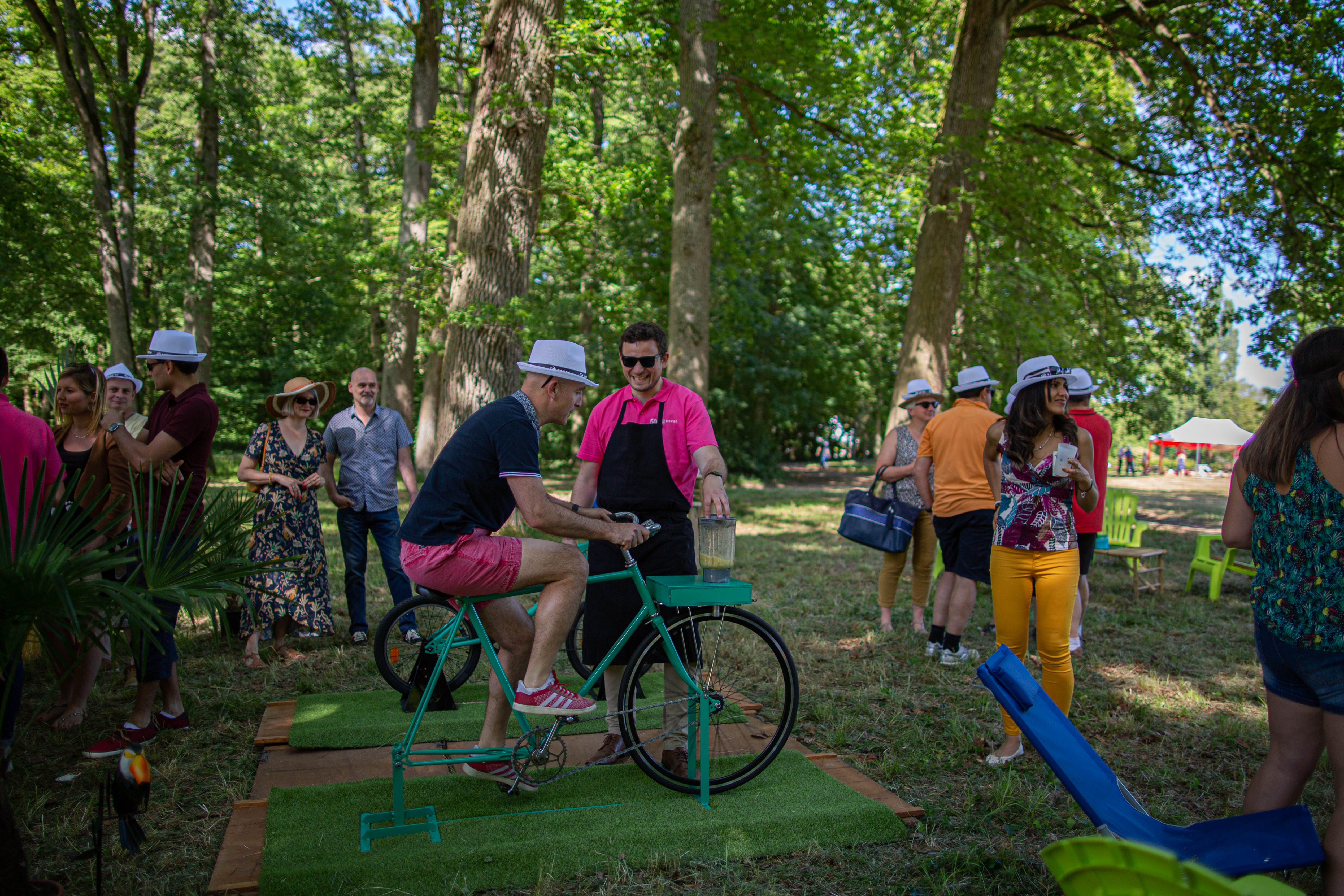
Corporate Garden Party in Barcelona that works for your people—and your brand
INNOV'events designs and delivers Corporate Garden Party formats in Barcelona for 50 to 1,500+ attendees, with the operational rigor expected by executives, HR and Comms.
We manage venue sourcing, permits, supplier coordination, production, catering flow, sound limits, security and the event day run-of-show—so your internal teams stay focused on stakeholders.
Table of contents
In a company context, entertainment is not “extra”: it is a lever to protect participation rates, create cross-team interaction, and support internal communication objectives (culture, onboarding, employer brand). In a Corporate Garden Party, the right activation keeps guests circulating and talking—without disrupting networking.
In Barcelona, organizations usually ask for an elegant but relaxed atmosphere, strong catering execution, and precise time control (speech windows, awards, or leadership messages). They also expect zero surprises on neighbors/noise, access logistics, and supplier punctuality—because most guests arrive straight from office hours.
As an events agency with local field teams, we work with Barcelona venues and technical partners weekly. We anticipate city-specific constraints (load-in slots, parking restrictions, weather contingencies, licensing) and translate your brief into a run-of-show that is credible on paper—and reliable on the day.
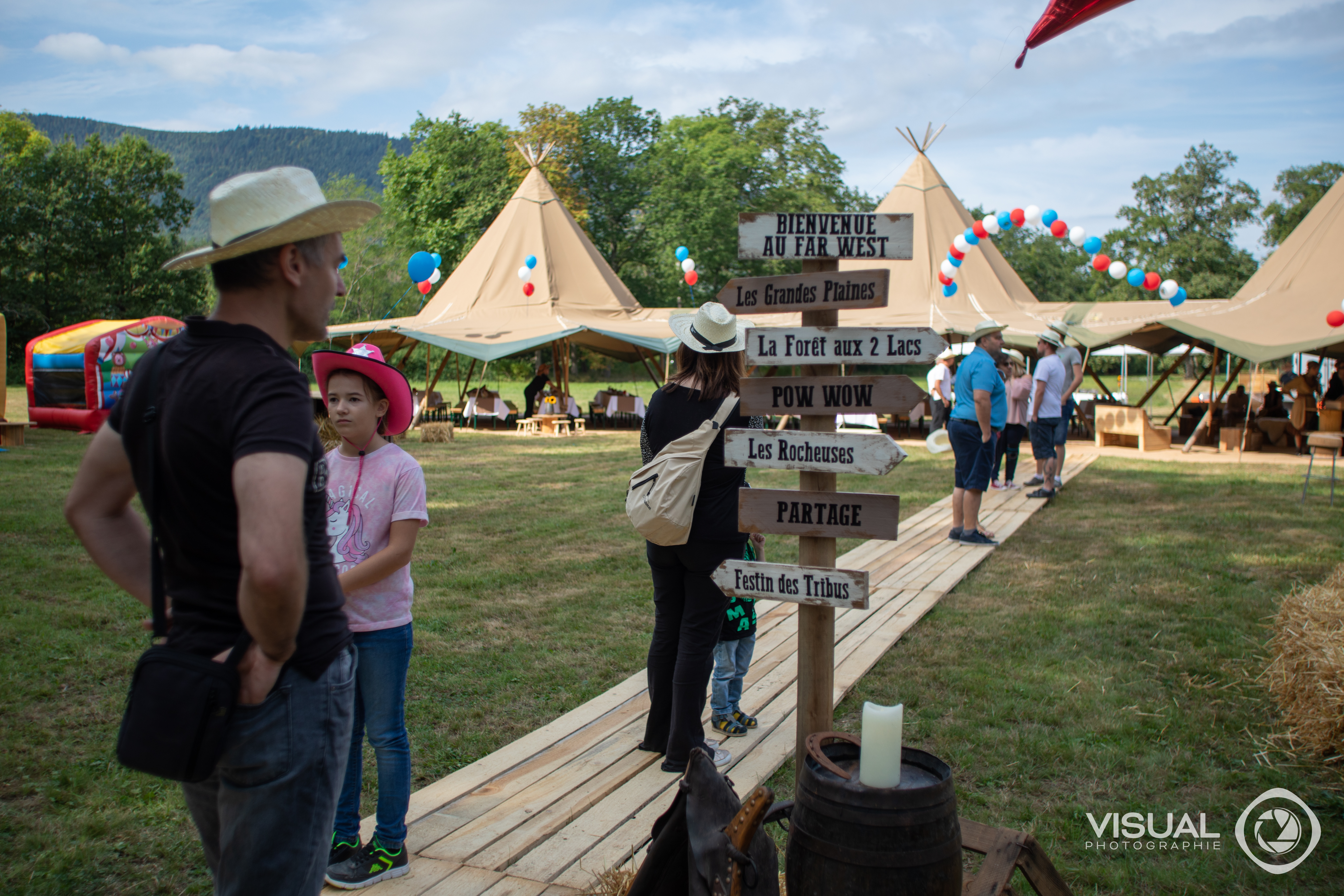
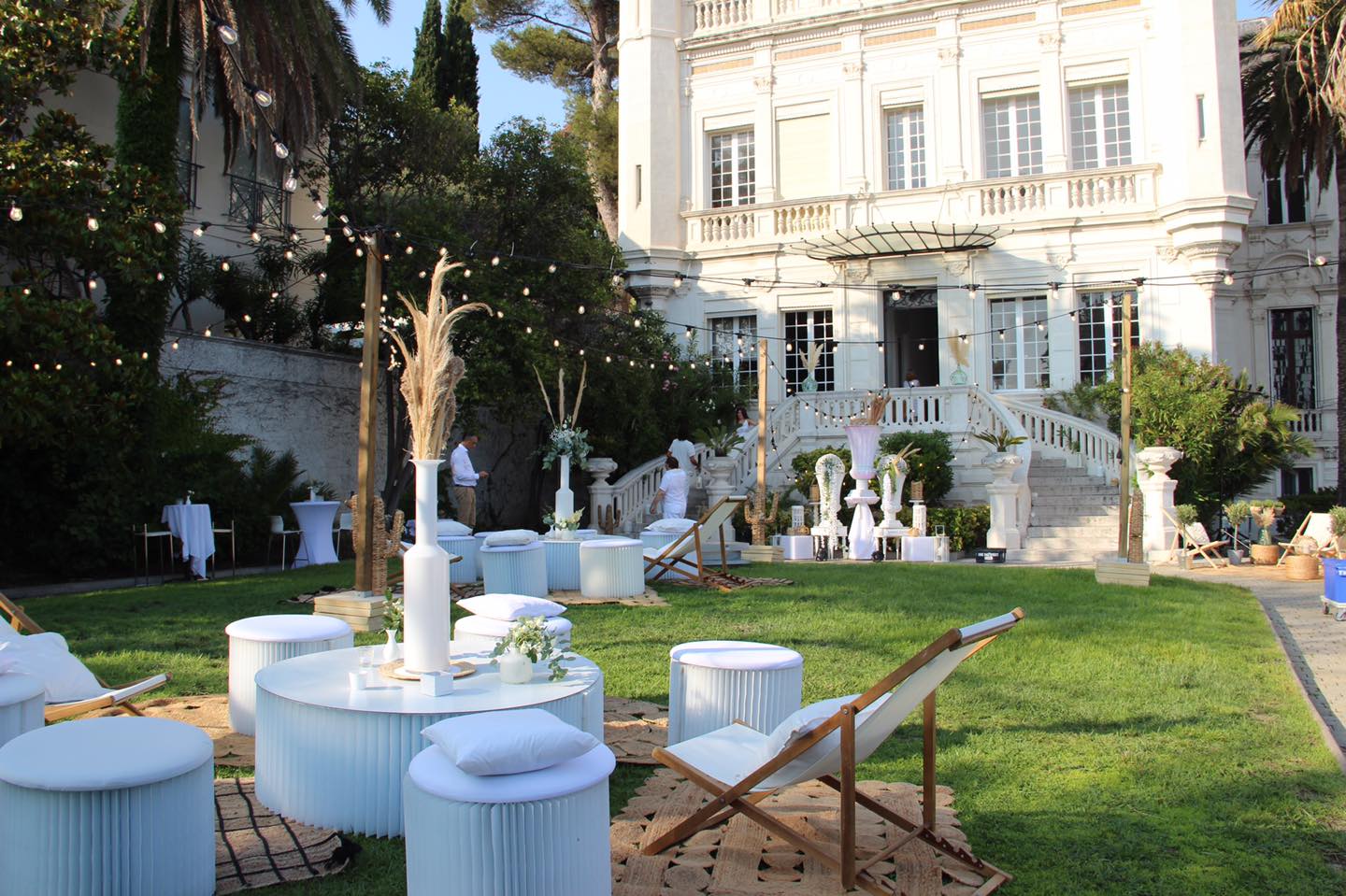
INNOV'events in numbers for Barcelona decision-makers
12+ years delivering corporate events across Spain, with recurring programs in Catalonia.
200+ corporate events/year within our network, enabling fast access to vetted suppliers and backup options.
48–72 hours typical turnaround to propose a first venue + budget shortlist for a Corporate Garden Party in Barcelona (depending on date constraints).
1 single project lead accountable from brief to show-calling, with an escalation path for procurement and compliance.
How to organize a professional event in Barcelona?
- Define the objective (cohesion, announcement, fidelity, performance).
- Set date, format and size (20–1 000 people).
- Secure the venue and accommodation according to seasonality.
- Lock down technical, suppliers and logistics.
- Drive the day J (timing, scene, entrance, flow).
Barcelona references and recurring clients you can verify
We support teams based in Barcelona and across Catalonia with recurring internal events, client gatherings, and leadership moments. Several accounts renew year after year because the operational pressure is real: once a date is announced internally, there is no room for improvisation on access, catering timing, sound limits, or VIP protocol.
To keep this page accurate: you mentioned you had specific company names to include as references, but they were not provided in your message. If you share the list (or the sectors you want to highlight), we will integrate them exactly as requested, in a discreet and compliant way (e.g., “global tech HQ in 22@”, “industrial group with offices near Zona Franca”)—and we can align the wording with your legal/communications constraints.
In the meantime, what we can say confidently is that our Barcelona work frequently involves HR and Internal Comms teams coordinating with leadership calendars, union/works council considerations, and tight availability for outdoor venues in peak season. Our role is to reduce their workload while keeping decisions auditable for procurement.
We send you a first proposal within 24h.
Why plan a Corporate Garden Party in Barcelona for leadership goals?
A Corporate Garden Party is often chosen when companies want the sociability of an informal moment without losing control over brand image and messaging. Done well, it supports culture and retention; done poorly, it becomes a cost line with low engagement. The difference is the structure behind the “relaxed” format.
Strengthen culture without forcing it: garden-party formats make it easier for teams to mix across functions (especially after reorganizations, mergers, or rapid hiring), because the environment is less hierarchical while still curated.
Increase participation and reduce drop-off: by combining arrival flow, short programmed highlights (10–12 minutes), and continuous micro-activations, guests feel there is “always something to do” without being stuck in a show.
Support employer brand with concrete signals: quality of catering, sustainability choices, and accessibility are noticed immediately by employees and invited candidates—more than a generic speech about values.
Create safe space for leadership visibility: executives can circulate, deliver brief remarks at the right moment, and host key stakeholders—without the stiffness of a seated gala.
Protect internal teams’ time: HR and Comms typically carry the burden of invitations, dietary needs, and last-minute changes. A robust vendor + run-of-show structure prevents the “day-of firefighting” that drains internal credibility.
Barcelona has a strong business events culture and high expectations in hospitality. A garden party here is not judged only on ambiance; it is judged on execution: arrival management, neighborhood compliance, and the ability to deliver an international-level experience with local pragmatism.
What Barcelona companies expect from outdoor corporate events
Local expectations tend to be practical and non-negotiable. Teams in Barcelona commonly ask us to secure venues with clear outdoor permissions, predictable access for suppliers, and a realistic Plan B that does not downgrade the event if weather shifts. Many have lived through “we’ll figure it out” setups that ended with rushed indoor moves, catering bottlenecks, or noise complaints.
From a communications standpoint, Barcelona audiences are sensitive to authenticity. Overly staged entertainment can feel disconnected; what works better is curated, well-produced, but discreet programming—so people can network. From an HR standpoint, dietary inclusivity and queue management are decisive: if guests wait 20+ minutes for food or drinks, your engagement drops instantly.
Operationally, the city can be demanding: limited loading windows, strict parking rules in some zones, neighbors close to terraces, and variable microclimates between seaside and inland areas. This is why we build technical specs early (sound, lighting, power distribution, flooring for lawns) and confirm supplier logistics with written call times and access maps.
Which corporate event entertainment works best in Barcelona gardens?
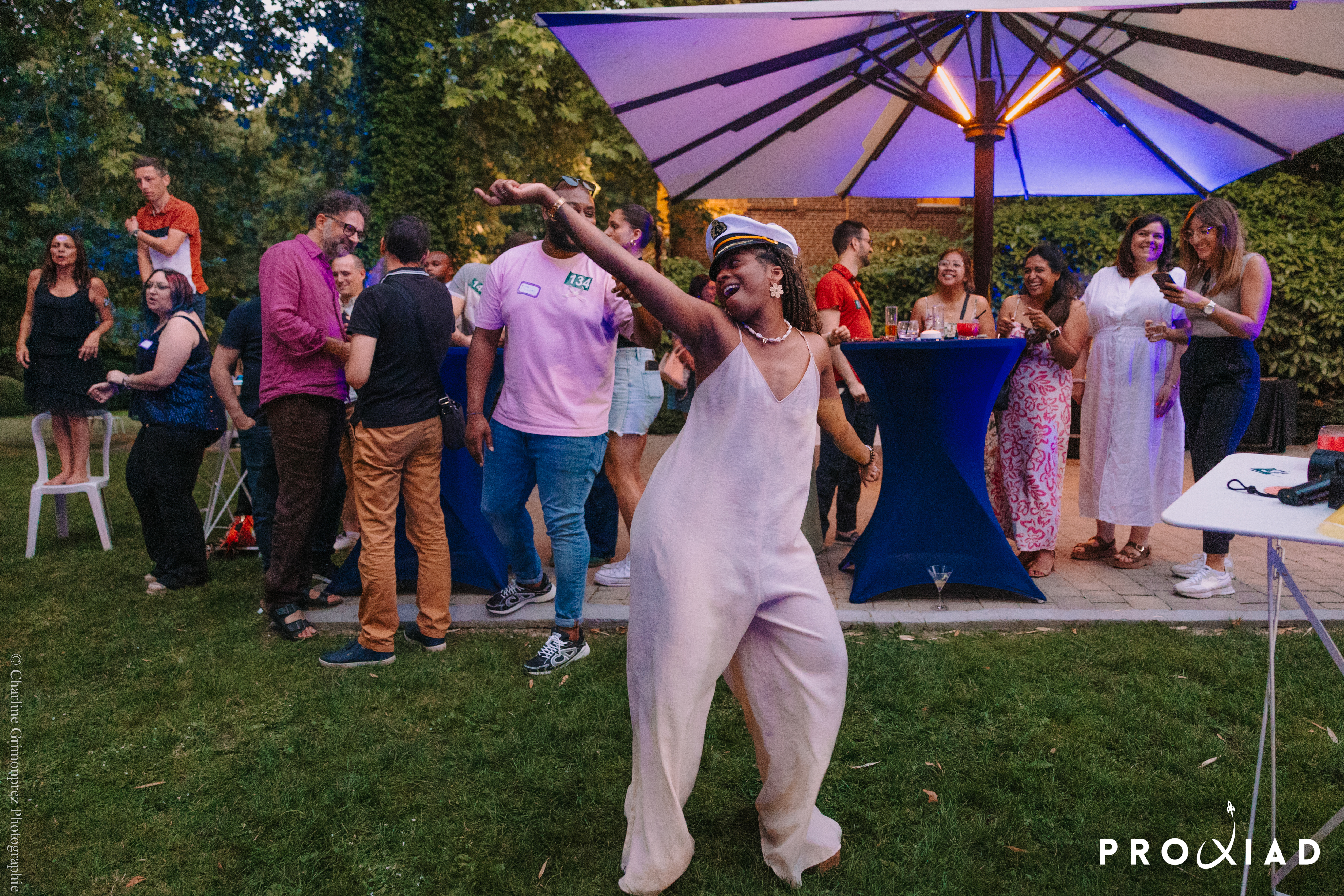
Entertainment should support interaction, not compete with it. In a Corporate Garden Party, we typically favor “continuous” formats: multiple points of interest that guests can approach at their own pace. This is how you avoid the common issue of people clustering in one area while other zones feel empty.
Interactive animations in Barcelona
Guided tastings with short rotations: vermouth or olive oil tastings in Barcelona-style format, run in 8–10 minute loops so people can join without committing to a long workshop.
Photo + content corner with brand control: a discreet set with professional lighting and on-brand framing. We recommend moderated sharing (QR gallery) rather than pushing social posts, especially for internal events where privacy matters.
Networking facilitation for large groups: color-coded badges by business line, “host” staff introducing newcomers, and structured prompts. This works particularly well after acquisitions where teams don’t yet know each other.
Low-friction games that don’t feel childish: pétanque-style setups, table football, or lawn games with a premium finish. We position them away from speech areas to keep sound and attention under control.
Art animations in Barcelona
Acoustic roaming musicians: ideal for terraces and gardens with noise constraints. They create atmosphere without forcing guests to stop networking.
DJ set with controlled SPL: we implement sound zoning and a schedule (ambient early, stronger later), aligned with venue and neighborhood rules.
Short-format performance slots: 7–12 minutes maximum, placed at natural peaks (after welcome drink, before dessert). This avoids the “everyone sits and disengages” effect.
Innovative animations in Barcelona
Live cooking stations designed for throughput: paella or plancha can be visually attractive, but we size the station count to avoid queues. For 300 guests, we often plan 3–5 distribution points depending on menu complexity.
Signature non-alcoholic bar: important for inclusivity and duty of care. We see better satisfaction scores when mocktails are treated as premium, not as an afterthought.
Dessert and coffee timing: in Barcelona events, many guests leave earlier due to commuting. Position dessert earlier (or offer “grab-and-go”) if your audience is office-based.
Gourmand animations in Barcelona
Silent disco for noise-sensitive areas: keeps energy high while protecting neighborhood relations—useful in certain urban venues.
Data-driven engagement: a lightweight QR interaction (polls, questions to leadership, raffle) with GDPR-safe collection and a clear purpose. We recommend it when Internal Comms wants measurable engagement without turning the event into a tech demo.
Micro-storytelling about your strategy: instead of long speeches, we propose “strategy stations” where leaders host 10-minute cycles (two key messages + Q&A). This is effective for transformation programs.
Whatever the entertainment mix, we align it with your brand image and internal culture: a regulated bank does not need the same tone as a creative scale-up in 22@. The goal is coherence—so the event feels intentional, not like a catalog of activities.
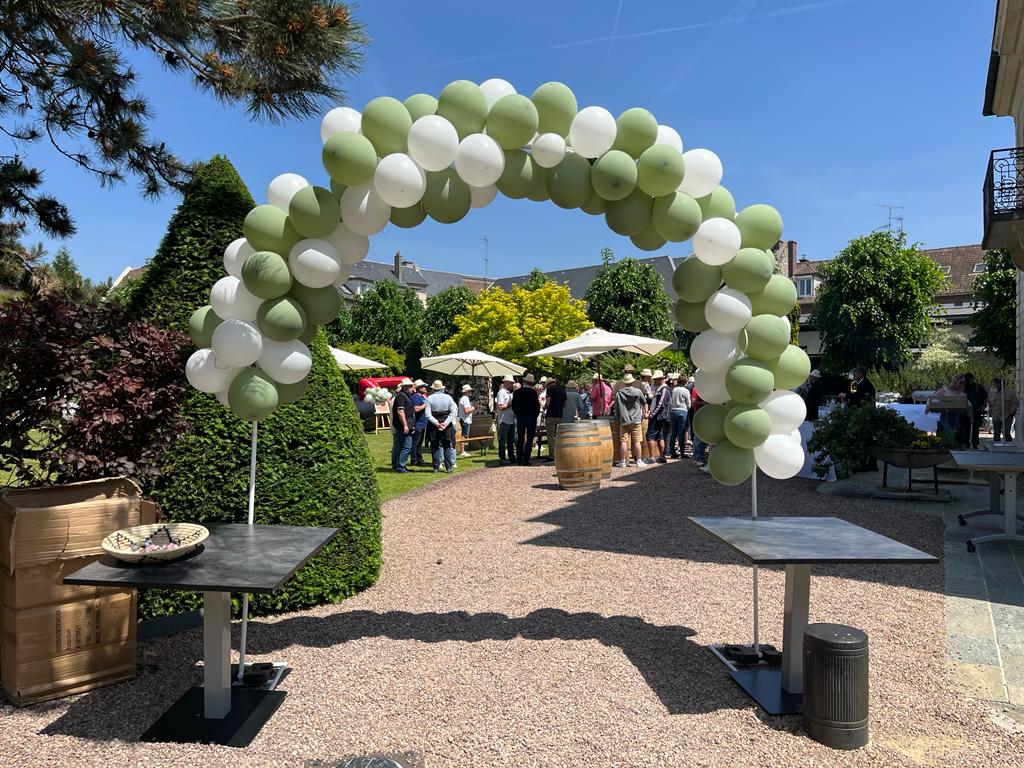
How to choose a Barcelona venue for a Corporate Garden Party
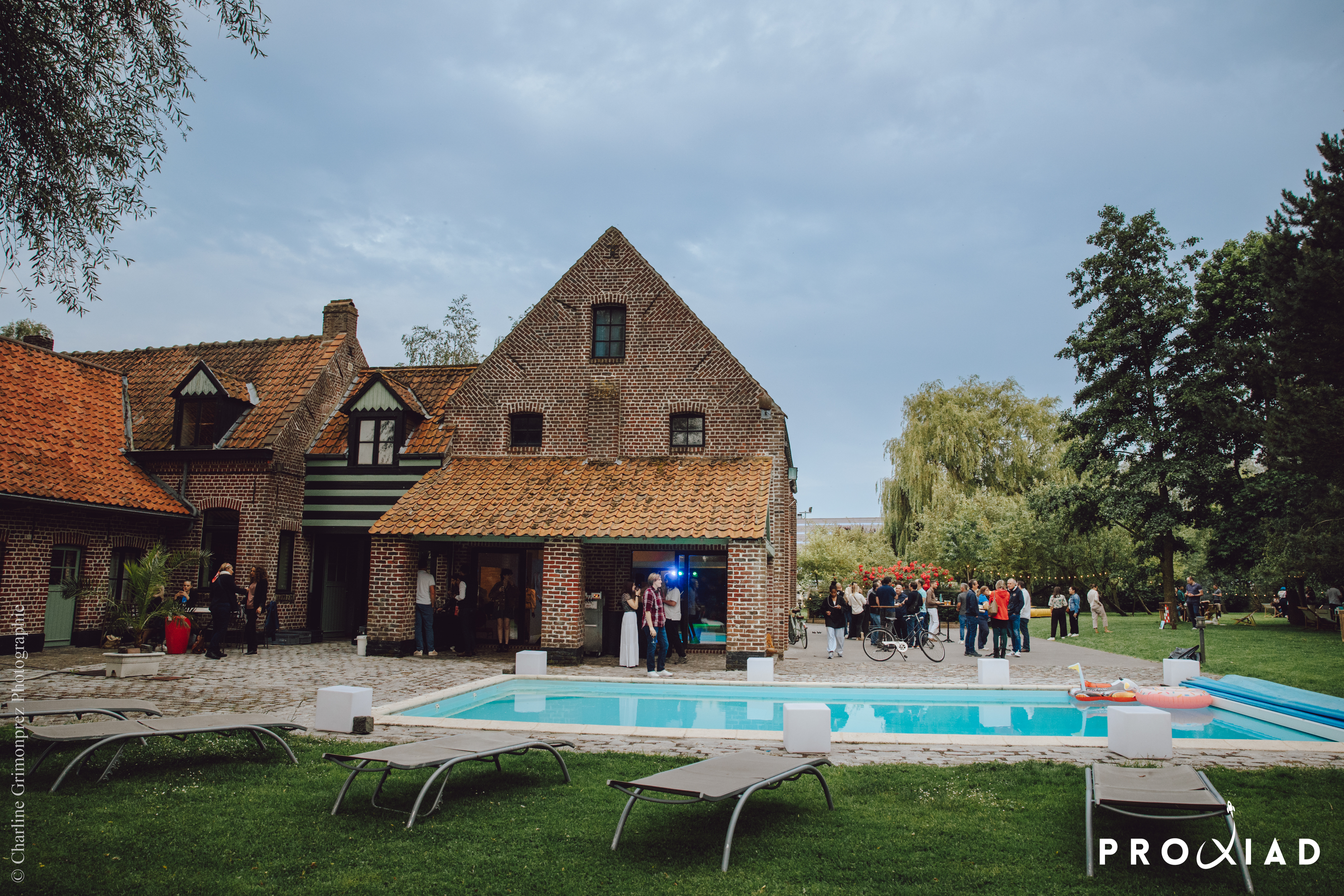
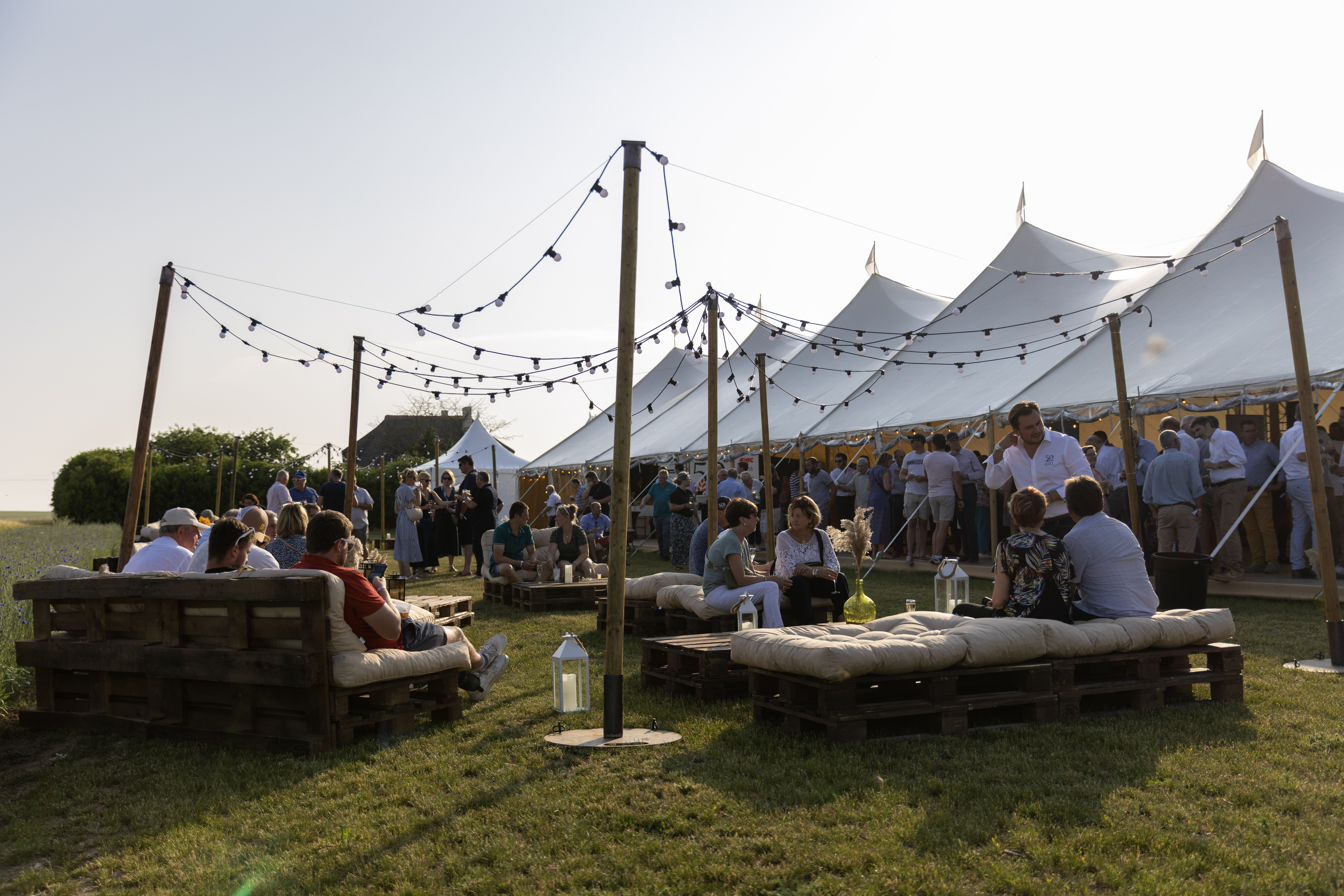
The venue is not just a backdrop; it dictates guest flow, technical feasibility, and perceived level. In Barcelona, availability and permitting can be the main constraints, especially in spring and early summer. We shortlist venues based on access, sound constraints, indoor fallback capacity, and catering infrastructure—not only aesthetics.
| Venue type | For which objective? | Main strengths | Possible constraints |
|---|---|---|---|
| Urban terrace / rooftop with garden zones | Client cocktail, partner evening, leadership visibility with skyline appeal | Strong perceived value, easy access, good for 80–250 guests, natural photo angles | Sound limits, wind exposure, strict load-in schedules, limited Plan B capacity |
| Private garden at a boutique hotel | HR celebration, awards, mixed audience requiring comfort and services | Restrooms and staff on site, easier catering logistics, better weather fallback options | Higher F&B minimums, branding restrictions, guest privacy depending on hotel layout |
| Masia / countryside finca near Barcelona | Company summer party, family day, longer program with multiple zones | Space for staging, parking options, fewer neighbor issues, flexible zoning | Transfers needed, longer supplier setup, must plan shade/heat and accessibility |
| Corporate courtyard / HQ outdoor space | Cost control, culture-building on-site, easier attendance for employees | Maximum brand control, no transport complexity, good for “after-work” formats | Need permits/neighbor alignment, power and flooring may be insufficient, stricter security planning |
We strongly recommend a site visit with the agency and key suppliers before signing: you can validate real loading paths, power availability, and guest circulation in 20–30 minutes. This is where most “surprises” are eliminated.
What budget to plan for a Corporate Garden Party in Barcelona
Budget for a Corporate Garden Party in Barcelona is driven by guest count, venue conditions, and the level of production—not by “the concept”. We build budgets that procurement can review: clear line items, options, and identified risks.
As a working range, many corporate garden parties land between €90 and €220 per person all-in, depending on catering style (seated vs cocktail), venue exclusivity, entertainment, and technical requirements. For large formats (800–1,500+), per-person can decrease but production and staffing become more complex.
Venue model: rental fee vs minimum spend, exclusivity, curfew, and included furniture.
Catering and service design: cocktail vs food stations vs hybrid, number of bars, glass policy, and dietary coverage.
Technical production: sound zoning, lighting for gardens, staging, power distribution, and weather protection (tents, flooring).
Compliance and safety: security staff ratios, access control, insurance requirements, and any permits depending on the location.
Entertainment scope: acoustic trio vs DJ + stage, number of activation points, rehearsal needs, and show-calling.
Transport: shuttles to fincas, parking management, and accessibility planning.
Branding and content: signage, photobooth/gallery, video recap, and corporate protocol support for leadership.
We frame ROI in operational terms: participation rate, internal satisfaction feedback, leadership visibility, and reduced internal workload. A well-produced garden party protects your brand and saves hidden costs (overtime, last-minute rentals, crisis management) that appear when planning is too light.
Why hire an event agency in Barcelona for outdoor formats
Outdoor events are where local execution matters most. An agency established in Barcelona reduces risk because we work with the city’s realities weekly: restricted access streets, venue-specific rules, trusted caterers who can scale, and technicians who know the acoustic constraints of terraces and gardens.
If you are comparing partners, a practical test is simple: ask how they will secure Plan B without downgrading the experience, how they calculate bar and staffing ratios, and how they manage sound limits with neighbors. These answers require local experience—not generic event planning.
As event agency in Barcelona, we also provide speed: shortlisting venues quickly, arranging site visits, and obtaining written confirmations from suppliers. This is critical when your preferred dates are already under pressure (May–July and September are particularly competitive).
- Vetted local supplier pool: partners we have tested on punctuality, service discipline, and quality under pressure.
- Operational anticipation: access maps, loading schedules, and contingency planning aligned with Barcelona constraints.
- On-site responsiveness: local teams available for last-minute inspections, tastings, and stakeholder walkthroughs.
- More accurate budgeting: fewer “surprise” add-ons because we know what venues truly require (power, flooring, security, curfew).
We frame ROI in operational terms: participation rate, internal satisfaction feedback, leadership visibility, and reduced internal workload. A well-produced garden party protects your brand and saves hidden costs (overtime, last-minute rentals, crisis management) that appear when planning is too light.











Examples of Corporate Garden Party delivery in Barcelona contexts
Our projects in Barcelona vary because corporate realities vary. We regularly deliver: after-work garden parties for headquarters teams; client appreciation evenings requiring controlled brand presence; and internal summer celebrations where HR priorities include inclusivity, safety, and predictable timing.
Typical scenarios we manage include: leadership asking to add a message at the last minute (we protect audio and timing), sudden attendance changes due to business travel (we adjust catering numbers within negotiated deadlines), and mixed language audiences (we plan bilingual signage and a run-of-show that avoids confusion).
We also handle the less visible work that protects your day: ensuring the caterer’s kitchen plan matches the venue’s power and water points, placing bars to prevent queues, confirming security and access control when partners are invited, and coordinating the teardown so your venue relationship stays intact for future years.
Mistakes to avoid for a Corporate Garden Party in 08
Underestimating Plan B: “We’ll move inside if it rains” is not a plan unless indoor capacity, furniture, and technical needs are validated in writing.
Designing entertainment that blocks networking: a central show can freeze circulation; in garden parties, distributed activations usually work better.
Creating food/drink bottlenecks: too few bars or stations leads to queues and immediate negative perception—especially in the first hour.
Ignoring sound and neighborhood constraints: complaints can force volume cuts or early shutdown. We manage zoning, timing, and venue rules upfront.
No single owner of the run-of-show: when multiple vendors “coordinate themselves”, timing drifts and speeches suffer. One show-caller must be accountable.
Not aligning with internal stakeholders: HR, Comms, Facilities, and Security often have conflicting priorities. If not aligned early, day-of decisions become political.
Our role is to prevent these risks through documented planning, supplier discipline, and on-site control—so your teams can host confidently instead of troubleshooting.
Why Barcelona clients renew with INNOV'events
Clients come back when the agency protects them from operational stress and reputational exposure. In recurring programs, the real KPI is not creativity; it is reliability across years despite changing internal stakeholders and business constraints.
Multi-year renewals are common when we manage a consistent supplier ecosystem and keep budgets predictable from one edition to the next.
Reduced internal workload measured by fewer meetings and fewer day-of escalations, thanks to a single accountable project lead and clear approvals.
Higher participation stability when formats are engineered for flow (arrival, catering, program rhythm) rather than built around a single performance.

Loyalty is earned on the details: call times respected, bars that never run dry, speeches heard clearly, and a Plan B that feels like Plan A. That is the standard we deliver in Barcelona.
Our Barcelona delivery process from brief to show-calling
👉 Step 1 (Barcelona): Clarify objectives, constraints, and decision process
We run a structured kickoff with HR/Comms and the sponsor: objective, audience segments, desired tone, brand rules, dietary policies, and success criteria. We also map your internal approval chain (procurement, legal, facilities, security) to avoid late blockers.
Deliverable: a written brief summary + initial assumptions (guest count, date flexibility, required zones, Plan B expectations).
👉 Step 2 (08): Venue shortlist with technical reality checks
We propose a shortlist with clear pros/cons: access, curfew, neighbor constraints, indoor fallback, and cost model. For each venue type we include the production implications (power, flooring, sound zoning) and a first layout recommendation.
Deliverable: venue comparison + budget scenarios (base / recommended / enhanced).
👉 Step 3 (Barcelona): Supplier sourcing and contract control
We lock catering, technical production, entertainment, furniture, and security based on service-level expectations. We negotiate cut-off dates for headcount, define what is included vs optional, and set escalation rules for event day.
Deliverable: consolidated production budget with line items and responsibilities (RACI-style), ready for procurement review.
👉 Step 4 (08): Run-of-show, layouts, and contingency planning
We produce the operational pack: minute-by-minute run-of-show, zone maps, technical riders, access/loading plan, staffing plan, signage plan, and weather contingencies. We coordinate a site visit with key vendors to validate feasibility.
Deliverable: final production book approved by you and the venue.
👉 Step 5 (Barcelona): Event day production and post-event wrap-up
On the day, our team leads setup, vendor coordination, and show-calling. We protect leadership from operational interruptions, manage guest flow, and monitor service timing. After teardown, we run a post-event debrief with budget closure and improvement points for future editions.
Deliverable: wrap-up report (attendance confirmation, incidents if any, supplier feedback, and recommendations).
FAQ sobre la organización Corporate Garden Party en Barcelona
How far in advance to book a Barcelona garden venue?
For peak season (May–July, September), plan 8–16 weeks ahead for strong venue choice. For premium rooftops and high-demand gardens, 4–6 months is safer. Off-peak, 4–8 weeks can work depending on guest count.
What is a realistic budget per person in Barcelona?
Most corporate garden parties fall between €90 and €220 per person all-in. Lower end usually means simpler venues and lighter production; higher end includes premium venues, upgraded catering, more staff, and technical elements like lighting, staging, and weather protection.
How do you handle rain risk for outdoor events in 08?
We validate a Plan B that keeps the experience consistent: indoor capacity, furniture plan, technical repositioning, and a decision deadline (often 24–48 hours prior). If needed, we cost an “insurance” setup (tenting/flooring) versus a full indoor transfer.
Which entertainment works best for executives in Barcelona?
Formats that protect conversation: acoustic roaming music, discreet tasting stations, and short performance slots (7–12 minutes). For executive audiences, we avoid high-volume entertainment early and prioritize comfort, service speed, and controlled messaging moments.
What guest count is ideal for a Corporate Garden Party in Barcelona?
Common formats are 80–300 guests for rooftop/hotel gardens and 300–1,500+ for larger fincas or multi-zone venues. The “ideal” number depends on the space’s usable outdoor m², bar/station count, and whether you want dense networking or more relaxed circulation.
Get a Barcelona quote with a clear plan and controllable risk
If you are preparing a Corporate Garden Party in Barcelona, involve us early—before venues and key suppliers are locked. We will come back with a venue shortlist, a realistic budget range, and a production approach that procurement and leadership can approve.
Share your target date(s), estimated attendance, audience type (internal / clients / mixed), and any brand or compliance constraints. We will respond with concrete options and the trade-offs behind each one, so you can decide quickly and confidently.
INNOV'events Barcelona Agency
Cyril Azevedo is the manager of the INNOV'events Barcelona office. Reach out directly by email at cyril@innov-events.es or via the contact form.
Contact the Barcelona agencyAll our services & entertainment Barcelona
Discover our event services
Discover our event entertainment available in the España
- Event Hostess Barcelona
- Escape Game Barcelona
- MasterChef Cooking Workshop Barcelona
- Magician Barcelona
- Marquee Rental Barcelona
- Color Analysis Workshop Barcelona
- Inflatable Games Barcelona
- Valet Parking Service Barcelona
- Football Simulator Barcelona
- LED Furniture Rental Barcelona
- Light Branding Barcelona
- Unique Dining Experience Barcelona
- Light Painting Barcelona
- Murder Mystery Party Barcelona
- Prize Contest Barcelona
- Promotional Displays (POS) Barcelona
- Virtual Reality Barcelona
- Molecular Gastronomy Workshop Barcelona
- Halloween Entertainment Barcelona
- Fireworks Show Barcelona
- Giant Games Challenge Barcelona
- Event Host / MC Barcelona
- Photo Booth Animation Barcelona
- Santa Claus Entertainment Barcelona
- Kids Entertainment Barcelona
- Guided Tour Barcelona
- Urban Rally Barcelona
- Ball Pit Barcelona
- Flight Simulator Barcelona
- Food Truck Rental Barcelona
- World Record Challenge Barcelona
- Surf Simulator Barcelona
- Wine Casino Barcelona
- Makeover Workshop Barcelona
- Perfume Creation Workshop Barcelona
- Acting Workshop Barcelona
- CSR Activities Barcelona
- Archery Barcelona
- Security Staff Barcelona
- Wine Tasting Barcelona
- Mime Performer Barcelona
- TV Game Show Barcelona
- Funfair Barcelona
- Crisis Management Workshop Barcelona
- Crisis Negotiation Workshop Barcelona
- Arcade Games Barcelona
- Indoor Skydiving Simulator Barcelona
- Ski Simulator Barcelona
- Racing Circuit Experience Barcelona
- Introductory Flight Experience Barcelona
- Tasting Experience Barcelona
- Build Your Own Foosball Workshop Barcelona
- 2CV Rally Barcelona
- LEGO Challenge Barcelona
- Casino Night Barcelona
- Interpreter / Translator Barcelona
- Promotional Giveaways Barcelona
- Shuttle Transport Barcelona