
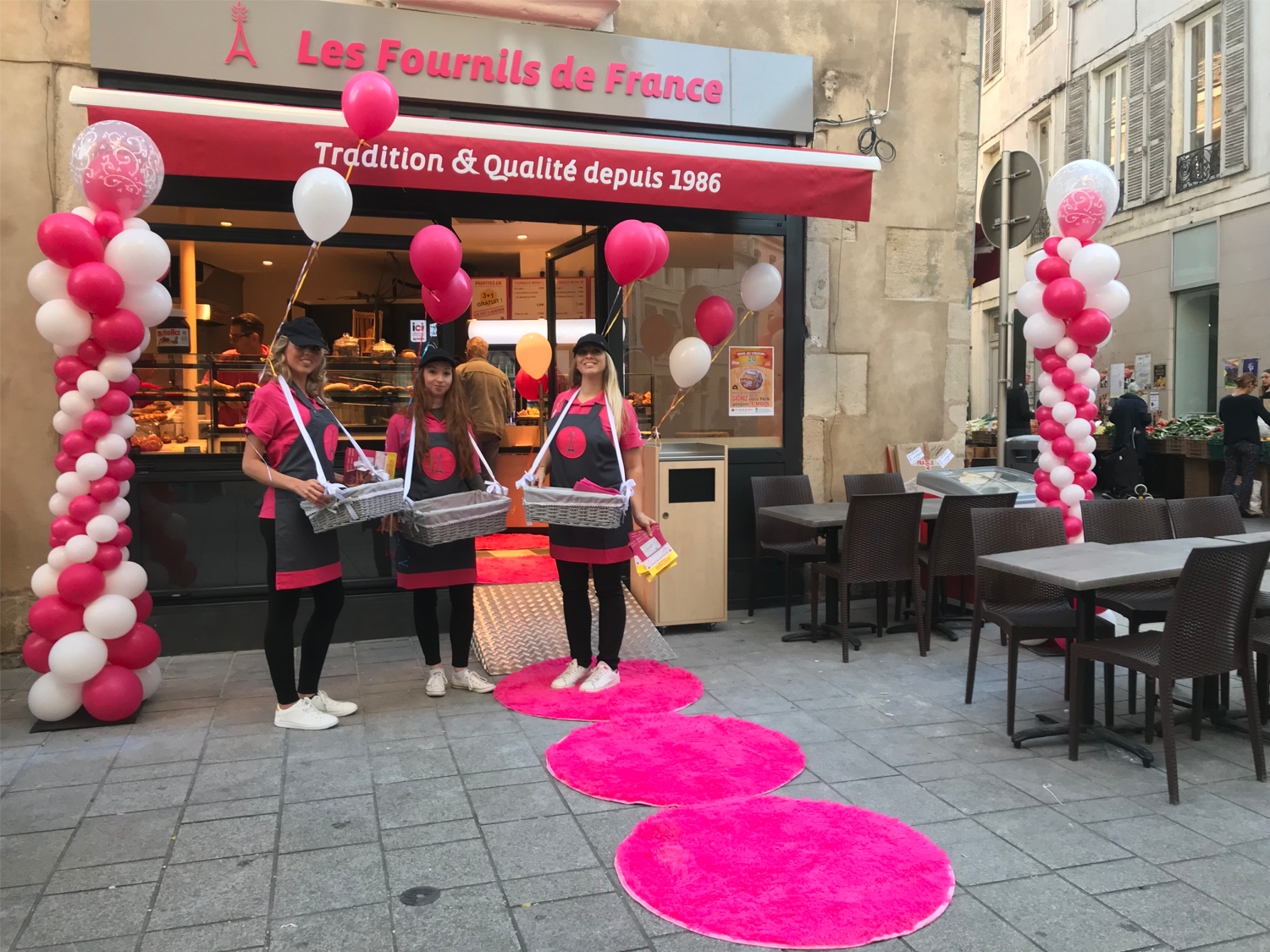
Street Marketing in Madrid that drives measurable footfall and brand trust
INNOV'events delivers Street Marketing activations in Madrid for corporate brands, HR teams and communications departments, typically designed for 500 to 50,000+ daily impacts depending on the location and format. We handle permits, production, staffing, security and reporting—so your team can focus on the message and the business outcome.
From a single-day pop-up to a multi-week route across districts, we build street operations that are compliant, on-brand and easy to defend internally with clear KPIs.
Table of contents
For executives, Street Marketing in Madrid is not “animation”; it is a field channel that can accelerate awareness, lead capture or store traffic when digital saturation is high and time-to-impact matters. When the activation is well engineered, it becomes a controllable moment of brand experience with measurable reach, conversion and sentiment.
Local organisations in Madrid expect operational seriousness: discreet but visible set-ups, teams that represent the brand properly, and zero surprises with permits, sound levels, or pedestrian flow. Communication and HR also need a format that aligns with internal policies (data privacy, sustainability, inclusion) while still creating public traction.
At INNOV'events, we work on the ground with trusted local suppliers and team leaders who know the rhythm of Madrid streets, peak hours, and the constraints of each district. We plan with realistic timings, contingency options and a reporting approach that makes sense for a boardroom debrief.
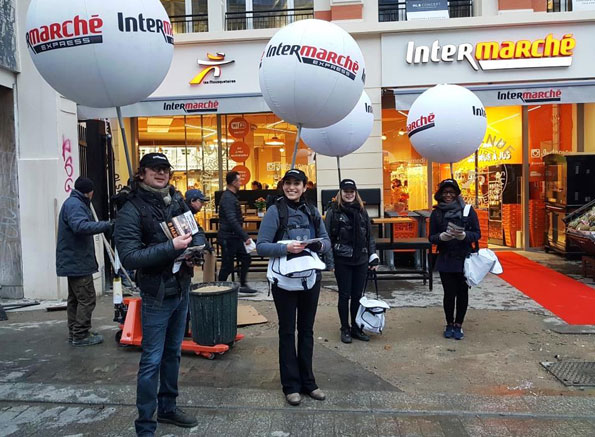
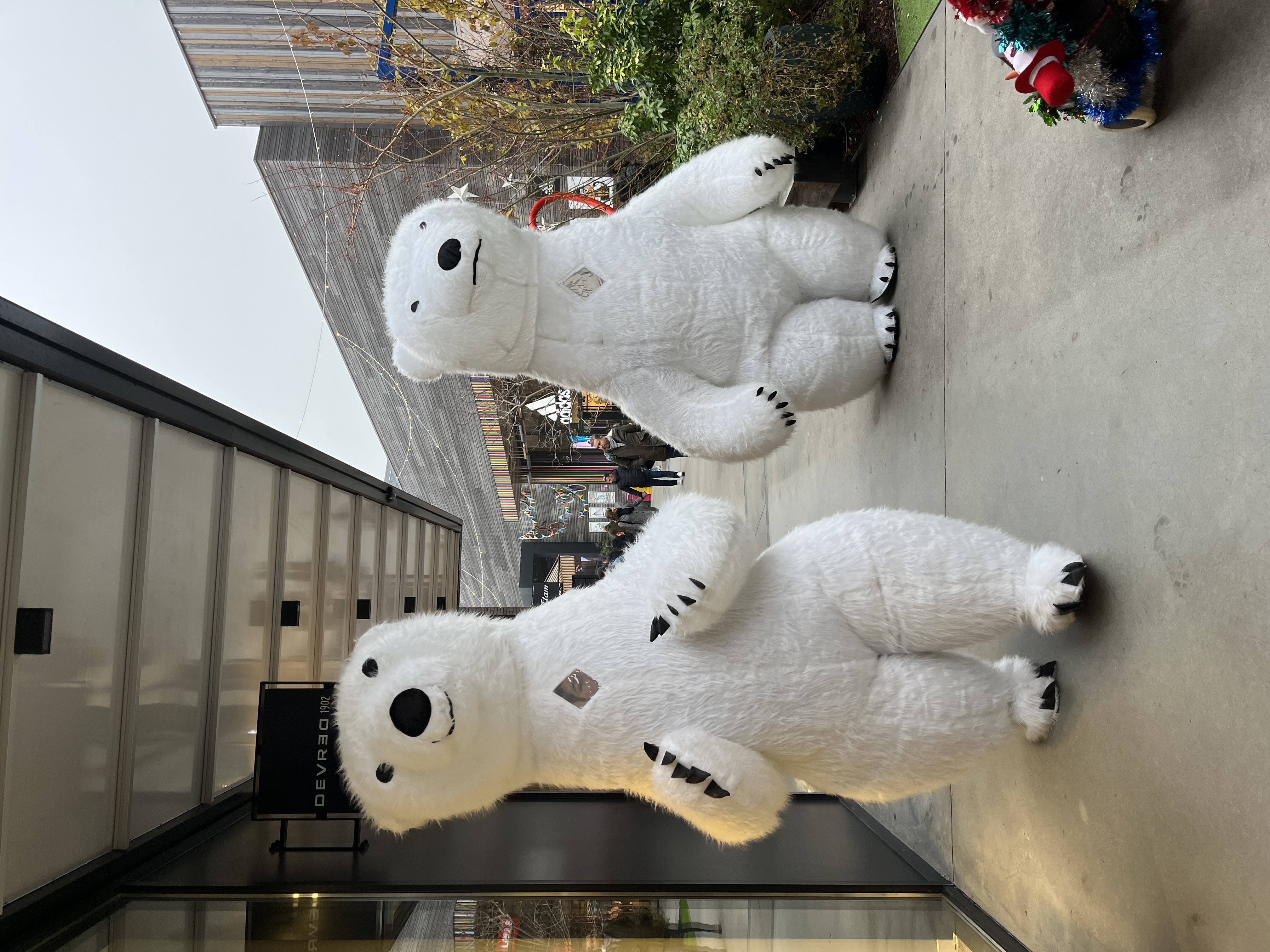
Operational proof points for Madrid decision-makers
10+ years delivering corporate activations and brand experiences across Spain, with repeat programmes in major cities.
150+ trained field staff in our extended network (brand ambassadors, team leaders, logistics runners, supervisors) available depending on seasonality and campaign scale.
48–72h typical turnaround to present a first operational concept with route options, staffing model and initial budget ranges (subject to permit complexity).
0 compromise on compliance: documented briefings, on-site supervision and incident logs to protect brand image and stakeholder confidence.
How to organize a professional event in Madrid?
- Define the objective (cohesion, announcement, fidelity, performance).
- Set date, format and size (20–1 000 people).
- Secure the venue and accommodation according to seasonality.
- Lock down technical, suppliers and logistics.
- Drive the day J (timing, scene, entrance, flow).
References and recurring collaborations around Madrid
In Madrid, many of our projects come from communication teams who need reliable execution and HR leaders who cannot risk reputational issues in public space. Several clients return year after year because they have experienced the difference between a “nice idea” and a properly managed street operation: the latter withstands pressure, last-minute changes and complex approvals.
We routinely collaborate with multi-site retailers, professional services firms, tech scale-ups and industrial groups with headquarters in Madrid or with a strategic presence in the region. Typical recurring scenarios include annual hiring pushes, product launches timed with trade fairs at IFEMA, and internal culture campaigns extended into the street to signal employer branding.
If you shared a list of reference company names, we can integrate them here as explicit local proof points (only with your approval and respecting confidentiality where needed). In the meantime, we can provide anonymised case summaries during the pitch: sector, objectives, route, staffing and KPIs.
We send you a first proposal within 24h.
Why run Street Marketing in Madrid for a business objective
When a brand chooses Street Marketing, the underlying reason is usually executive-level: compress the time between message and market reaction. In Madrid, where pedestrian density and commuting patterns create high opportunity windows, a well-placed activation can generate immediate attention and test a proposition faster than a media-only plan.
For HR and communications, the street is also a controlled “truth moment”: people meet the brand through your ambassadors, your tone of voice, your inclusivity standards and your operational discipline.
Faster market feedback: test messaging, offers or positioning in a single day through structured interactions (questions, micro-surveys, QR journeys) and compare by location/time slot.
Footfall and lead capture: drive traffic to a nearby store, pop-up, showroom or recruitment booth with clear attribution (unique QR, NFC tags, tracked landing pages).
Employer brand visibility: HR campaigns become tangible—particularly effective around university zones and business districts when you need qualified profiles quickly.
Reputation management through professionalism: a well-briefed team avoids the typical street risks (overly aggressive approach, blocking sidewalks, inconsistent brand messaging).
Internal alignment: executives appreciate formats that produce a dashboard: impressions (estimated), interactions (counted), leads (qualified), and qualitative insights (recurring objections, sentiment).
Cost control: compared with broad media, street operations can be scoped precisely (hours, staff count, route), and optimised quickly when early indicators show what works.
Madrid rewards brands that respect the city’s pace: efficient set-ups, courteous engagement and clear value for the public. When the activation is built with that mindset, it fits naturally with the capital’s business culture—results-driven, time-sensitive and reputation-conscious.
What Madrid stakeholders expect from a street activation
In Madrid, you can gain visibility quickly—but you can also lose control quickly if the operation is not engineered. The main local expectation is not creativity; it is smooth execution under real conditions: heavy pedestrian traffic, changing weather, tight sidewalks, and high sensitivity to noise or obstruction in specific zones.
Executives typically ask three questions: “Will it be compliant?”, “Will it reflect the brand properly?”, and “How will we measure success?”. HR adds: “Will we avoid any behaviour that could be perceived as intrusive?”. Communications adds: “Can we anticipate social media exposure—positive or negative?”.
We design around these realities with practical choices: time slots aligned with commuting peaks, clear engagement scripts that respect personal space, and formats that do not create crowding. We also plan for local operational friction: loading/unloading constraints, exact meeting points for staff, fallback indoor options near the route when feasible, and a strict chain of command (team leaders, supervisor, client contact).
Finally, Madrid audiences are diverse: tourists, commuters, residents, and international professionals. That impacts language choice, accessibility, and brand tone. We often plan bilingual ambassador coverage (Spanish/English) when the area suggests it, and we set quality controls so the experience is consistent across the whole team.
Which Street Marketing formats work best in Madrid today
Engagement in the street happens in seconds. The best formats are those that give the public a clear reason to stop without feeling trapped, while letting your brand collect a meaningful signal (visit, scan, opt-in, sample redemption). In Madrid, we prioritise formats that are fast, respectful of pedestrian flow and operationally clean.
Interactive animations in Madrid
Guided QR journey with live support: ambassadors invite people to scan a QR leading to a short landing page with a clear value (discount, appointment, content). We track scans by location and hour to optimise the route.
Micro-survey with instant result screen: a tablet-based 3-question survey (no personal data unless needed) producing an immediate visual output. Useful when executives need insights, not only reach.
Street-to-store missions: controlled challenges that direct to a nearby point of sale or pop-up. We use time-limited incentives and redemption codes to attribute results.
Recruitment touchpoints for HR: quick “role fit” quiz with a CTA to apply, combined with appointment scheduling. Works well when you need volume but also basic qualification.
Art animations in Madrid
Live illustration or calligraphy linked to your message: low-noise, high-perceived value content creation that people are willing to share. Operationally simple and brand-safe.
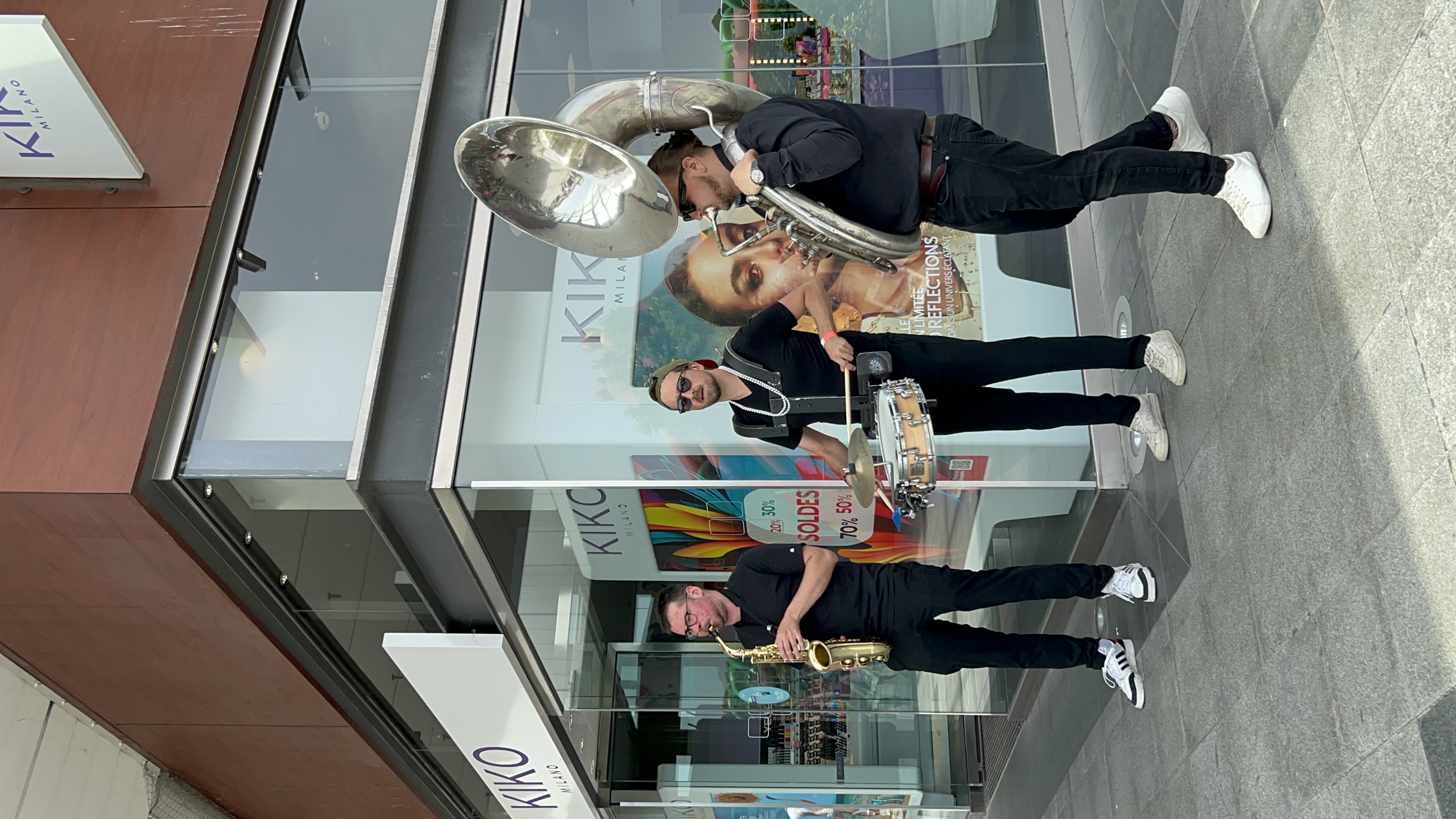
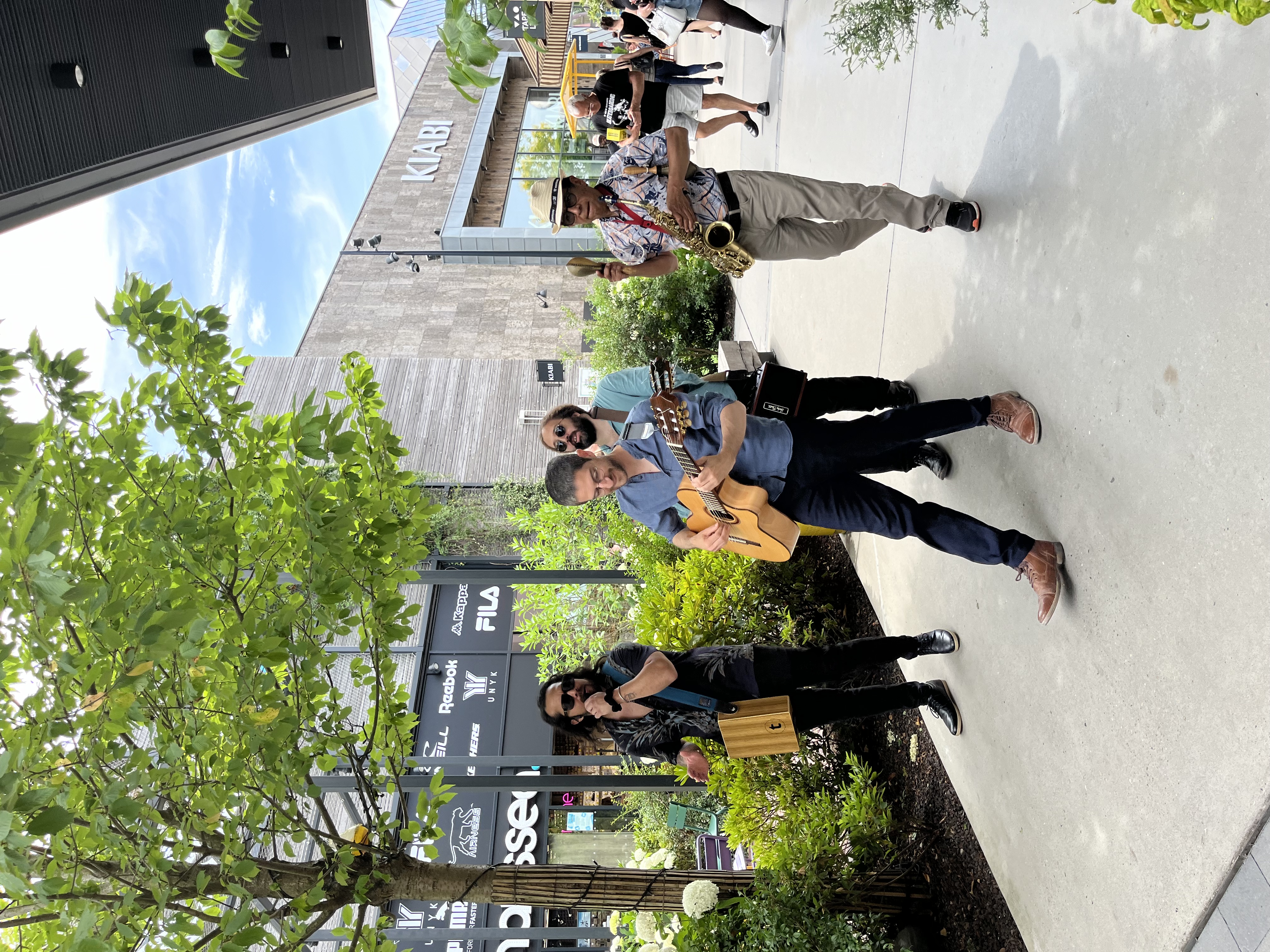
Small-format acoustic performance: when appropriate and permitted, designed to attract without generating crowding. We manage sound levels and positioning to avoid conflicts.
Choreographed brand moments: short, repeatable sequences (3–5 minutes) that create attention peaks without blocking traffic, coordinated with supervisors.
Innovative animations in Madrid
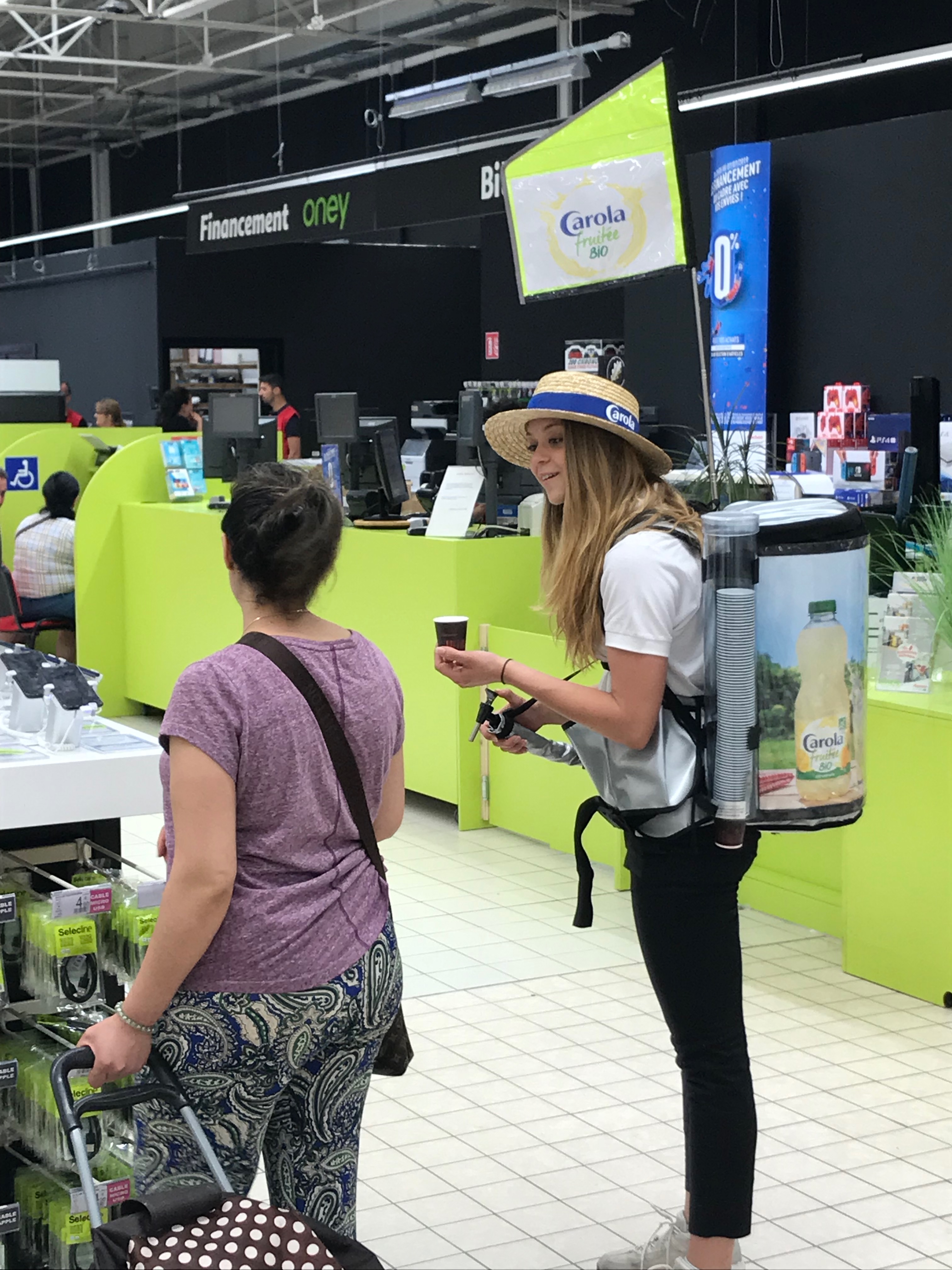
Controlled sampling with hygiene protocol: single-serve distribution, clear allergen info, waste management and replenishment plan. We plan exact volume (e.g., 1,000–8,000 units/day) based on staffing and time slot.
Partnered tasting points: integrate with a nearby venue for better control (storage, handwashing, waste). This reduces risk and increases conversion opportunities.
Gourmand animations in Madrid
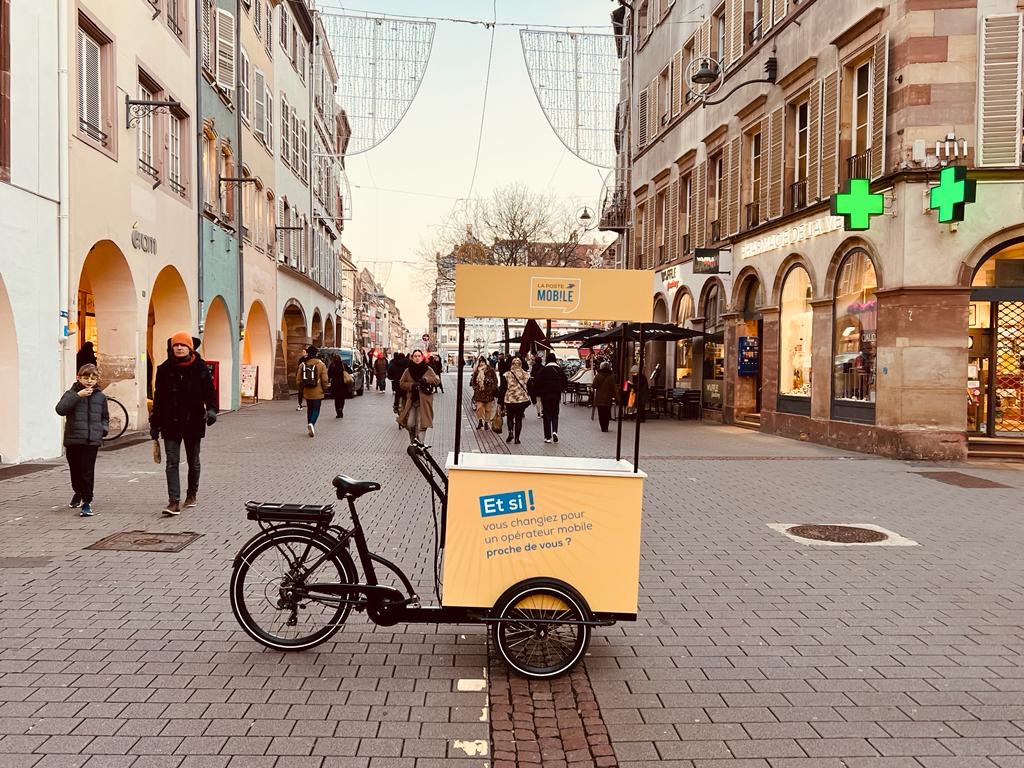
Mobile content unit: a compact rolling module for product demo, photo content or short interviews. Designed to be stable, fast to relocate and compliant with space constraints.
AR filter activation: people unlock an AR experience via QR, then share content. We link to measurable KPIs (shares, time on page, opt-ins) instead of relying on “buzz”.
Real-time optimisation: supervisor monitors interactions/hour and scan rate, and adjusts the micro-route or pitch. This is often the difference between average performance and a strong ROI.
Whatever the format, we align it with your brand image: tone of voice, inclusivity, sustainability commitments and risk tolerance. Street Marketing in Madrid is public by nature; the execution must be consistent with what your stakeholders already expect from your company.
How to choose the right Madrid locations for Street Marketing
The venue question in Street Marketing is really a location and flow question. In Madrid, two spots can be 10 minutes apart and produce completely different results depending on pedestrian intent (commuting vs leisure), space configuration, and enforcement sensitivity.
We help you select locations based on audience match and operational feasibility, not only “busy areas”. We also define what is permitted: sampling, structures, sound, filming, lead capture, and any brand visibility constraints.
| Venue type | For which objective? | Main strengths | Possible constraints |
|---|---|---|---|
High-footfall commercial streets | Awareness + rapid interaction volume | Strong pedestrian density; easy to A/B test messaging by time slot; good for sampling and QR scans | Space limitations; sensitivity to obstruction; permit complexity can increase; strict brand behaviour required |
Business districts and office corridors | B2B messaging, employer branding, event invitations | More qualified audiences at specific hours; higher acceptance of professional messaging; easier to drive to meetings | Peak-hour compression; engagement windows are short; needs a very concise pitch and premium materials |
Transport hubs and commuting nodes | Mass reach + fast call-to-action | Predictable peaks; high scan rates when CTA is simple; strong frequency opportunities for multi-day campaigns | Higher rules and security expectations; limited set-up time; careful staff positioning required |
University areas and training zones | Graduate recruitment, app adoption, youth-focused products | High engagement; good for interactive formats; peer sharing effect | Need inclusive tone; avoid aggressive capture tactics; schedule around exams and academic calendar |
We strongly recommend site visits and time-slot observation before locking the plan. In Madrid, a location that looks perfect at 12:00 can be unworkable at 18:30 due to flow, sunlight, noise, or enforcement patterns. A short recce often prevents costly redesigns.
What budget to plan for Street Marketing in Madrid
Budget for Street Marketing in Madrid depends on the operational footprint, not just the concept. A simple team of ambassadors handing out flyers has a different cost structure than a mobile unit with sampling, permits, supervisors and reporting. For corporate teams, we frame budget in a way that is easy to validate internally: what you pay for is control, compliance, staff quality and measurable output.
As realistic orientation, corporate activations in Madrid often start around €3,000–€6,000 for a small half-day or one-day presence (light production, small team), while multi-day, multi-location operations with branded structures, supervisors, data capture and content can range from €12,000–€60,000+. We confirm ranges after feasibility and permit requirements are assessed.
Staffing: number of ambassadors, team leaders, supervisors; shift length; bilingual requirement; training time; dress code and grooming standards.
Permits and compliance effort: administrative lead time, documentation, location restrictions, insurance requirements, and any district-specific conditions.
Production and branding: mobile units, counters, uniforms, print, props, weather-proofing, storage and transport.
Sampling and consumables: unit cost, volume (e.g., 1,000–10,000 units), cold chain if needed, allergen labelling, waste plan.
Data capture and measurement: landing pages, QR tracking, tablets, opt-in flows aligned with privacy standards, and reporting depth.
Content capture: photo/video team, releases where needed, shot list, editing, and delivery timeline for communications teams.
Risk management: contingency stock, replacement staff, weather plan, and on-site incident handling.
We always connect cost to return: expected interactions/hour, scan rate, lead volume, or store visits. This is the difference between a “street action” and an investment you can defend in an executive review.
Why choose a Madrid-based partner for Street Marketing
With public-space operations, proximity is not a comfort—it is a performance factor. A team that knows Madrid can anticipate constraints and react fast when reality deviates from plan (it often does). Local presence also improves supplier reliability, staff punctuality, and the ability to do quick recces without inflating costs.
If you are comparing agencies, look for concrete operational signals: do they propose a realistic route, identify permit risks early, and explain supervision and reporting? At INNOV'events, our approach is the same whether the activation is a modest employer branding push or a multi-location product roll-out: feasibility first, then creativity, then measurement.
For broader support beyond street activations, our teams also cover corporate experiences through our event agency in Madrid offering, which helps when you want to connect the street campaign to an internal event, a press moment or a client hospitality format.
- Faster troubleshooting: we can redeploy staff, adapt the set-up, or source missing items quickly without derailing the day.
- Better local staffing: access to trained ambassadors who understand local etiquette and can represent premium brands appropriately.
- Supplier control: production, print and logistics partners we know in real conditions—reducing last-minute quality issues.
- Realistic planning: route and time-slot choices based on observation, not assumptions.
- Higher brand safety: supervision and clear escalation paths to avoid reputational risk in public space.
We always connect cost to return: expected interactions/hour, scan rate, lead volume, or store visits. This is the difference between a “street action” and an investment you can defend in an executive review.









Examples of Street Marketing projects delivered in Madrid
Our projects in Madrid vary because corporate needs vary. Some brands need volume, others need qualification, others need reputation-safe visibility around sensitive topics (HR, sustainability, corporate positioning). We design accordingly.
Common project patterns we execute:
- Product launch with measurable CTA: a two-day route with a small mobile unit, bilingual ambassadors and unique QR per location. Reporting includes scans by hour, top questions heard, and conversion to appointment/store visit.
- Employer branding sprint: HR-driven activation near targeted talent zones with a short role-fit questionnaire and scheduling link. We focus on respectful approach and pre-qualified leads rather than “big numbers”.
- Retail footfall push: sampling and directional engagement within a defined radius of the store, with redemption codes and daily adjustment based on conversion rate.
- Corporate messaging campaign: low-noise, high-quality interaction formats (live illustration, curated content) designed to align with an executive narrative and avoid any “aggressive sales” perception.
Across all of them, the differentiator is operational discipline: briefings, supervision, compliance checks and post-action learning that improves the next wave.
Which risks to avoid with Street Marketing in Madrid
Choosing locations based on intuition only: without time-slot observation, teams end up in low-intent flows or in spots where stopping people creates friction.
Underestimating permit and enforcement realities: a great concept can be forced to stop if the administrative side was not built correctly. We anticipate this early and propose feasible alternatives.
No chain of command on-site: when teams are unsupervised, brand tone drifts, quality becomes inconsistent, and small incidents escalate.
Overly aggressive engagement scripts: this is a fast way to generate complaints and negative social posts. We train for respectful, opt-in interactions.
Weak data and reporting: executives do not want anecdotes. Without a measurement plan, you cannot compare locations, defend spend, or improve performance.
Poor logistics for stock and waste: running out of materials at 16:00 or leaving visible waste damages the brand more than it helps.
No weather contingency: Madrid weather can be forgiving, but wind, heat or sudden rain still happens. We plan protective solutions and alternative micro-routes.
Our role is to prevent these risks with practical planning and on-site control. The best street operations feel simple to the client because complexity is managed behind the scenes.
Why Madrid clients renew Street Marketing with us
Repeat business is rarely about “loving the concept”. It is about predictability, accountability and continuous improvement. Communication and HR teams renew with us when they see that we protect the brand in public space and make performance visible through reporting.
We also understand internal dynamics: budgets are reviewed, procurement asks for transparency, and executives want to know what changed since the last activation. We document learnings and apply them in the next iteration.
60–70% of our street and brand activation clients typically re-engage within 12–18 months when the initiative is linked to recurring cycles (recruitment, seasonal retail, annual launches).
1 supervisor per 8–12 ambassadors is the ratio we recommend for consistent quality in busy Madrid zones.
Daily reporting available for multi-day campaigns: interactions, QR scans, issues, and next-day adjustments.

Loyalty is the most practical proof of quality in Street Marketing: if the operation was risky, hard to manage or difficult to justify internally, clients do not repeat. They repeat when the agency makes them look good in front of their leadership.
Our Street Marketing delivery process in Madrid
👉 Madrid brief alignment and risk scan
We start with a working session with your communications/HR/business owner: objective, audience, brand constraints, legal/privacy requirements, and desired KPIs. We also run a risk scan: what cannot happen on the street for your brand (aggressive approach, filming, certain claims, sensitive locations). Output: a one-page activation brief and KPI framework.
👉 Route and feasibility design in the Community of Madrid
We propose route options with time-slot logic, staffing per zone, and operational notes (space, likely engagement speed, replenishment points). When needed, we schedule a recce to validate reality: pedestrian flow, stopping points, shade/heat exposure, and any friction risks. Output: route map, schedule, and feasibility recommendations.
👉 Permits, documentation and compliance packaging
We confirm what authorisations are required and assemble the documentation package. We also define visible compliance elements: ambassador IDs, scripts, disclaimers for sampling or lead capture, and escalation rules. Output: compliance checklist and permit status tracker.
👉 Production, staffing and training
We produce or source materials (uniforms, print, props, mobile units) designed for street constraints. We staff ambassadors and team leaders, then run a structured briefing: brand message, do/don’t, FAQ handling, safety, and data capture protocols. Output: staffing roster, call times, briefing sign-off, and contingency plan.
👉 On-site execution and supervision in Madrid
We manage set-up, positioning, break rotations, replenishment and real-time optimisation. Supervisors track interactions/hour and scan rates, correcting behaviours immediately to keep brand tone consistent. Output: on-site incident log (if any), performance snapshots, and client updates.
👉 Reporting, learnings and next-step plan
We deliver a report aligned with your KPIs: estimated reach methodology, total interactions, QR/NFC analytics, lead numbers (when applicable), qualitative insights, and recommendations. For multi-wave campaigns, we propose concrete adjustments for the next activation in Madrid: best time slots, best script, staffing tweaks, and production improvements.
FAQ sobre la organización Street Marketing en Madrid
Do we need permits for Street Marketing in Madrid?
Often yes. It depends on what you do: occupying public space with structures, distributing samples, using sound, or filming may trigger permits or specific conditions. We assess the exact format and locations first, then confirm the required authorisations and realistic lead times.
What budget range is typical for Madrid street activations?
For corporate-grade operations in Madrid, small one-day activations commonly start around €3,000–€6,000. Multi-day campaigns with branded set-ups, supervisors, sampling and reporting often fall between €12,000–€60,000+, depending on staffing, permits and production.
How many brand ambassadors do we need in Madrid?
A practical range is 2–6 ambassadors for a single spot and 8–20+ for multi-location routes. We typically add 1 team leader per unit and recommend 1 supervisor per 8–12 ambassadors in high-traffic Madrid areas to keep quality and brand safety consistent.
How do you measure Street Marketing results in Madrid?
We combine operational counts (interactions/hour, samples distributed), digital signals (unique QR by location, landing page conversions), and business KPIs (redemptions, appointments, store visits). We agree the KPI set upfront so the final report answers executive questions, not just activity metrics.
How far in advance should we plan in Madrid?
Plan 3–6 weeks ahead for a smooth process, especially if permits, sampling, or production are involved. For simpler formats, we can sometimes mobilise faster, but early planning reduces risk and improves location options.
Request a Street Marketing proposal for Madrid
If you are preparing a campaign in Madrid, involve us early—before internal validation is locked. We can quickly confirm feasibility, propose realistic routes, and provide budget ranges that procurement can work with.
Share your objective (awareness, leads, recruitment, footfall), preferred dates, any “non-negotiables” (tone, data policy, sustainability), and whether you need content capture. INNOV'events will come back with an operational concept, staffing model and measurement plan designed for Street Marketing in Madrid.
INNOV'events Madrid Agency
Cyril Azevedo is the manager of the INNOV'events Madrid office. Reach out directly by email at cyril@innov-events.es or via the contact form.
Contact the Madrid agencyAll our services & entertainment Madrid
Discover our event services
Discover our event entertainment available in the España
- Event Hostess Madrid
- Escape Game Madrid
- MasterChef Cooking Workshop Madrid
- Magician Madrid
- Marquee Rental Madrid
- Color Analysis Workshop Madrid
- Inflatable Games Madrid
- Valet Parking Service Madrid
- Football Simulator Madrid
- LED Furniture Rental Madrid
- Light Branding Madrid
- Unique Dining Experience Madrid
- Light Painting Madrid
- Murder Mystery Party Madrid
- Prize Contest Madrid
- Promotional Displays (POS) Madrid
- Virtual Reality Madrid
- Molecular Gastronomy Workshop Madrid
- Halloween Entertainment Madrid
- Fireworks Show Madrid
- Giant Games Challenge Madrid
- Event Host / MC Madrid
- Photo Booth Animation Madrid
- Santa Claus Entertainment Madrid
- Kids Entertainment Madrid
- Guided Tour Madrid
- Urban Rally Madrid
- Ball Pit Madrid
- Flight Simulator Madrid
- Food Truck Rental Madrid
- World Record Challenge Madrid
- Surf Simulator Madrid
- Wine Casino Madrid
- Makeover Workshop Madrid
- Perfume Creation Workshop Madrid
- Acting Workshop Madrid
- CSR Activities Madrid
- Archery Madrid
- Security Staff Madrid
- Wine Tasting Madrid
- Mime Performer Madrid
- TV Game Show Madrid
- Funfair Madrid
- Crisis Management Workshop Madrid
- Crisis Negotiation Workshop Madrid
- Arcade Games Madrid
- Indoor Skydiving Simulator Madrid
- Ski Simulator Madrid
- Racing Circuit Experience Madrid
- Introductory Flight Experience Madrid
- Tasting Experience Madrid
- Build Your Own Foosball Workshop Madrid
- 2CV Rally Madrid
- LEGO Challenge Madrid
- Casino Night Madrid
- Interpreter / Translator Madrid
- Promotional Giveaways Madrid
- Shuttle Transport Madrid