
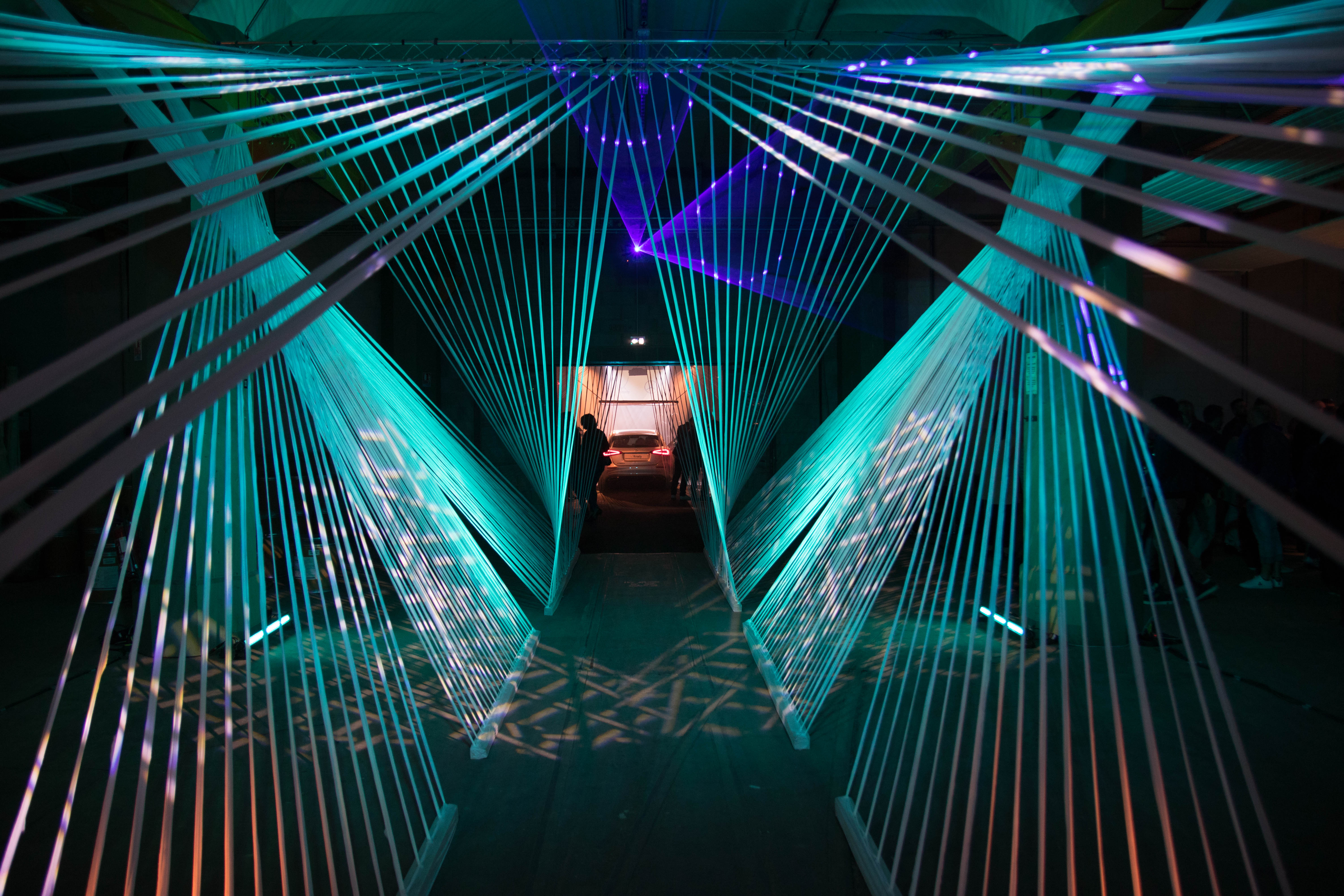
Event Scenography in Madrid that protects your message and your timeline
INNOV'events designs and produces Event Scenography in Madrid for executive town halls, product launches, conferences and internal ceremonies—from 80 to 3,000+ attendees. We handle creative direction, set build, AV integration, backstage logistics, and on-site technical management so your teams can focus on content and stakeholders.
Whether you need a clean brand stage for a leadership meeting or a complex multi-space environment for an internal convention, we translate your objectives into a scenography that is readable, safe, and deliverable—under real corporate constraints.
Table of contents
Scenography is not decoration; it is a management tool. The way the stage, screens, lighting and space are structured determines whether people understand the priorities, whether speakers feel in control, and whether the event stays on time. In a corporate context, Event Scenography directly impacts attention, message retention, and the perceived rigor of leadership.
Organizations in Madrid expect reliability: precise schedules, fluent speaker transitions, clean brand integration, and a production team that works with venue rules and strict access windows. They also need scenography that reads well on camera for hybrid audiences and internal comms replay.
As INNOV'events, we operate locally with production partners, fabricators, and technical crews used to Madrid venues and municipal requirements. We bring a field-proven approach: plans that can be installed, signage that guides flows, and technical choices that reduce day-of risk.
INNOV'events figures that matter for Madrid productions
12+ years delivering corporate events across Spain, with recurring programs in the capital.
250+ corporate events/year produced within our network (conferences, launches, leadership meetings, conventions).
80 to 3,000+ attendees managed with scalable scenography and technical production.
24/7 production coverage on installation days and event days (show caller + technical lead on site).
100% of scenography projects start with feasibility: access, rigging points, power, load-in, and safety checks before design is locked.
How to organize a professional event in Madrid?
- Define the objective (cohesion, announcement, fidelity, performance).
- Set date, format and size (20–1 000 people).
- Secure the venue and accommodation according to seasonality.
- Lock down technical, suppliers and logistics.
- Drive the day J (timing, scene, entrance, flow).
Madrid references and recurring collaborations
We support companies and institutions in Madrid that need production partners who can deliver under corporate pressure: last-minute speaker changes, security constraints, tight access slots, and hybrid streaming requirements.
Several clients renew with us year after year because our method is stable: we document your brand standards, technical preferences, and approval workflows so each new edition starts faster and with fewer surprises. We regularly coordinate with internal communication teams, HR, procurement and venue operations to keep decisions auditable and timelines realistic.
If you want us to cite specific brand names as references, send us the list you are authorized to disclose (many companies require prior approval). We can also share anonymized case examples from similar sectors in Madrid (finance, pharma, tech, retail HQs) to help you benchmark scope and budget without compromising confidentiality.
We send you a first proposal within 24h.
What Madrid leaders gain from professional scenography
In executive events, the scenography is part of governance: it frames what matters, structures speaking time, and reduces operational noise. Done correctly, it supports strategic clarity; done poorly, it becomes a distraction and a risk.
Sharper message hierarchy: stage layout, screen formats and lighting cues help the audience instantly understand what is “headline” vs. “supporting detail.” This is crucial for strategy updates, quarterly results, or transformation programs.
Speaker confidence and pacing: monitor placement, lectern design, stage access, and show calling reduce hesitation, improve transitions, and protect the agenda. A 10-minute delay at the start can cascade into rushed Q&A and weaker leadership perception.
Brand consistency across channels: scenography that matches your brand system (typography, motion style, color calibration, materials) improves internal comms assets—photos, aftermovie, webcast replay—without relying on heavy post-production fixes.
Operational safety and compliance: certified structures, proper ballast, fire-retardant materials, and controlled cable management reduce incidents and liability. This matters when auditors, insurers, and venue technical directors ask for documentation.
Better flow and less friction: wayfinding, zoning (plenary / breakout / networking), and acoustic treatment limit congestion and create spaces where people can actually talk—important for HR engagement moments or partner days.
In Madrid, where many headquarters run frequent leadership communications and multi-site team gatherings, scenography becomes a repeatable asset: once you standardize your stage and technical logic, each edition is faster to deliver and easier to control.
How Madrid’s corporate reality changes scenography decisions
Madrid events often run on compressed calendars: global leadership availability, end-of-quarter constraints, and venue scarcity during peak seasons (September–November and March–June). That directly affects scenography: you need designs that can be installed in short load-in windows and that tolerate last-minute agenda edits without re-building the whole stage.
We also see stricter expectations around hybrid delivery. Many Madrid-based organizations have distributed teams across Spain and EMEA, so the scenography must work for the room and for the camera: correct screen brightness, controlled contrast, presenter lighting tuned for broadcast, and backdrops that avoid moiré patterns or unreadable gradients.
Another local factor is venue technical governance. Whether you are in a hotel conference center, a cultural space, or a corporate auditorium, you will face limitations: rigging permissions, maximum loads, noise restrictions, loading dock schedules, and unionized or in-house technical requirements. Our job is to integrate these constraints early so your internal stakeholders are not forced into a late compromise that harms the message.
Which entertainment and scenographic interactions work in Madrid venues?
In corporate events, “entertainment” is effective when it serves an outcome: attention reset, audience participation, or reinforcing the message. In Madrid, where audiences are often time-poor and content-heavy agendas are common, we use short, controlled formats that integrate with scenography and do not disrupt timing.
Interactive animations in Madrid
Live polling integrated on the main screen: we design the screen layout so results are readable from the back rows and on webcast. Works well for leadership town halls and HR engagement, with a clear plan for data privacy and moderation.
Stage-driven Q&A formats: standing mics or app-based questions routed to a moderator, with a dedicated “Q&A look” on lighting to signal the sequence change. This avoids the common Madrid issue of time overruns caused by unstructured questions.
Interactive brand wall (RFID or QR-based): attendees trigger content on a media wall—useful for product knowledge days or partner kickoffs. We plan queue management and screen refresh cycles to keep it fluid.
Art animations in Madrid
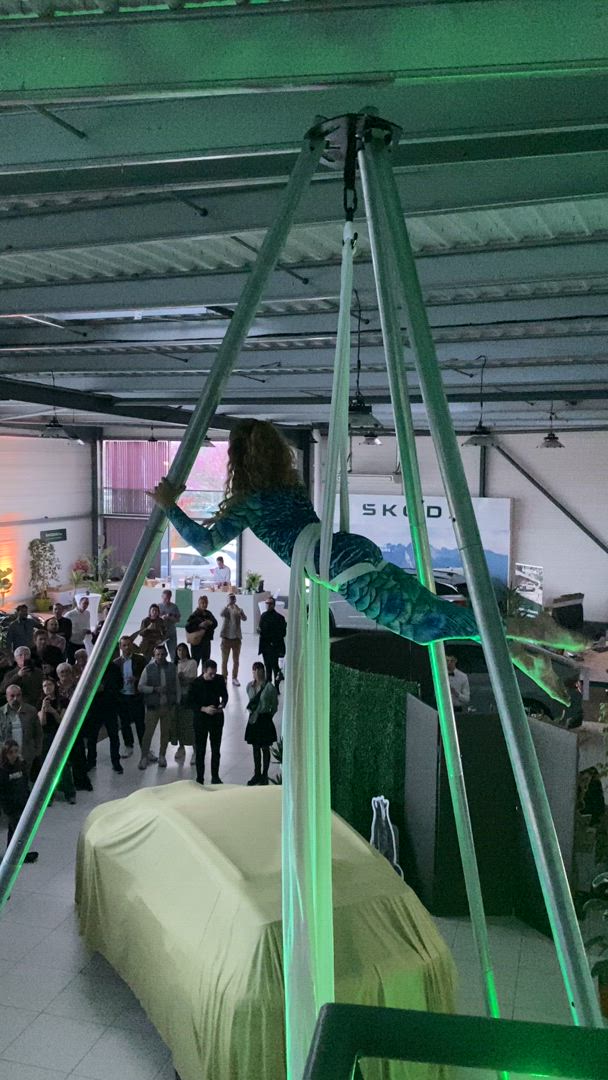
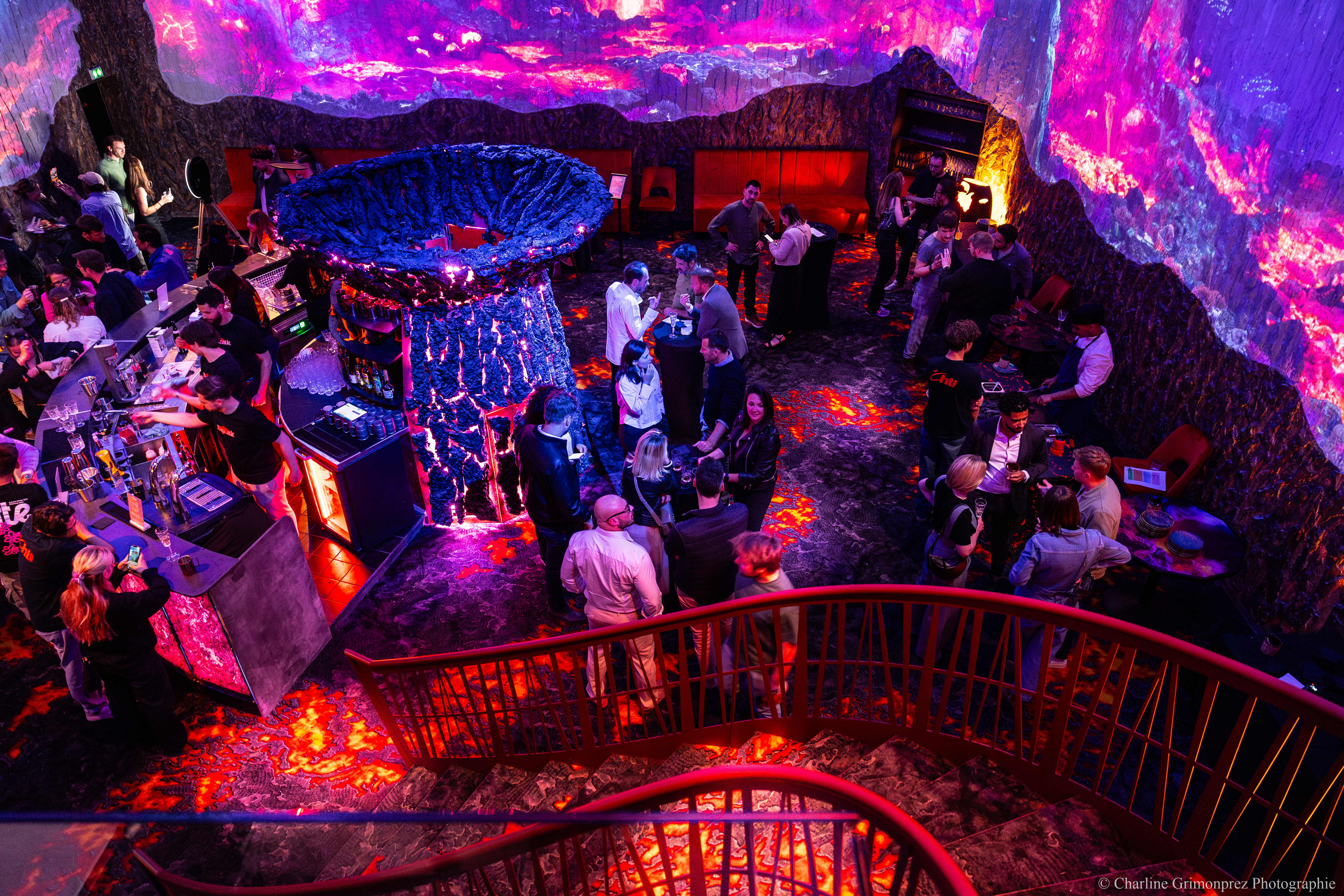
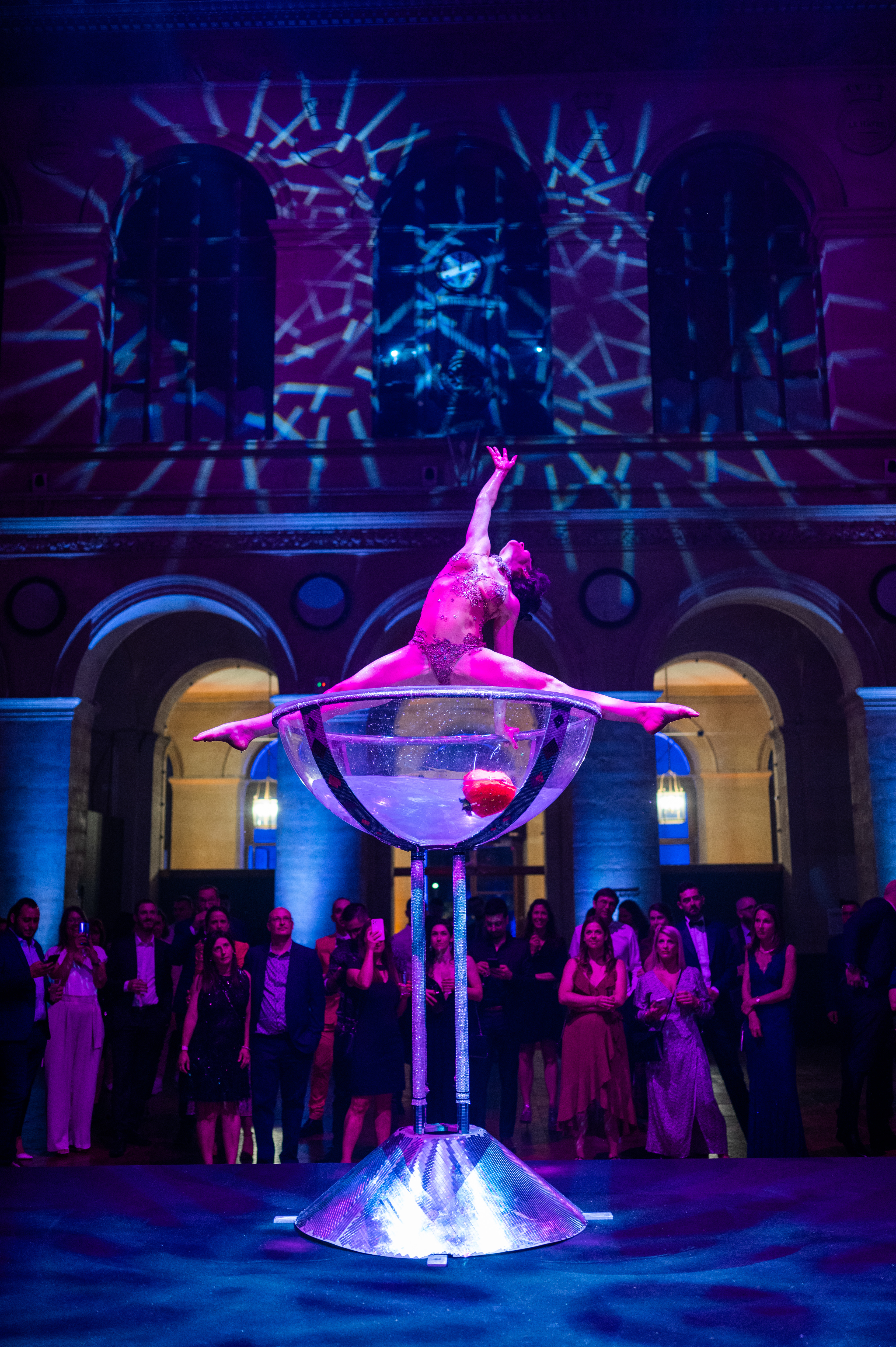
Short opening performance with precise technical rider: a 3–5 minute act can set energy without turning into a “show.” We align stage depth, floor finish, and lighting cues to avoid improvisation and protect corporate tone.
Data-to-visual moments: kinetic lighting or motion graphics synchronized to a key KPI reveal. This is scenography as communication: the room “feels” the message while the numbers stay clear and credible.
Sound design for transitions: custom stings and walk-on music normalized for consistent loudness (broadcast-safe). This is often underestimated but is essential for leadership presence.
Innovative animations in Madrid
Networking zones with functional design: high tables, acoustic separation, and lighting that flatters people in photos. In Madrid, where networking time is often limited, the space must encourage quick conversations and easy circulation.
Branded tasting stations: small-format food experiences placed to support flow (not block it). We plan refrigeration, power, and allergen signage so operations remain compliant.
Gourmand animations in Madrid
Hybrid scenography: designing a stage that works as a studio (camera angles, key light, background depth) while still feeling engaging in-room. This is increasingly requested by Madrid headquarters with multi-city audiences.
Modular scenic elements: reconfigurable portals, frames, and scenic cladding that can be reused across multiple events—useful for HR roadshows and recurring internal conventions where procurement wants amortization.
Real-time captioning and accessibility overlays: integrated into screens without harming slide readability. Particularly relevant for multinational audiences and compliance-driven organizations.
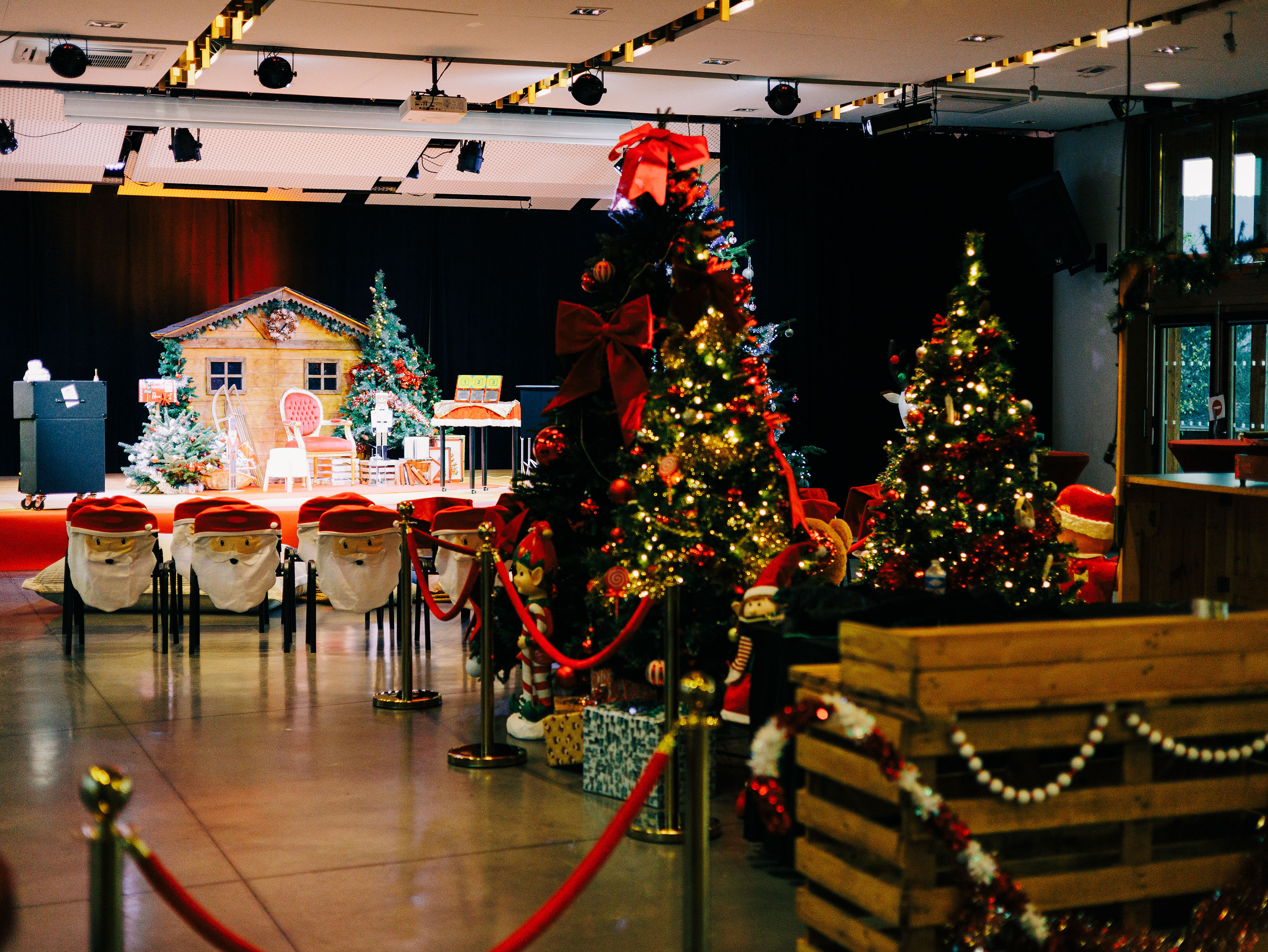
Whatever the format, we ensure alignment with your brand image: if your company tone is understated and premium, we avoid visual noise; if your goal is transformation momentum, we build rhythm through cues and spatial storytelling. In all cases, Event Scenography must support credibility first.
How to choose a Madrid venue that supports scenography
The same scenography can look “executive” or “improvised” depending on the venue’s ceiling height, rigging capacity, loading access, and acoustic behavior. In Madrid, venue choice should be made with production feasibility in mind, not only location and catering.
| Venue type | For which objective? | Main strengths | Possible constraints |
|---|---|---|---|
Large hotel conference center (plenary + breakouts) | Annual convention, sales kick-off, multi-room training | Integrated services, predictable operations, easy attendee logistics | Rigging limitations, set-up time windows, “standard look” unless scenography is upgraded |
Corporate auditorium / HQ space | Town hall, leadership updates, employer branding sessions | Brand control, security, shorter transfers, easier speaker management | Fixed stage geometry, limited load-in, restrictions on smoke/haze and certain structures |
Cultural venue / theater-style space | Executive keynote, awards ceremony, external communication | Professional stage infrastructure, strong audience focus, premium perception | Strict technical rules, union/in-house technicians, limited customization depending on heritage constraints |
Site visits are non-negotiable for reliable Event Scenography in Madrid. We verify measurements, access routes, ceiling points, power availability, backstage circulation, and camera positions before final drawings—because the day-of is not the moment to discover a loading dock is too small for scenic panels.
What an Event Scenography budget looks like in Madrid
Scenography pricing is driven by measurable parameters: size, complexity, technical integration, and time on site. In Madrid, costs also vary with venue constraints and crew hours (night work, limited load-in windows, and in-house staffing requirements).
Stage and scenic build: platforms, steps, cladding, scenic walls, branded elements, and finish level (paint, fabric, carpentry). A clean corporate stage can be efficient; high-end finishes and custom structures increase workshop time and transport volume.
Screen strategy: LED wall vs. projection vs. blended solutions. LED is often chosen for bright rooms and hybrid capture, but it impacts power, rigging, and content formatting.
Lighting and show control: front light for speakers, scenic washes, moving heads for transitions, and programming time. The difference between “lights on” and a controlled show is typically programming hours and cue design.
Audio and acoustics: room coverage, microphone plan (handheld, lavaliers, headsets), redundancy, and possible acoustic treatment. Poor intelligibility is one of the fastest ways to damage perceived professionalism.
Labor and logistics: crew sizing, load-in/load-out schedules, security access, freight elevators, and transport constraints in the city center. Madrid traffic and delivery restrictions can require earlier call times.
Compliance and documentation: fire certificates for materials, structural calculations where needed, risk assessments, and venue approvals. These are not “extras”; they protect you.
Rehearsals and speaker support: time reserved for executive run-throughs, teleprompter if needed, confidence monitors, and stage management. This is where many budgets under-allocate and then pay in stress.
Typical ranges: for corporate scenography in Madrid, projects often fall between €12,000 and €80,000+ depending on audience size, LED needs, number of spaces, and installation days. Complex conventions with multiple rooms and large LED can exceed €120,000.
We frame budget as risk control and communication impact. A well-structured scenography reduces overtime, avoids last-minute rentals, improves content capture, and protects your leadership image—often delivering a better ROI than adding more agenda items.
Why a Madrid-based partner reduces production risk
Choosing an agency with an operational base in Madrid is not a patriotic argument; it is a delivery argument. Scenography is logistics-heavy, and the capital has specific constraints: access permits, venue technical governance, tight schedules, and high expectations from corporate stakeholders.
As INNOV'events, we combine local production reflexes with national standards. When you need a fast reprint of signage, an extra stage deck, or a replacement LED processor, proximity and supplier relationships matter. It also matters for pre-event checks: a local team can do a second site verification or technical meeting without turning it into a major travel cost line.
If you are comparing providers, consider whether they can take full accountability on the ground, including venue coordination and technical sign-off. If you also need broader event support beyond scenography, our Madrid team operates as your event agency in Madrid with integrated planning and production governance.
- Faster technical decisions thanks to local venue knowledge and established supplier ecosystems.
- More reliable scheduling with realistic crew call times and contingency planning adapted to Madrid logistics.
- Lower friction with stakeholders because we provide clear documentation, approvals, and responsibilities.
- Better control on event day through on-site leadership (show caller, technical director, stage manager) rather than remote coordination.
We frame budget as risk control and communication impact. A well-structured scenography reduces overtime, avoids last-minute rentals, improves content capture, and protects your leadership image—often delivering a better ROI than adding more agenda items.








Madrid scenography projects: versatility without improvisation
Our scenography work in Madrid spans different corporate realities: leadership meetings where confidentiality and pacing are critical; product and partner events requiring strong brand staging and controlled demos; HR conventions with multiple breakouts and complex flows; and internal ceremonies where emotion must be present but still consistent with corporate tone.
In practice, adaptability means designing systems, not one-off builds. For example, we often propose a modular stage kit (platforms, scenic frames, branded headers, lighting logic) that can scale from 200 to 800 attendees while keeping the same “brand language.” This helps procurement and communication teams because assets can be reused and content templates remain consistent.
We also plan for executive realities: last-minute slide updates, speakers joining remotely, or agenda changes due to operational incidents. Our setups include redundancy (media backup, spare mics, alternate playback paths) and a clear chain of command so decisions are quick and documented.
Common scenography mistakes we prevent in Madrid
Design locked before feasibility: approving visuals without checking rigging points, power, and access leads to late compromises (smaller screens, weak lighting, unsafe structures).
Unreadable content because of screen/layout choices: wrong aspect ratio, too-small typography, or excessive brightness contrast can make key messages invisible from the back rows and ugly on camera.
Underestimating rehearsal time: executives do not need “more slides”; they need a confident run-through with the actual stage, monitors, and clickers.
Backstage congestion: no clear circulation for speakers, awards, props, or interpreters creates delays and stress minutes before going live.
Sound as an afterthought: poor intelligibility damages perceived competence faster than almost any visual issue.
Inconsistent branding: mixing fonts, colors, and materials across stage, signage, and screens results in a “patchwork” look that internal comms teams then struggle to fix in post.
Missing documentation: lack of fire certificates, risk assessments, or structural sign-off can trigger venue refusal or last-minute changes.
Our role is to remove these risks before they reach your leadership team. We do it with checks, drawings, approvals, and on-site governance—because the event day is not a rehearsal for your brand.
Why Madrid clients renew with INNOV'events
Recurring clients are usually not looking for “more creative.” They want predictable delivery, fewer internal escalations, and a partner who understands their approval circuits. That is exactly what long-term scenography collaboration provides.
60–75% of our Madrid projects each year come from repeat clients or internal referrals within the same group.
1 shared production file per client: brand guidelines, stage standards, preferred formats, cue logic, and supplier constraints—updated after every event to improve the next edition.
2-level reporting: a concise executive summary for decision-makers and a detailed technical recap for communication/production teams.

Loyalty is the most objective proof in production: companies come back when scenography is delivered safely, on time, and with no unpleasant surprises for leadership or procurement.
Our Madrid process for reliable Event Scenography delivery
👉 Madrid discovery and stakeholder alignment
We start with a short working session with HR/Comms/Executive office to clarify the objective, constraints, and non-negotiables: brand rules, confidentiality, hybrid requirements, venue shortlist, and approval owners. We also identify operational risks early (tight load-in, speaker availability, union/in-house technicians).
👉 Concept + feasibility in parallel
We produce a scenographic concept (stage architecture, key visuals, material intentions) while running feasibility checks: measurements, rigging points, power, access, fire rules, backstage space, camera positions. This avoids the common trap of approving a beautiful concept that cannot be installed in a Madrid venue within the allowed hours.
👉 Technical design and budget consolidation
We deliver plans, elevations, equipment lists, and a consolidated budget with options (e.g., projection vs. LED; standard vs. premium finishes). We clarify what is included: crew hours, programming, rehearsal, transport, and documentation. Procurement gets comparable line items instead of opaque packages.
👉 Content integration and show planning
We align screen formats with your presentation templates, define cue points, and build a run-of-show that is realistic. We plan who approves what and when, and we set a rehearsal plan adapted to executive schedules. We also establish backup protocols for media and microphones.
👉 Build, install, rehearsals, and live show management
We manage workshop build, logistics, and on-site installation. On the day, we run the show with a show caller and stage management, coordinate speakers, and maintain timing. After the event, we handle dismantling, venue handover, and a debrief with actionable improvements for the next edition.
FAQ sobre la organización Event Scenography en Madrid
How far in advance should we book scenography in Madrid?
For a standard corporate event (200–600 attendees), plan 6–10 weeks. For large conventions or complex LED builds, 10–16 weeks is safer, especially in peak seasons (spring and autumn in Madrid).
What budget range is typical for scenography in Madrid?
Most corporate projects fall between €12,000 and €80,000+. The biggest drivers are LED size, number of rooms, installation days, and finish level. Multi-space conventions can exceed €120,000.
Can you adapt scenography to a Madrid corporate auditorium?
Yes. We design around fixed stage dimensions, sightlines, and venue restrictions. We usually optimize screen format, speaker lighting, and backstage flow, and we propose modular scenic elements that fit through building access constraints.
Do you handle permits and safety documentation in Madrid?
We handle the production documentation typically requested by venues: material fire certificates, risk assessments, structural notes when applicable, and technical plans for approval. If municipal permits are needed (rare for indoor corporate setups), we coordinate with the venue and relevant stakeholders.
How do you ensure scenography looks good on camera in Madrid?
We plan for hybrid from the start: camera positions, presenter key light, background depth, screen brightness, and color calibration. We also avoid patterns that cause moiré and ensure typography is readable for both the room and the stream.
Request a Madrid scenography quote with a realistic plan
If you are planning a leadership meeting, convention, launch or internal ceremony in Madrid, involve us early. The fastest way to control budget and reduce risk is to validate feasibility before design is locked.
Share your date, venue (or shortlist), audience size, event format (plenary/breakouts/hybrid), and any brand guidelines. INNOV'events will return a clear proposal with options, timelines, and the production roles that will be on-site. Contact us to schedule a technical-first call and get a quote you can defend internally.
INNOV'events Madrid Agency
Cyril Azevedo is the manager of the INNOV'events Madrid office. Reach out directly by email at cyril@innov-events.es or via the contact form.
Contact the Madrid agencyAll our services & entertainment Madrid
Discover our event services
Discover our event entertainment available in the España
- Event Hostess Madrid
- Escape Game Madrid
- MasterChef Cooking Workshop Madrid
- Magician Madrid
- Marquee Rental Madrid
- Color Analysis Workshop Madrid
- Inflatable Games Madrid
- Valet Parking Service Madrid
- Football Simulator Madrid
- LED Furniture Rental Madrid
- Light Branding Madrid
- Unique Dining Experience Madrid
- Light Painting Madrid
- Murder Mystery Party Madrid
- Prize Contest Madrid
- Promotional Displays (POS) Madrid
- Virtual Reality Madrid
- Molecular Gastronomy Workshop Madrid
- Halloween Entertainment Madrid
- Fireworks Show Madrid
- Giant Games Challenge Madrid
- Event Host / MC Madrid
- Photo Booth Animation Madrid
- Santa Claus Entertainment Madrid
- Kids Entertainment Madrid
- Guided Tour Madrid
- Urban Rally Madrid
- Ball Pit Madrid
- Flight Simulator Madrid
- Food Truck Rental Madrid
- World Record Challenge Madrid
- Surf Simulator Madrid
- Wine Casino Madrid
- Makeover Workshop Madrid
- Perfume Creation Workshop Madrid
- Acting Workshop Madrid
- CSR Activities Madrid
- Archery Madrid
- Security Staff Madrid
- Wine Tasting Madrid
- Mime Performer Madrid
- TV Game Show Madrid
- Funfair Madrid
- Crisis Management Workshop Madrid
- Crisis Negotiation Workshop Madrid
- Arcade Games Madrid
- Indoor Skydiving Simulator Madrid
- Ski Simulator Madrid
- Racing Circuit Experience Madrid
- Introductory Flight Experience Madrid
- Tasting Experience Madrid
- Build Your Own Foosball Workshop Madrid
- 2CV Rally Madrid
- LEGO Challenge Madrid
- Casino Night Madrid
- Interpreter / Translator Madrid
- Promotional Giveaways Madrid
- Shuttle Transport Madrid