
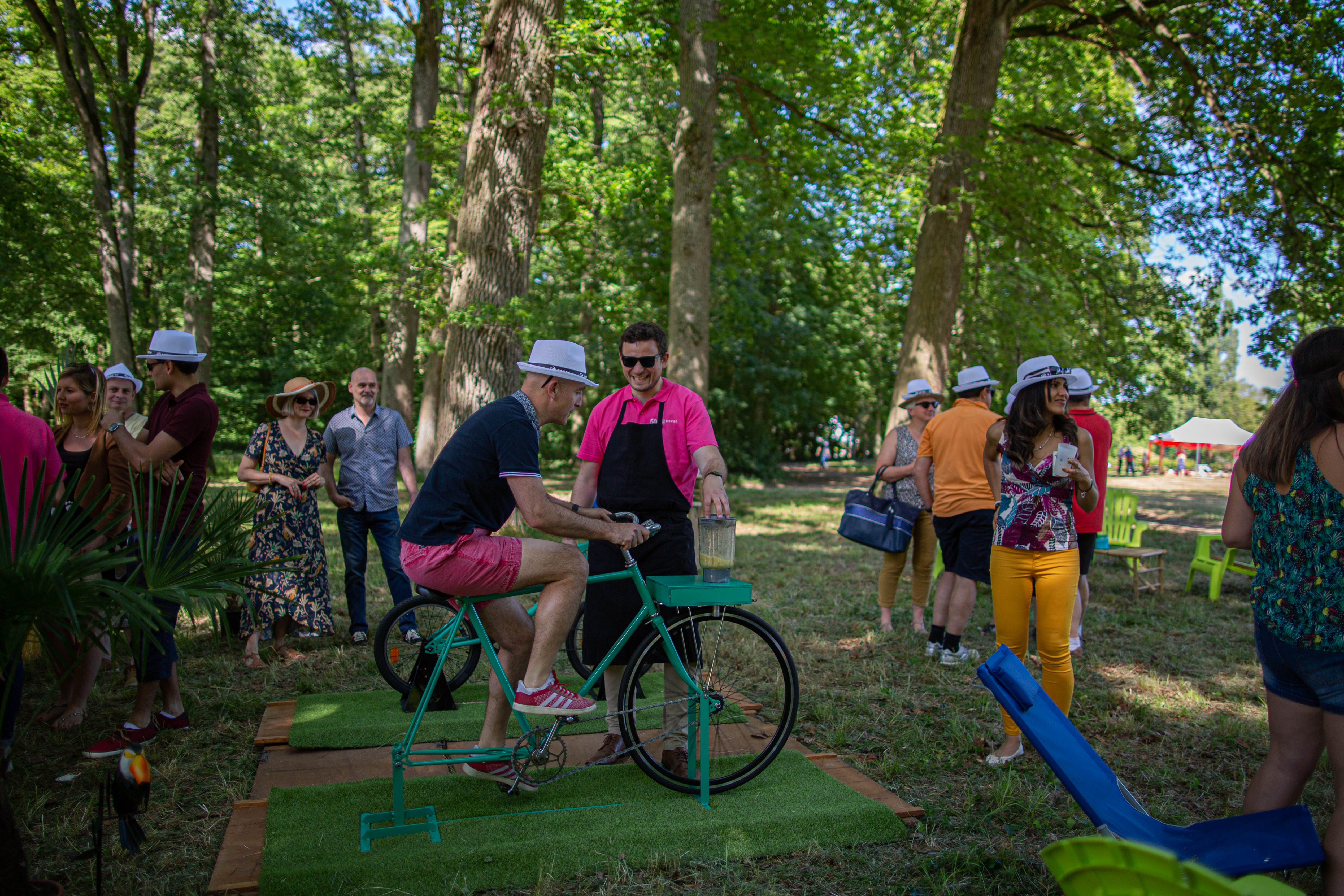
Corporate Garden Party in Madrid that runs smoothly—and reflects your brand
INNOV'events is a Spanish corporate event agency producing Corporate Garden Party formats across Madrid, typically for 50 to 800 attendees. We plan and deliver the full operational chain: venue sourcing, supplier coordination, guest flow, food & beverage, sound limits, permits, safety, and corporate event entertainment in Madrid aligned with your culture.
If you are an executive, HR lead, or communications director, you get a single accountable partner, a realistic production timeline, and a day-of run-of-show built to reduce risk—not add complexity.
Table of contents
In a corporate context, entertainment is not “nice to have”: it’s a lever to manage energy, cross-team interaction, and message retention without forcing networking. In a Corporate Garden Party in Madrid, the right pacing (arrival, icebreakers, peak moment, closing) directly impacts how people talk about your company the next day.
Madrid-based organisations typically expect a relaxed feel with executive-grade standards: discreet security, fast service ratios at bars, controlled sound levels, and clear contingency plans for heat or sudden rain. They also expect that suppliers arrive on time despite city traffic and venue access constraints.
We operate locally in Madrid with field teams who know venue rules, neighbourhood restrictions, and the real production constraints of gardens, patios, rooftops and fincas. Our role is to translate your objectives into a safe, budget-controlled, on-brand event—down to technical riders and staffing plans.
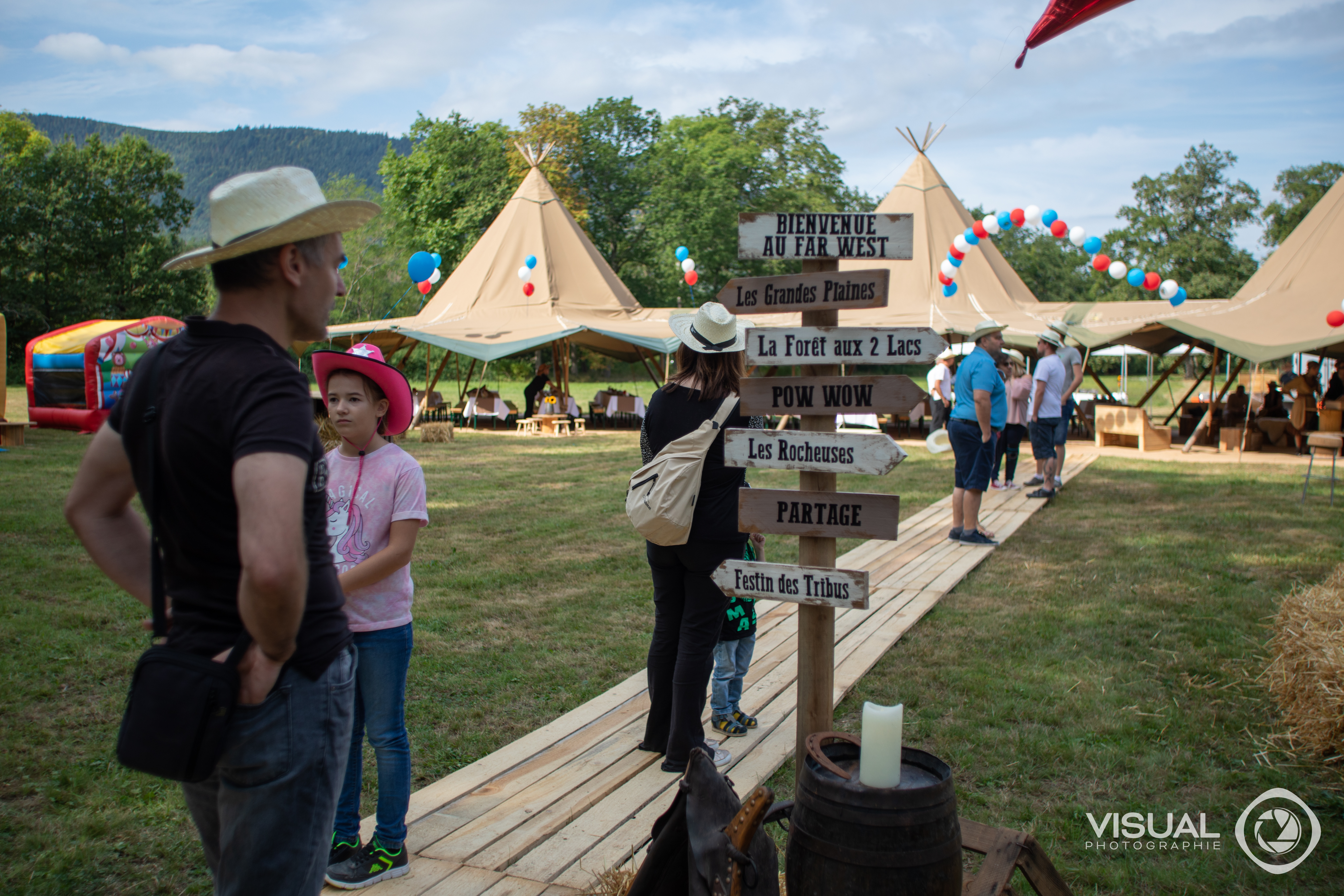
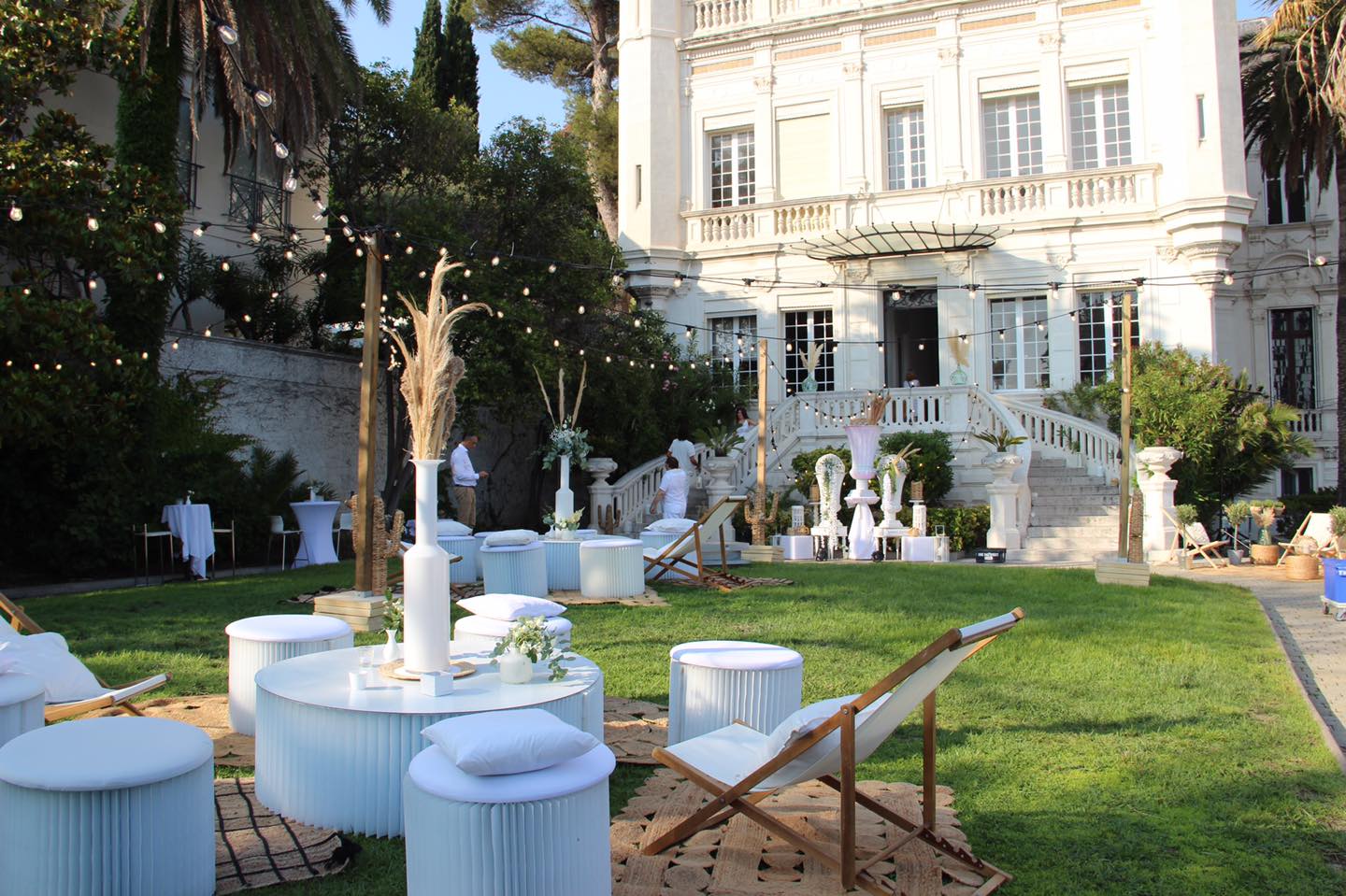
What you can check quickly before shortlisting us in Madrid
10+ years delivering corporate events in Spain, with repeat clients in multiple regions.
150+ corporate events/year coordinated through our agency network (planning, production, supplier management).
Operations designed for 50–800 attendees with scalable staffing models (floor managers, hosts, security, medics when required).
24–72 hours typical turnaround for a first structured proposal (scope, options, and budget ranges) once the brief is validated.
How to organize a professional event in Madrid?
- Define the objective (cohesion, announcement, fidelity, performance).
- Set date, format and size (20–1 000 people).
- Secure the venue and accommodation according to seasonality.
- Lock down technical, suppliers and logistics.
- Drive the day J (timing, scene, entrance, flow).
Who we support in Madrid year after year (and why)
In Madrid, we work with organisations that have recurring needs: quarterly team celebrations, summer parties, leadership offsites, partner evenings, and employer-branding moments for recruitment. Many of our clients renew because they don’t want to re-explain internal constraints every year: approval workflows, brand guidelines, compliance rules, and the realities of leadership schedules.
Typical situations we manage with Madrid-based teams include: last-minute headcount shifts due to project deadlines, reserved executive areas without “VIP optics”, and mixed audiences (employees + clients + partners) where the tone must remain inclusive but controlled.
When you request references, we provide them in context: event objective, format, headcount, and constraints—so you can benchmark our approach against your own scenario.
We send you a first proposal within 24h.
Why plan a Corporate Garden Party for your teams in Madrid?
A Corporate Garden Party is one of the most effective formats to bring people together without the formality of a gala and without the unpredictability of a festival. In Madrid, it also matches the local social culture: outdoor time, food-led moments, and relaxed conversation—while still allowing structured messaging.
Accelerate cross-team interaction without forcing it: garden-party layouts (stations, corners, walking flows) are ideal for creating “natural collisions” between departments that rarely meet.
Support HR priorities such as retention and onboarding: we design welcome touchpoints for new hires (hosts, signage, light gamification) that feel organic, not corporate.
Give executives a controlled speaking moment that doesn’t kill the atmosphere: short, well-timed micro-addresses with correct sound dispersion and a clear plan for attention capture.
Enhance employer brand with tangible signals: service quality, inclusive catering options (allergens, non-alcoholic sophistication), and attention to comfort (shade, seating ratio, restrooms).
Enable client/partner hospitality without splitting the event: we can integrate a discreet reception for key guests, then merge audiences seamlessly to avoid “two-speed” optics.
Reduce event risk vs. ad-hoc planning: permits, neighbour sound sensitivities, supplier access times, and weather contingencies are planned upfront rather than improvised on the day.
Madrid is competitive and fast-moving; companies here value execution as much as concept. A well-produced garden party sends a simple signal: you can create a high-quality moment with operational discipline—exactly the mindset stakeholders expect in the city’s business environment.
What Madrid stakeholders expect (and what they will notice)
Decision-makers in Madrid are used to strong hospitality standards and low tolerance for operational noise. They will notice queues, unclear signage, uneven sound, and staff who look lost. They will also notice when the event feels “imported” without adapting to local realities—especially around schedules, heat management, and outdoor comfort.
From our field experience, the most common expectations are practical:
- Access and timing discipline: load-in windows, service elevators, and strict venue rules are common. A supplier arriving late can cascade into delayed opening and a visible drop in perceived quality.
- Sound control: not every garden, finca, or rooftop can support a DJ at the same level. We plan sound mapping, directionality, and cut-off times so entertainment works within real constraints.
- Comfort engineering: shade solutions, seating ratio, water stations, and airflow matter in Madrid’s warmer months. Guests forgive simple décor; they don’t forgive being uncomfortable.
- Food & beverage throughput: Madrid guests expect service speed. We design bar counts, station distribution, and replenishment plans based on headcount and venue geometry.
- Brand safety: for communications teams, the risk is not only “something goes wrong”, but “the optics are off”. We anticipate photo angles, signage placement, and sponsor/partner visibility rules.
These are not creative topics—but they decide whether your event feels premium or improvised.
Which entertainment options work best for a garden party in Madrid?
Entertainment works when it supports the event’s rhythm and your company’s tone. In Madrid, we often see two failure modes: (1) too passive—guests drift and leave early; (2) too intrusive—music and activities block conversation. For a Corporate Garden Party, we typically build entertainment as a sequence of light engagement layers.
Interactive animations in Madrid
Guided “networking prompts” hosted by discreet facilitators: ideal for mixed audiences (new hires + managers + clients). We use short, optional prompts that spark conversation without forcing participation.
Team micro-challenges (15–20 minutes, opt-in): designed for departments that don’t naturally mix. Examples: clue-based routes inside the venue, or collaboration puzzles near drink stations to drive circulation.
Live polling moments projected subtly: useful for HR/Comms when you want quick feedback (e.g., culture values, “what should we improve next quarter?”) without turning it into a workshop.
Art animations in Madrid
Acoustic sets and roaming musicians: better than a fixed stage early on because they keep sound levels comfortable and create atmosphere in multiple zones.
Live illustration (branding-friendly): a fast illustrator capturing guest portraits or key moments. Outputs can be used internally for employer branding while remaining tasteful for executives.
Short-format performance windows (5–8 minutes): scheduled between key moments to reset attention without extending the agenda.
Innovative animations in Madrid
Chef-led stations with controlled throughput: rather than one long buffet, we distribute stations to reduce queues and manage guest flow across the garden.
Premium non-alcoholic bar: increasingly requested by HR and leadership. We design it with the same care as cocktails (presentation, speed, and menu clarity).
Local tasting corner with sourcing transparency: when done well, it becomes a conversation hub and supports your ESG narrative (waste control, responsible suppliers).
Gourmand animations in Madrid
Quiet tech: RFID or QR check-in to reduce arrival friction and give you reliable attendance data (useful for internal reporting and procurement).
Photo content with brand governance: controlled backdrops, lighting, and an approval workflow so Communications can publish quickly without chasing assets.
Comfort-first production: misting fans, shaded lounges, and smart lighting for late afternoon transitions—small investments that dramatically improve perceived quality in Madrid summer conditions.
Whatever the entertainment mix, we validate alignment with your brand image: what can be photographed, what can be heard from the street, and what signals it sends to employees and clients. The goal is engagement that feels coherent, not entertainment “for its own sake”.
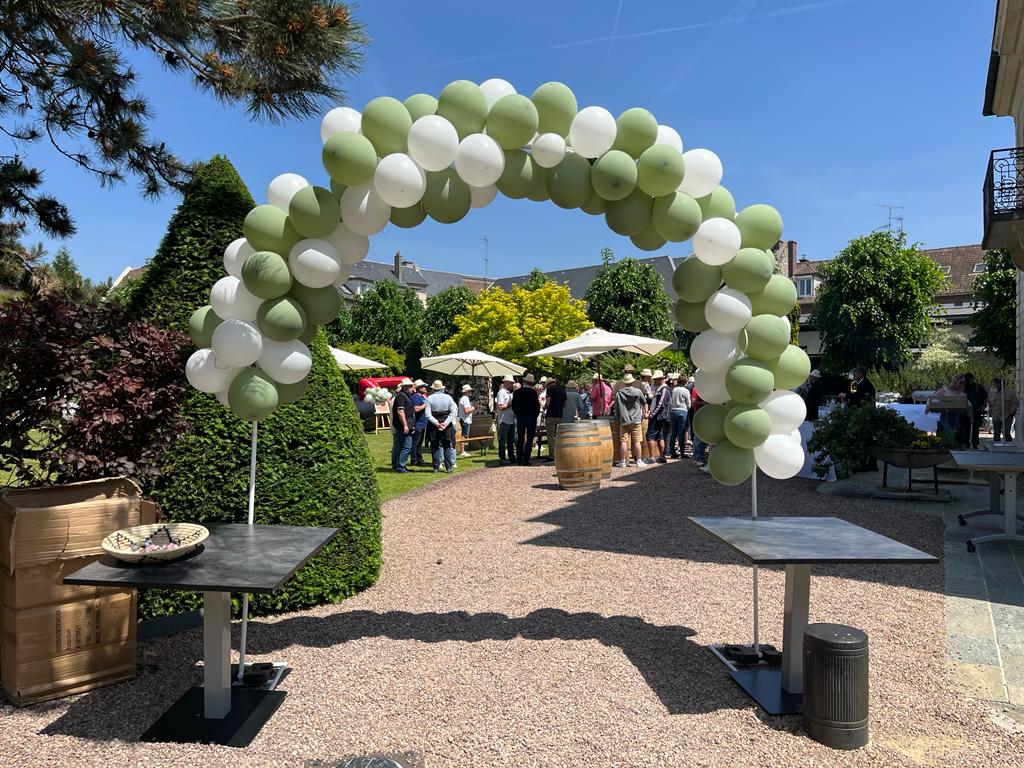
How to choose the right venue type in Madrid for a garden party
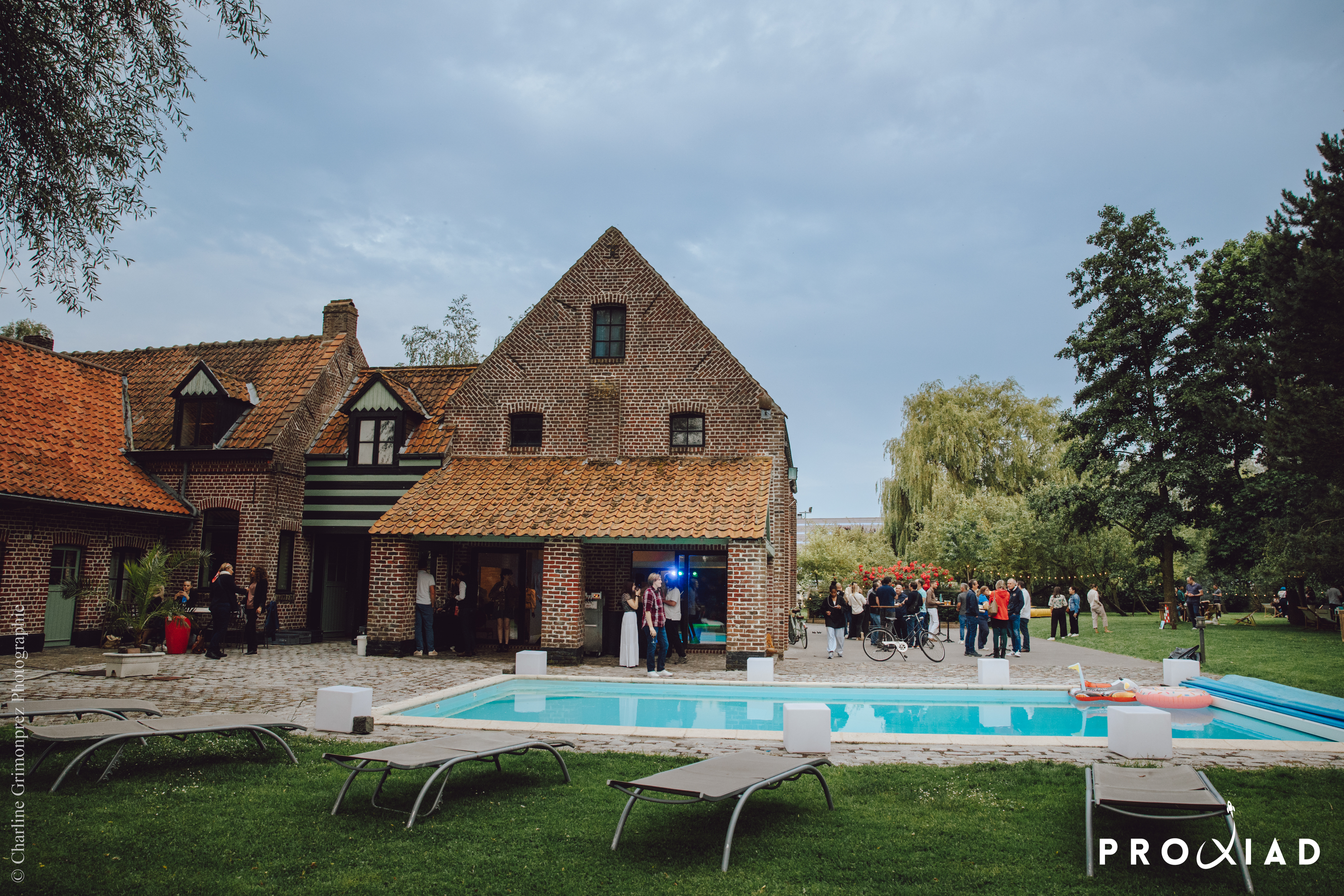
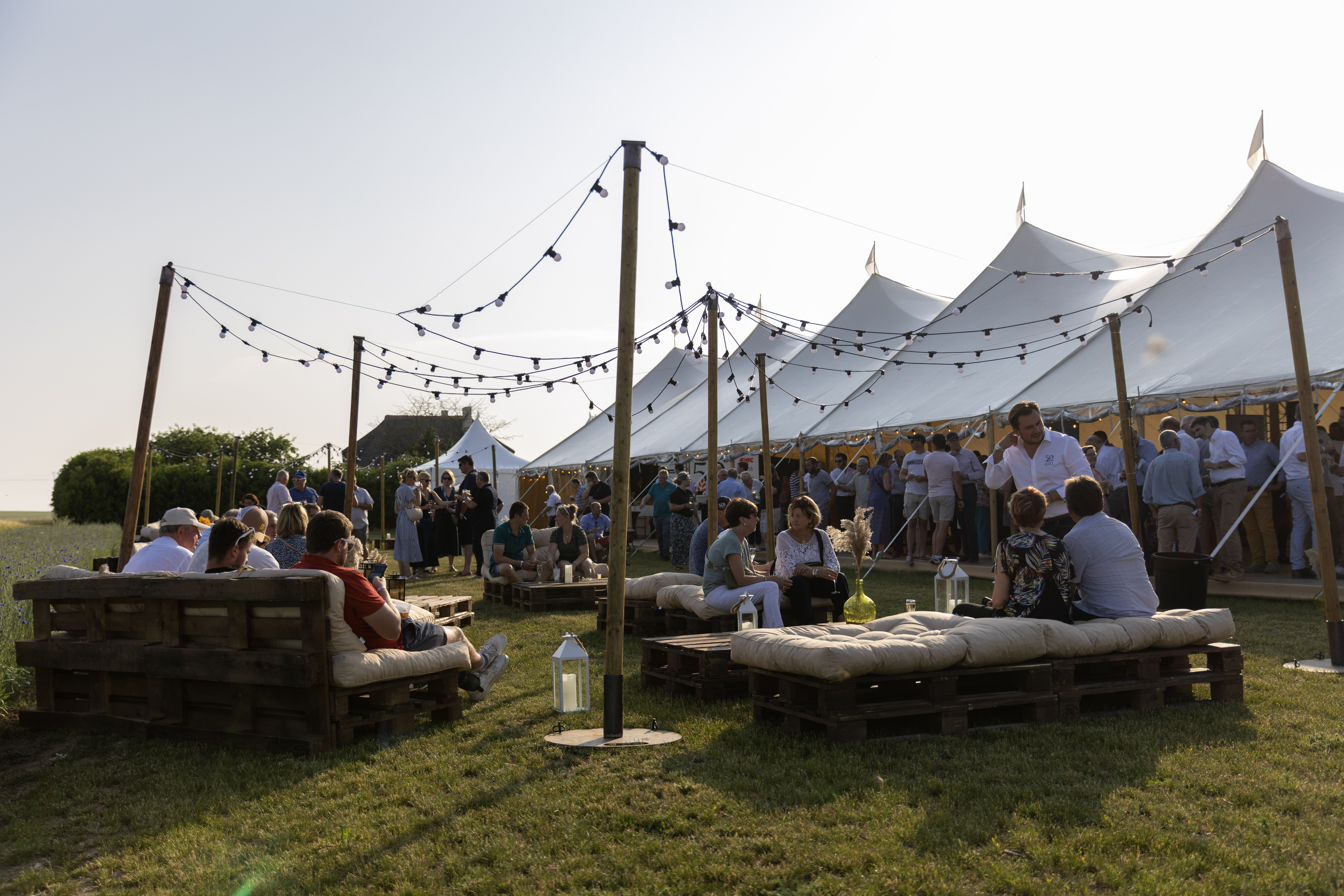
The venue drives perception more than décor budgets. In Madrid, the same entertainment and catering will feel completely different depending on access, noise constraints, shade, and the ability to separate zones (welcome, mingling, executive moment, and late-phase music). We help you select a setting based on operational feasibility, not only aesthetics.
| Venue type | For which objective? | Main strengths | Possible constraints |
|---|---|---|---|
| Private finca / country estate (Madrid outskirts) | Large headcount celebrations, summer parties, family-friendly formats | Space for zoning, easier sound management, flexible layouts for stations and lounges | Transport logistics, longer supplier load-in, need for clear guest mobility plan (buses/parking) |
| Garden of a premium hotel | Executive hosting, client hospitality, brand-controlled atmosphere | High service standards, reliable back-of-house, strong rain plan options | Stricter exclusivity rules, branding limitations, higher minimum spends |
| Rooftop / terrace with outdoor area | Modern company positioning, afterwork-style networking | Strong visual impact, central access, ideal for 80–250 guests | Noise and time restrictions, wind exposure, limited load-in and power constraints |
| Corporate campus garden / HQ outdoor area | Internal culture moments, cost control, operational familiarity | Brand ownership, easier approvals, minimal venue rental | Need to build infrastructure (power, toilets, catering areas), stricter H&S responsibilities |
We strongly recommend site visits before locking key suppliers. In Madrid, two venues with similar photos can differ drastically in access rules, sound tolerance, and hidden costs. A proper site check protects your budget and your reputation.
What does a Corporate Garden Party cost in Madrid (and what drives it)?
Budget for a Corporate Garden Party in Madrid depends on headcount, venue type, season, and how “built” the location must be (power, flooring, shade, restrooms, staging). We avoid artificial package pricing: instead, we structure a transparent estimate with clear options and cost drivers so procurement and leadership can validate choices.
Headcount and service ratios: bar count, catering staff, hosts, security, cleaning. A difference between 200 and 350 guests is not linear if you want to avoid queues.
Venue rental and minimum spend: hotels and premium terraces may require minimum F&B commitments; fincas can require additional build costs.
Catering style: cocktail stations vs. seated elements, number of menu items, dietary coverage, and replenishment strategy.
Technical production: sound level management, distributed speakers, microphones for executive moments, lighting for late afternoon and evening transitions, and backup power where relevant.
Comfort infrastructure: shade structures, lounge furniture, flooring on grass, fans/misters, and the quantity/quality of restrooms.
Entertainment: number of acts, duration, technical riders, licensing considerations, and rehearsal needs.
Risk & compliance: permits when applicable, civil liability, medical coverage for larger headcounts, and safety staffing.
Transport logistics: shuttles, parking management, and guest flow at arrival/departure to prevent bottlenecks.
From an ROI perspective, Madrid leadership teams often evaluate the event on three measurable outcomes: attendance rate, internal sentiment (pulse surveys), and stakeholder perception (clients/partners). We help you define these KPIs upfront and align spend with what will actually move them.
When does choosing a Madrid-based event agency reduce your risk?
For outdoor formats, local execution matters. A Corporate Garden Party is operationally exposed: weather, neighbourhood constraints, access schedules, and supplier punctuality all impact the experience. Working with a team established in Madrid means fewer assumptions and faster problem-solving on the ground.
If you are comparing agencies, ask who will actually be on-site and who manages supplier accountability. At INNOV'events, we coordinate production through local teams and validated vendor relationships; you get documented plans, not verbal reassurance. If you want to review our broader capabilities beyond this format, see our event agency in Madrid page.
- Venue and supplier realism: we know which venues have strict sound controls, tricky load-in, or limited power—and we plan accordingly.
- Faster on-site decisions: when conditions change (wind, heat, delayed delivery), local production leadership can adapt without escalating every detail remotely.
- Better cost control: fewer last-minute rentals and emergency labour because constraints are mapped early.
- Credible compliance approach: we work with local standards and ensure the right documentation is in place (insurance, safety protocols, access authorisations).
From an ROI perspective, Madrid leadership teams often evaluate the event on three measurable outcomes: attendance rate, internal sentiment (pulse surveys), and stakeholder perception (clients/partners). We help you define these KPIs upfront and align spend with what will actually move them.










What we have delivered in Madrid: formats, constraints, and outcomes
In Madrid, we regularly deliver garden-party-style corporate events with different strategic purposes: employee celebrations after a high-pressure quarter, leadership visibility moments aligned with internal communications calendars, and client hospitality that must remain discreet and high-standard.
Examples of operational realities we handle:
- Heat management for late-afternoon events: we shift high-energy entertainment to later slots, build shaded lounge areas, and increase water/NA beverage points to keep comfort high without excessive staffing.
- Mixed messaging (HR + commercial): we structure one short executive moment with clear audio coverage, then return to ambient flow quickly so the event stays social.
- Confidentiality and brand control: some companies require restricted photography zones, controlled signage, and approved vendor lists. We integrate those constraints in production, not as afterthoughts.
- Logistics under city pressure: tight load-in windows, limited parking, and supplier sequencing. We use detailed call sheets and staging plans to avoid visible chaos.
Our value is not a “concept deck”; it is the ability to adapt the format to your constraints while keeping the guest experience consistent.
Common mistakes we prevent on garden parties in Madrid
Underestimating queues: too few bars or stations creates visible dissatisfaction in the first 30 minutes. We size service points based on venue geometry, not just headcount.
No real rain plan: a “tent maybe” is not a plan. We define alternative zones, capacity, and the exact trigger time to switch.
Sound without a map: one loud point ruins conversation; too quiet kills atmosphere. We design distributed sound and check neighbour constraints.
Ignoring access realities: if suppliers can’t unload efficiently, you lose time and increase stress. We confirm routes, timings, and who opens gates/doors.
Entertainment disconnected from your culture: activities that feel childish or too aggressive can backfire. We propose options with clear participation levels and audience fit.
Weak run-of-show: when leadership decides to speak “whenever”, you get awkward pauses and attention loss. We plan precise windows and cues.
Insufficient comfort basics: not enough seating, shade, or restrooms quickly becomes the dominant memory of the event.
Our job is to remove these risks before they appear on the event day. In Madrid, that means disciplined preparation, documented decisions, and a production team empowered to act.
Why Madrid clients renew with INNOV'events for the next summer party
Recurring clients usually don’t come back because of a one-off “wow effect”. They come back because the experience was predictable for stakeholders: the event started on time, the mood was right, incidents were handled discreetly, and post-event reporting was clear.
60–70% of our corporate clients rebook for another format within 12–18 months (seasonal parties, offsites, or internal communication events).
For recurring Madrid accounts, we typically reduce planning time by 20–30% from one year to the next through supplier continuity and improved internal workflows.
Standard deliverables include a production schedule, supplier list, and a run-of-show that can be validated by HR, Comms, and Procurement—reducing back-and-forth.

Loyalty is a concrete indicator: clients renew when operational risk is controlled and internal teams feel supported rather than overloaded.
Our production process for a Corporate Garden Party in Madrid
👉 Step 1 — Madrid brief alignment and stakeholder mapping
We start with a working session (30–60 minutes) to align objectives and constraints: audience composition, leadership involvement, brand rules, procurement requirements, and success metrics. We identify who must approve what (HR, Comms, Facilities, Legal) and build a realistic timeline that matches your internal cycle.
👉 Step 2 — Venue shortlist and feasibility checks
We propose venue types and concrete options based on headcount, access, sound constraints, and seasonality in Madrid. For each, we flag hidden drivers: minimum spends, build requirements, curfews, and load-in limitations. Where needed, we organise a site visit with AV and catering to validate feasibility early.
👉 Step 3 — Program architecture and entertainment sequencing
We design the guest journey: arrival flow, welcome drink distribution, food station timing, entertainment layers, and any executive speaking moment. We define what happens in each zone and at what time so the event stays social while remaining controlled.
👉 Step 4 — Budget structuring and option sets
You receive a structured estimate with line items and options (e.g., “comfort pack”, “premium F&B”, “enhanced lighting”). This helps you defend budget choices internally and adjust scope without losing coherence.
👉 Step 5 — Production planning and compliance
We lock suppliers, build the production schedule, and produce operational documents: call sheets, floor plans, sound plan, staffing plan, and contingency protocols. We also ensure documentation is aligned with venue requirements (insurance, safety procedures, access authorisations).
👉 Step 6 — On-site delivery and real-time control
On the event day, a production manager leads the on-site team with zone leads and a clear escalation path. We manage supplier arrivals, cue entertainment, monitor sound levels, and keep service throughput on target. Issues are handled discreetly so stakeholders remain focused on hosting.
👉 Step 7 — Post-event debrief and reporting
Within agreed timelines, we deliver a debrief: what worked, what to improve, and key operational notes for future editions. If you use attendance tracking or surveys, we help consolidate insights for HR and Communications reporting.
FAQ sobre la organización Corporate Garden Party en Madrid
How far in advance should we book in Madrid?
For peak season (May–July, September), plan 8–12 weeks ahead for strong venue availability. For 50–150 guests in a flexible venue, 4–6 weeks can work, but entertainment and technical options narrow quickly.
What headcount works best for a Madrid garden party?
The format is efficient from 50 to 800 guests, depending on venue type and zoning. For 150–350, we typically recommend multiple food and bar points to avoid queues and create circulation.
Can we run a Corporate Garden Party in Madrid with sound limits?
Yes. We use distributed sound, directional speakers, and timed music peaks. In sound-sensitive areas, we prioritise acoustic acts early and schedule DJ-style moments later, always aligned with venue rules and local constraints.
What is a realistic budget range in Madrid per guest?
For corporate standards in Madrid, many projects fall between €90–€220 per guest depending on venue, F&B level, technical build, and entertainment. Larger headcounts can lower the average, while “build-from-scratch” sites increase it.
How do you handle heat or rain risk in Madrid?
We define a weather contingency plan upfront: shaded zones, hydration strategy, and a clear rain alternative (covered areas with capacity calculations). We also set a decision trigger time (often T-24h and T-6h) so the team can switch without last-minute chaos.
Request a Madrid proposal with clear options and a controlled plan
If you are planning a Corporate Garden Party in Madrid, involve us early—venue constraints, sound limits, and comfort infrastructure decisions have a direct impact on budget and guest experience. Share your target date, approximate headcount, audience mix (employees/clients/partners), and any brand or compliance requirements.
INNOV'events will come back with a structured proposal: venue direction, production approach, entertainment sequencing, and transparent cost options. When stakeholders are demanding, clarity and operational discipline are what protect your reputation—let’s build that together.
INNOV'events Madrid Agency
Cyril Azevedo is the manager of the INNOV'events Madrid office. Reach out directly by email at cyril@innov-events.es or via the contact form.
Contact the Madrid agencyAll our services & entertainment Madrid
Discover our event services
Discover our event entertainment available in the España
- Event Hostess Madrid
- Escape Game Madrid
- MasterChef Cooking Workshop Madrid
- Magician Madrid
- Marquee Rental Madrid
- Color Analysis Workshop Madrid
- Inflatable Games Madrid
- Valet Parking Service Madrid
- Football Simulator Madrid
- LED Furniture Rental Madrid
- Light Branding Madrid
- Unique Dining Experience Madrid
- Light Painting Madrid
- Murder Mystery Party Madrid
- Prize Contest Madrid
- Promotional Displays (POS) Madrid
- Virtual Reality Madrid
- Molecular Gastronomy Workshop Madrid
- Halloween Entertainment Madrid
- Fireworks Show Madrid
- Giant Games Challenge Madrid
- Event Host / MC Madrid
- Photo Booth Animation Madrid
- Santa Claus Entertainment Madrid
- Kids Entertainment Madrid
- Guided Tour Madrid
- Urban Rally Madrid
- Ball Pit Madrid
- Flight Simulator Madrid
- Food Truck Rental Madrid
- World Record Challenge Madrid
- Surf Simulator Madrid
- Wine Casino Madrid
- Makeover Workshop Madrid
- Perfume Creation Workshop Madrid
- Acting Workshop Madrid
- CSR Activities Madrid
- Archery Madrid
- Security Staff Madrid
- Wine Tasting Madrid
- Mime Performer Madrid
- TV Game Show Madrid
- Funfair Madrid
- Crisis Management Workshop Madrid
- Crisis Negotiation Workshop Madrid
- Arcade Games Madrid
- Indoor Skydiving Simulator Madrid
- Ski Simulator Madrid
- Racing Circuit Experience Madrid
- Introductory Flight Experience Madrid
- Tasting Experience Madrid
- Build Your Own Foosball Workshop Madrid
- 2CV Rally Madrid
- LEGO Challenge Madrid
- Casino Night Madrid
- Interpreter / Translator Madrid
- Promotional Giveaways Madrid
- Shuttle Transport Madrid