
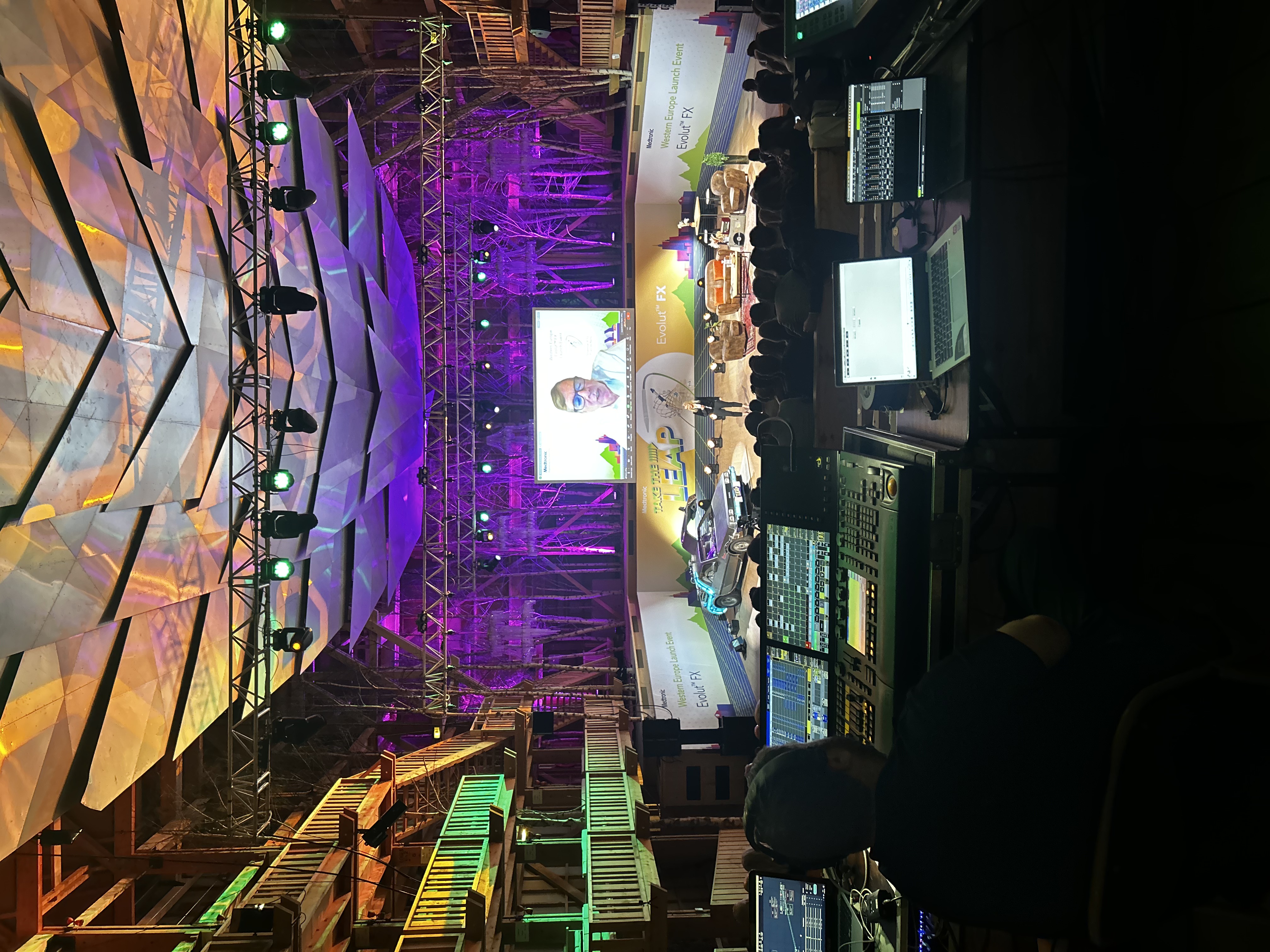
Convention & Executive Meeting in Valencia that aligns leaders and accelerates decisions
INNOV'events designs and delivers Convention & Executive Meeting formats in Valencia, typically from 30 to 800 attendees, for executive committees, HR and corporate communications teams. We manage the full chain: content architecture, venue, technical production, guest flow, speaker coaching, show-calling, and on-site governance.
If your priority is a meeting that lands key messages, protects executive time, and runs with zero improvisation, we structure the event like a business project: clear objectives, measurable deliverables, and operational control from rehearsal to debrief.
Table of contents
In a corporate context, “entertainment” is not a nice-to-have: it is the mechanism that keeps attention, supports message retention, and reduces cognitive fatigue during long plenaries. In a Convention & Executive Meeting in Valencia, the right pacing (music cues, interactive sequences, energisers) protects strategic moments such as results disclosure, leadership Q&A, or a sensitive reorganisation narrative.
Local organisations in Valencia typically expect discipline and efficiency: on-time start, clean AV, bilingual facilitation when needed (Spanish/English), and a guest journey that respects executives’ agendas. They also expect an event that feels anchored in the city—without turning the convention into a tourist programme.
INNOV'events operates on the ground with tested suppliers, recurring venues, and production teams who know the constraints of city-centre access, the port area, and the main business corridors. Our role is to bring executive-level rigour: a single point of responsibility, documented run-of-show, and contingency planning sized to the stakes.
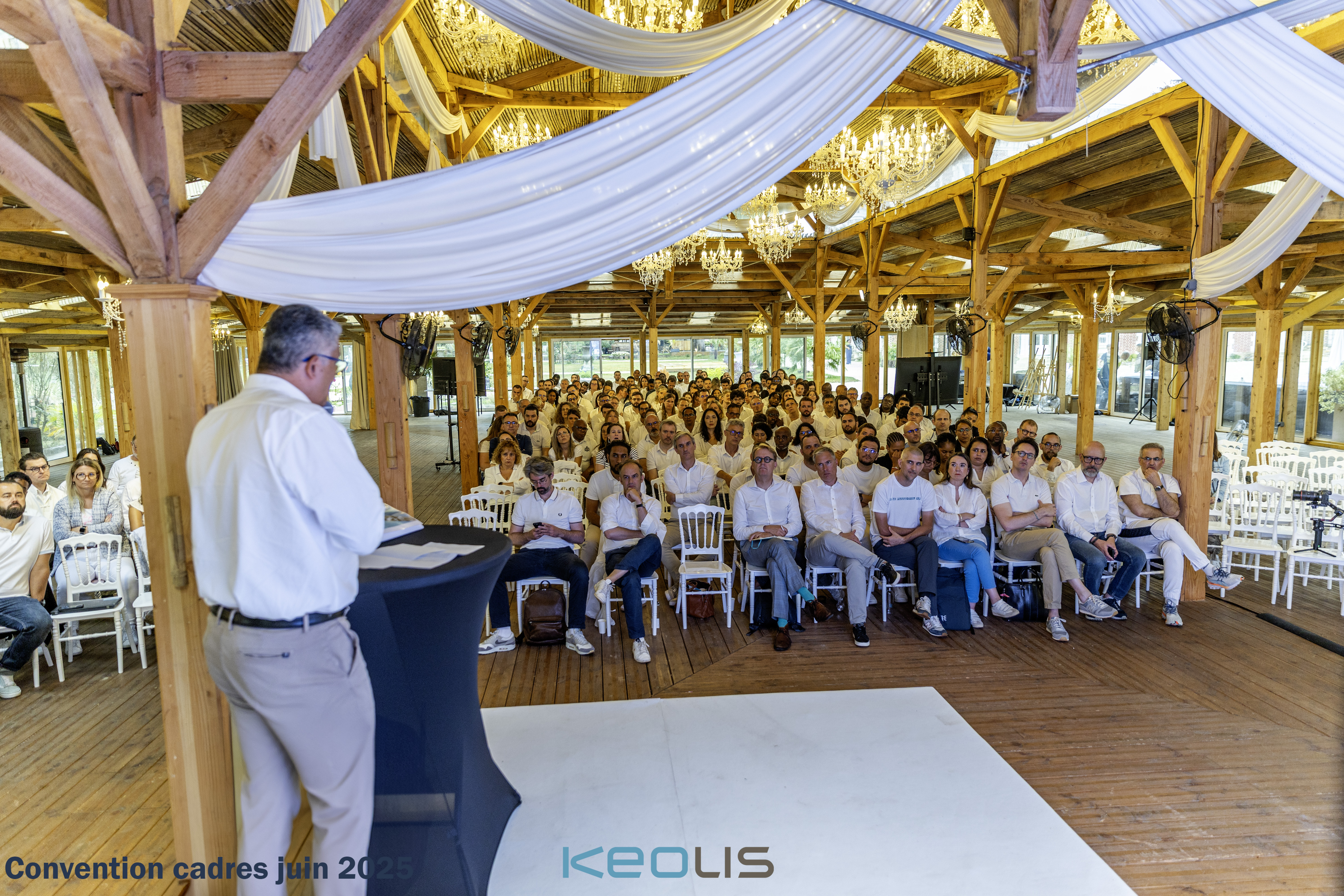
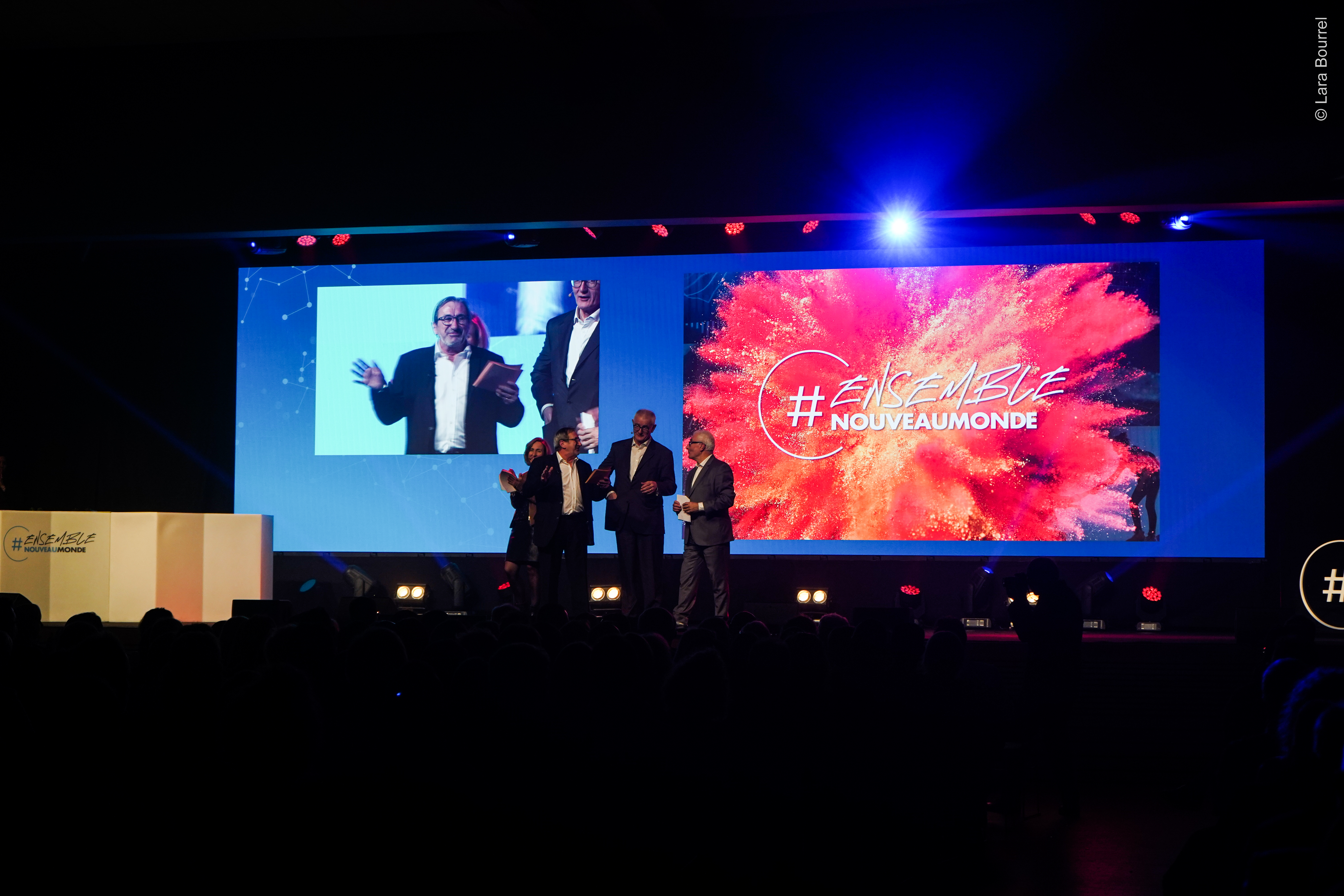
Operational figures executives ask for in Valencia
12+ years delivering corporate events across Spain, with a stable network of producers, stage managers, and technical directors.
150+ corporate events per year managed at national level (conventions, leadership offsites, product kick-offs, internal communications events).
30–800 attendees is our most frequent convention range; we also manage smaller ExCo meetings with high protocol requirements.
1 run-of-show owner on every project (show caller), with a documented cue list and rehearsal plan shared in advance.
24–72 hours typical response time for an initial feasibility and budget range when the brief is clear (date, audience, objectives, constraints).
How to organize a professional event in Valencia?
- Define the objective (cohesion, announcement, fidelity, performance).
- Set date, format and size (20–1 000 people).
- Secure the venue and accommodation according to seasonality.
- Lock down technical, suppliers and logistics.
- Drive the day J (timing, scene, entrance, flow).
Who we support year after year in Valencia
We work with decision-makers in Valencia who need events that stand up to internal scrutiny: CEOs who want message discipline, HR directors managing engagement during change, and communication teams under pressure to protect brand tone. Some clients come back annually because they want the same thing every time: predictable delivery, transparent budgets, and teams who do not learn on their event day.
To keep this page credible, we do not invent logos. If you share the company names you want displayed as local references (and the level of disclosure you authorise), we can integrate them with the right wording (e.g., “annual leadership convention”, “quarterly town hall”, “multi-site internal roadshow”), without breaching confidentiality.
In the meantime, what we can confirm is our recurring footprint across the city’s main business environments—technology, industrial groups with regional sites, professional services, and organisations with mixed audiences (HQ + field teams). Our approach is always the same: align stakeholders early, lock the agenda, and protect execution through rehearsal and governance.
We send you a first proposal within 24h.
Why run a Convention & Executive Meeting in department 46 now
A convention is a management tool. When used well, it compresses weeks of scattered communication into a single moment where leadership can set direction, listen, and create momentum. In department 46, where many organisations operate with both city-based HQ functions and distributed teams, the convention becomes the “alignment checkpoint” that reduces interpretation gaps and accelerates execution.
Executives often come to us with a very practical issue: “We have a strategy, but not the same understanding of priorities across layers.” A well-structured Convention & Executive Meeting makes the priority stack visible, puts leaders in front of real questions, and creates a clear narrative that middle management can repeat consistently.
Leadership alignment in public: when ExCo members share a stage with a single narrative and consistent KPIs, the organisation stops reading between the lines. We plan who says what, in what order, and with which proof points to avoid contradictions.
Faster decision cycles: by combining plenary direction with controlled breakouts (3–6 parallel rooms), you can validate operating priorities, unblock dependencies, and close actions with named owners before people leave.
Change management with less resistance: employees accept difficult moves (reorg, new tools, cost discipline) when the message is coherent, when Q&A is real (not filtered theatre), and when leaders show operational empathy. We design the Q&A so it is safe but not artificial.
Employer brand consistency: HR and Comms can demonstrate leadership behaviours in a live environment—how leaders answer, how they recognise performance, how they talk about safety and inclusion—without turning it into a slogan exercise.
Measurable engagement: we can set simple metrics: attendance rate, session dwell time, audience interaction rate (questions/votes), and post-event clarity score on key messages. This gives HR and Comms evidence beyond “people liked it”.
The economic culture around Valencia values pragmatism and relationship-building: people expect substance, but they also expect a human tone. A convention that balances operational clarity with genuine interaction fits that culture—and tends to produce better adoption of decisions in the weeks after the event.
What Valencia-based organisations typically require from an executive event
In Valencia, we frequently see conventions that must serve mixed profiles: leadership, HQ functions, commercial teams, and sometimes franchisees or partners. That creates two concrete requirements: first, a message architecture that speaks to each audience without fragmenting the strategy; second, a production setup that handles varied attention spans and different levels of familiarity with corporate language.
Operationally, local realities matter. City-centre venues can have strict access windows for load-in/load-out, limited truck docking, and noise restrictions that impact rehearsals. The port and marina areas offer scale and contemporary settings, but you need to plan transfers, parking, and weather backup if you use terraces. If you invite international speakers, flight arrival buffers and bilingual stage management become non-negotiable.
From a corporate point of view, we also notice a strong demand for cost visibility. Finance and procurement teams increasingly ask for line-item budgets (AV, staging, scenic, hospitality, security, staff, content support) rather than a single “package”. We build estimates with assumptions documented (hours, crew size, equipment class), so your approval chain is faster and the final reconciliation is clean.
Finally, organisations here are sensitive to reputational risks. A minor technical incident during a CEO keynote, a disorganised registration, or a poorly managed Q&A can undermine months of internal communication. Our production plans are written to protect the moments that matter most: opening, leadership segments, awards, and closing call-to-action.
What entertainment works for executive conventions in Valencia
In a Convention & Executive Meeting, entertainment must serve the agenda. The best options are those that increase attention, create controlled interaction, and reinforce your narrative. In Valencia, we often balance a modern, international tone with subtle local anchoring—enough to feel present in the city, never enough to distract from business objectives.
Interactive animations in Valencia
Live pulse checks with moderated Q&A: short votes (3–5 questions) tied to strategy pillars, followed by curated questions. This is effective when leadership needs a “temperature reading” without turning the plenary into an open mic.
Breakout workshops with deliverables: we design templates so each room produces a concrete output (top 3 obstacles, actions, owners, deadlines). We then bring back only the synthesis to the plenary to keep time under control.
Case clinics with operators: instead of inspirational talks, we put internal teams on stage to show how a change is implemented in the field (CRM adoption, safety programme, customer turnaround). Executives appreciate the realism; teams feel represented.
Art animations in Valencia
Short musical cues for transitions: 10–30 second stings, aligned with brand tone, used to protect timing and avoid “dead air”. This is particularly useful when you have many speakers and need fast changeovers.
Contemporary performance as an opening frame: a 3–5 minute piece that matches your theme (precision, innovation, teamwork) and sets energy before the CEO segment—kept short so it supports authority rather than competing with it.
Moderated storytelling segment: instead of a stand-up show, we design a guided story with a professional host and selected internal voices (customer success, safety incident learnings, transformation milestones). This is engaging and credible.
Innovative animations in Valencia
Structured networking breaks: food and beverage are a tool to create interactions between silos. We plan “prompted networking” (e.g., table topics, colour-coded badges, or app-based matching) so coffee breaks produce value, not just calories.
Local tasting with business logic: if you include a local touch in Valencia, we frame it as hospitality, not as spectacle. Example: a curated tasting station during the reception with clear service times and traffic flow, so it does not delay the plenary restart.
Executive dinner protocol: when you have a leadership dinner, we plan seating strategy, short speeches with timeboxing, audio needs (often overlooked), and staff briefing to ensure service supports conversation.
Gourmand animations in Valencia
CEO “Ask Me Anything” with safeguards: questions collected via app, grouped by theme, with a moderator empowered to keep answers concrete and to protect sensitive topics. This format works well after a transformation announcement.
Data visualisation moments: instead of dense slides, we turn KPIs into clear on-screen visuals (animated but restrained) and structure a narrative around them. The result is faster comprehension and fewer follow-up clarifications.
Hybrid-ready production: even for in-person events, many organisations now need a secure stream for remote managers. We set camera positions, audio capture, and a separate feed so the remote audience experiences a coherent event rather than a room microphone.
Whatever the format, we validate alignment with brand image and executive posture: tone, language level, stage aesthetics, and risk profile. The goal is to support authority and clarity—especially in moments where leadership credibility is on the line.
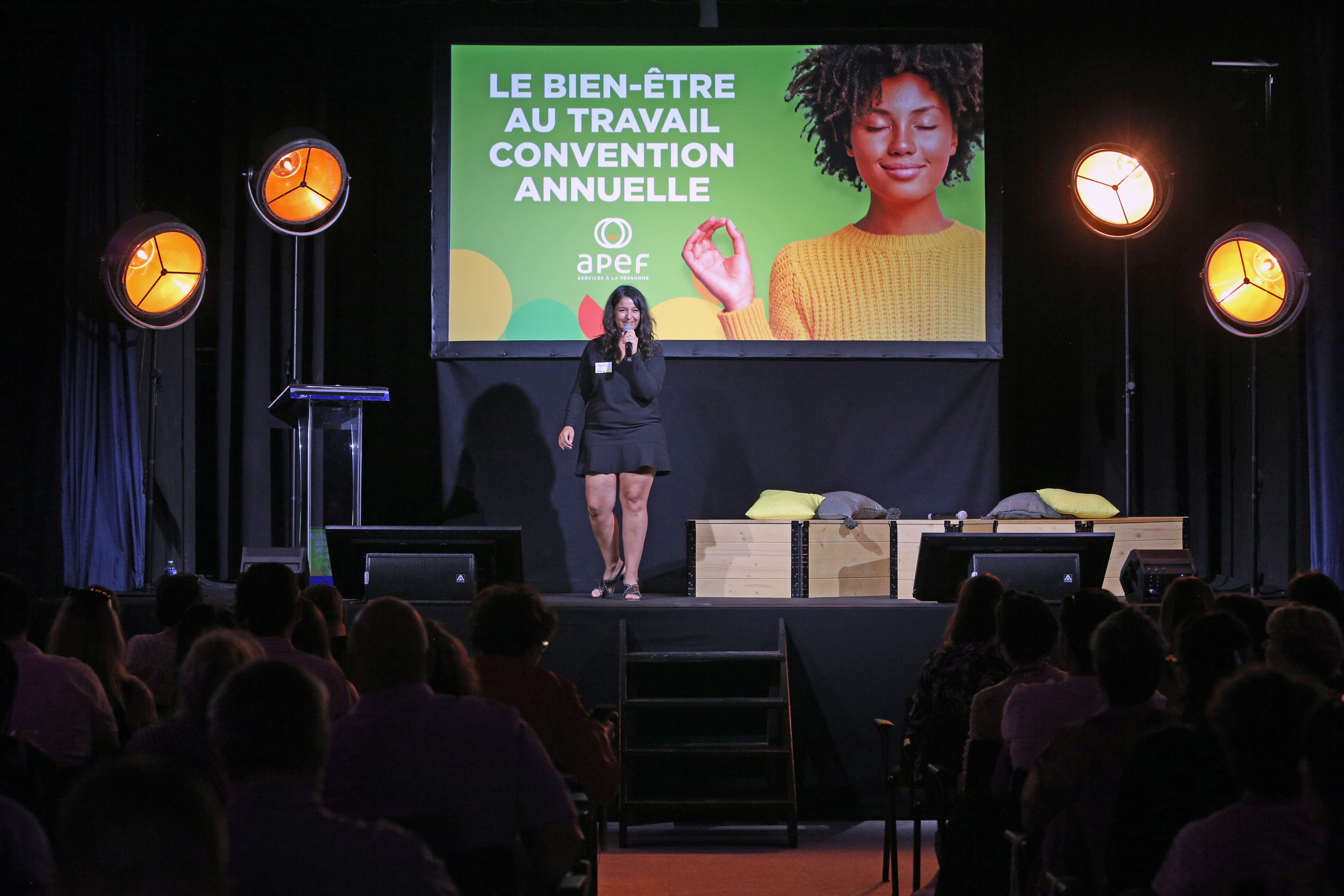
How to choose the right venue in Valencia for executive meetings
The venue is not only a backdrop; it influences punctuality, production quality, and the perceived seriousness of your message. In Valencia, the right choice depends on whether your priority is plenary impact, breakout efficiency, confidentiality, or networking space.
We typically recommend deciding the venue after two items are clear: (1) the session architecture (plenary + number of breakouts) and (2) the technical ambition (screen size, multi-camera, translation, stage design). This prevents selecting a beautiful space that later forces compromises on sightlines, acoustics, or access.
| Venue type | For which objective? | Main strengths | Possible constraints |
|---|---|---|---|
Conference hotel (city or business area) | One-roof convention with plenary + multiple breakouts and accommodation. |
|
|
Convention centre / auditorium | High-impact plenary, strong AV, formal keynotes and large audiences. |
|
|
Industrial-chic venue / private event space | Brand storytelling, product reveal, leadership experience with a modern tone. |
|
|
We insist on a site visit with your core stakeholders (Comms, HR, production) before locking the contract. A 60–90 minute walkthrough typically reveals the real issues: backstage routes, holding areas for speakers, registration flow, breakout proximity, and whether the room “reads” as executive-level without excessive scenic spend.
What a Convention & Executive Meeting costs in department 46
Budget depends on format choices, technical ambition, and the level of content support required. In department 46, we see a wide spread because some meetings are essentially “board-level offsites with a screen”, while others are full conventions with staging, multi-room breakouts, branded environments, and hybrid streaming.
To keep budgeting efficient, we work with ranges early and then lock assumptions. This avoids the common pattern where teams design a “dream agenda” and only later discover the venue or AV costs make it unrealistic.
Audience size and room count: 50 vs 500 attendees changes venue class, staffing, catering volumes, and safety requirements.
Agenda architecture: plenary only vs plenary + 3–6 breakouts affects room rental, AV duplication, and coordination complexity.
Technical production level: screen dimensions, lighting design, multi-camera capture, playback redundancy, intercom, translation, confidence monitors for speakers.
Scenic and branding: stage set, lectern, backdrops, wayfinding, registration area build, branded content on screens.
Content and speaker support: agenda engineering, scriptwriting assistance, slide clean-up, speaker coaching, moderator sourcing.
Guest journey logistics: transfers, parking management, VIP protocol, security, accommodation blocks.
Risk and contingency: weather backup for outdoor components, additional generators, spare equipment, additional rehearsal time.
ROI is not abstract: the value is in clarity and speed of execution after the event. A convention that reduces misalignment saves leadership hours, limits rework across departments, and lowers the “hidden cost” of inconsistent interpretation. We help you translate objectives into measurable outputs so budget discussions remain business-driven.
Why choose an event agency in Valencia for executive conventions
When executives are on stage, local execution matters. Choosing a partner established in Valencia reduces operational risk: faster site checks, better supplier accountability, and realistic planning around access, schedules, and city constraints. It also improves responsiveness when something changes late—speaker timing, venue rules, weather, or internal approvals.
As INNOV'events, we combine local production capability with national standards. If you need a single governance model across Spain but a strong local team for this city, we are structured for that: one producer accountable end-to-end, supported by on-the-ground crew who know the venues and the technical realities.
If you are comparing providers, ask for evidence of local operations: who is the show caller, who is the technical director, how many site visits are included, and how they manage vendor contracts. That is where reliability comes from.
Learn more about our local setup as an event agency in Valencia and how we structure accountability for leadership events.
- Shorter reaction time for site checks, last-minute branding changes, or compliance requests from the venue.
- Supplier leverage: local teams know which providers are consistent on crew quality, punctuality, and equipment maintenance.
- Realistic logistics: understanding of traffic patterns, access windows, and how to avoid registration bottlenecks in typical local venue layouts.
- Better risk control: easier to schedule rehearsals, technical tests, and backup planning with local availability.
ROI is not abstract: the value is in clarity and speed of execution after the event. A convention that reduces misalignment saves leadership hours, limits rework across departments, and lowers the “hidden cost” of inconsistent interpretation. We help you translate objectives into measurable outputs so budget discussions remain business-driven.












What we have delivered for leadership teams in Valencia
Our work in Valencia covers a spectrum of executive formats, because leadership needs vary across the year. Typical assignments include annual conventions with plenary + breakouts, leadership kick-offs where targets and priorities are communicated, and executive meetings where confidentiality and protocol are the primary constraints.
We adapt the production approach to the business context. For example, in a year where a company is rolling out a new operating model, we prioritise message consistency and Q&A structure: we build moderator notes, a “question taxonomy” (people, process, tools, customer impact), and a clear escalation line for topics that require offline follow-up. In a year focused on growth, we prioritise case-based storytelling: customer examples, pipeline discipline, and cross-functional handoffs—supported by clean visuals and tight timing.
We are also used to complex stakeholder environments: HR wanting engagement, Finance wanting cost transparency, IT/security validating apps and streaming, and leadership wanting a confident stage. Our deliverable is not just a day-of show; it is a controlled project with documentation: agenda grid, technical rider, staffing plan, safety notes, run-of-show, rehearsal schedule, and post-event debrief.
Common mistakes we prevent in Valencia conventions
Agenda overload: too many speeches, not enough oxygen. Result: attention drops and key messages do not land. We enforce timeboxing and build transition buffers.
Underestimating rehearsal: CEOs do not need “acting”, but they do need a technical run-through. We rehearse the risky parts: walk-ons, video triggers, microphones, timing, teleprompter if used.
AV specified too late: choosing the venue before defining technical needs leads to compromises on screens, acoustics, or camera positions. We lock requirements early.
Q&A handled as theatre: employees notice when questions are filtered beyond credibility. We implement a moderated process that is honest but safe.
Breakouts without outputs: sessions that produce “nice discussions” but no actions waste executive time. We design templates and reporting so outcomes are usable.
Registration bottlenecks: poor badge strategy creates queues and irritates VIPs. We plan scanning points, staffing ratios, and pre-event data hygiene.
Brand inconsistency on stage: mismatched visuals, music, and host tone can undermine corporate positioning. We validate tone and assets with Comms early.
Our role is to anticipate these risks and treat them as controllable variables. That is what an executive event partner is for: fewer unknowns, fewer last-minute decisions, and a production environment where leadership can focus on content and presence.
Why leadership teams in department 46 stay with the same partner
When a company repeats its convention yearly, the real value is operational continuity: institutional memory, supplier consistency, and faster decision-making. In department 46, many teams prefer to stabilise the event machine so they can focus on content and strategy rather than re-explaining constraints to a new provider every year.
We build loyalty by being easy to govern: clear documentation, predictable timelines, and transparency on what drives cost and risk. We also keep a disciplined post-event process: debrief, lessons learned, and a prioritised improvement list for the next edition.
40–60% of our annual activity is repeat business (depending on year and client cycles), which reflects delivery consistency more than sales effort.
3–8 years is a common duration for recurring client relationships on annual conventions or leadership series.
1 accountable producer retained across editions whenever possible, to preserve the client’s operational memory and stakeholder map.

Loyalty is not a slogan: it is a practical proof that the agency can perform under pressure, manage internal politics discreetly, and deliver a clean event day that executives trust.
Our delivery process for Valencia executive meetings
👉 Step 1 (Valencia): brief alignment and success criteria
We start with a working session with the sponsor (CEO office/HR/Comms): objectives, audience segmentation, sensitive topics, constraints (budget ceiling, approvals, security), and non-negotiables. We convert this into success criteria and a decision calendar: who approves agenda, venue, creative, and spend—by when.
👉 Step 2 (46): agenda engineering and format choices
We build an agenda grid with timeboxing, energy curve, and interaction points. We propose formats that match the objective: keynote vs moderated chat, panel with operators vs external speaker, breakouts with templates. We also define what the audience must leave with (3–5 takeaways) and where each takeaway is reinforced.
👉 Step 3 (Valencia): venue shortlisting and technical pre-check
Based on audience and agenda, we shortlist venue types and confirm practical feasibility: room sizes, breakout proximity, backstage, access windows, power, rigging points, acoustics, and Wi-Fi capacity. We flag constraints early (e.g., limited load-in hours) so your plan and budget remain realistic.
👉 Step 4 (46): budget build with documented assumptions
We provide a structured estimate with line items and assumptions: AV class, crew hours, rehearsal time, catering format, branding scope, staffing ratios. This allows procurement and finance to validate quickly and reduces scope drift. If you need options, we present 2–3 controlled scenarios rather than endless menus.
👉 Step 5 (Valencia): production planning and stakeholder coordination
We produce the operational documents: run-of-show, cue list, technical rider, staffing plan, registration plan, signage map, speaker schedule, and risk register. We coordinate suppliers and internal stakeholders, and we confirm compliance needs (security, data privacy for apps, filming permissions).
👉 Step 6 (46): rehearsals, show-calling, and on-site governance
We run technical set-up and rehearsals focusing on high-risk segments. On event day, a dedicated show caller runs the production via comms, with clear escalation paths. We control timing, stage transitions, and contingency responses. After the event, we deliver a debrief with action points and budget reconciliation.
FAQ sobre la organización Convention & Executive Meeting en Valencia
What is a realistic timeline for a Valencia executive convention?
For 30–150 attendees, plan 6–10 weeks if the venue is available and content is internal. For 200–800 attendees with breakouts, staging and hybrid options, plan 10–16 weeks. Under 6 weeks is possible, but you will trade off venue choice, rehearsal time, and cost efficiency.
How much does a Convention & Executive Meeting cost in 46?
As a working range: a focused executive meeting (plenary + light AV) often starts around €15k–€35k. A full convention with staging, multiple breakouts and professional AV commonly lands in €45k–€150k+. The main drivers are attendee count, room count, AV level, and content support.
Which venue type in Valencia suits plenary plus breakouts?
Conference hotels are usually the most efficient for plenary + 3–6 breakout rooms because everything is under one roof and timing is easier to control. If plenary impact is the priority and breakouts are limited, an auditorium or convention centre can be better—provided catering and networking zones are planned properly.
How do you manage bilingual speakers in Valencia conventions?
We define language needs early (sessions, Q&A, signage). Solutions range from a bilingual moderator to simultaneous interpretation. For interpretation, plan 2 interpreters per language for long plenaries, plus headset logistics, a sound check, and clear on-stage cues so speakers keep a steady pace.
How do you avoid last-minute chaos on event day in Valencia?
We rely on three controls: (1) a locked run-of-show with cue-by-cue ownership, (2) rehearsals for high-risk moments (CEO opening, video, awards, demos), and (3) a clear on-site governance model (show caller + technical director + client decision-maker). This reduces improvisation and protects executive time.
Request a Valencia proposal with a clear budget and run-of-show
If you are planning a Convention & Executive Meeting in Valencia, involve us early—venue availability, production schedules, and speaker calendars tighten quickly. Share your date options, estimated attendance, audience profile, and the 3–5 outcomes you want (decisions, alignment, engagement, change adoption).
INNOV'events will respond with a structured approach: recommended format, venue logic, key production requirements, a first budget range with assumptions, and a realistic timeline. If you need to defend the project internally, we can also provide a governance plan and risk controls that reassure leadership and procurement.
Contact us to schedule a 20-minute scoping call and receive a first proposal adapted to your constraints in Valencia.
INNOV'events Valencia Agency
Cyril Azevedo is the manager of the INNOV'events Valencia office. Reach out directly by email at cyril@innov-events.es or via the contact form.
Contact the Valencia agencyAll our services & entertainment Valencia
Discover our event services
Discover our event entertainment available in the España
- Event Hostess Valencia
- Escape Game Valencia
- MasterChef Cooking Workshop Valencia
- Magician Valencia
- Marquee Rental Valencia
- Color Analysis Workshop Valencia
- Inflatable Games Valencia
- Valet Parking Service Valencia
- Football Simulator Valencia
- LED Furniture Rental Valencia
- Light Branding Valencia
- Unique Dining Experience Valencia
- Light Painting Valencia
- Murder Mystery Party Valencia
- Prize Contest Valencia
- Promotional Displays (POS) Valencia
- Virtual Reality Valencia
- Molecular Gastronomy Workshop Valencia
- Halloween Entertainment Valencia
- Fireworks Show Valencia
- Giant Games Challenge Valencia
- Event Host / MC Valencia
- Photo Booth Animation Valencia
- Santa Claus Entertainment Valencia
- Kids Entertainment Valencia
- Guided Tour Valencia
- Urban Rally Valencia
- Ball Pit Valencia
- Flight Simulator Valencia
- Food Truck Rental Valencia
- World Record Challenge Valencia
- Surf Simulator Valencia
- Wine Casino Valencia
- Makeover Workshop Valencia
- Perfume Creation Workshop Valencia
- Acting Workshop Valencia
- CSR Activities Valencia
- Archery Valencia
- Security Staff Valencia
- Wine Tasting Valencia
- Mime Performer Valencia
- TV Game Show Valencia
- Funfair Valencia
- Crisis Management Workshop Valencia
- Crisis Negotiation Workshop Valencia
- Arcade Games Valencia
- Indoor Skydiving Simulator Valencia
- Ski Simulator Valencia
- Racing Circuit Experience Valencia
- Introductory Flight Experience Valencia
- Tasting Experience Valencia
- Build Your Own Foosball Workshop Valencia
- 2CV Rally Valencia
- LEGO Challenge Valencia
- Casino Night Valencia
- Interpreter / Translator Valencia
- Promotional Giveaways Valencia
- Shuttle Transport Valencia