
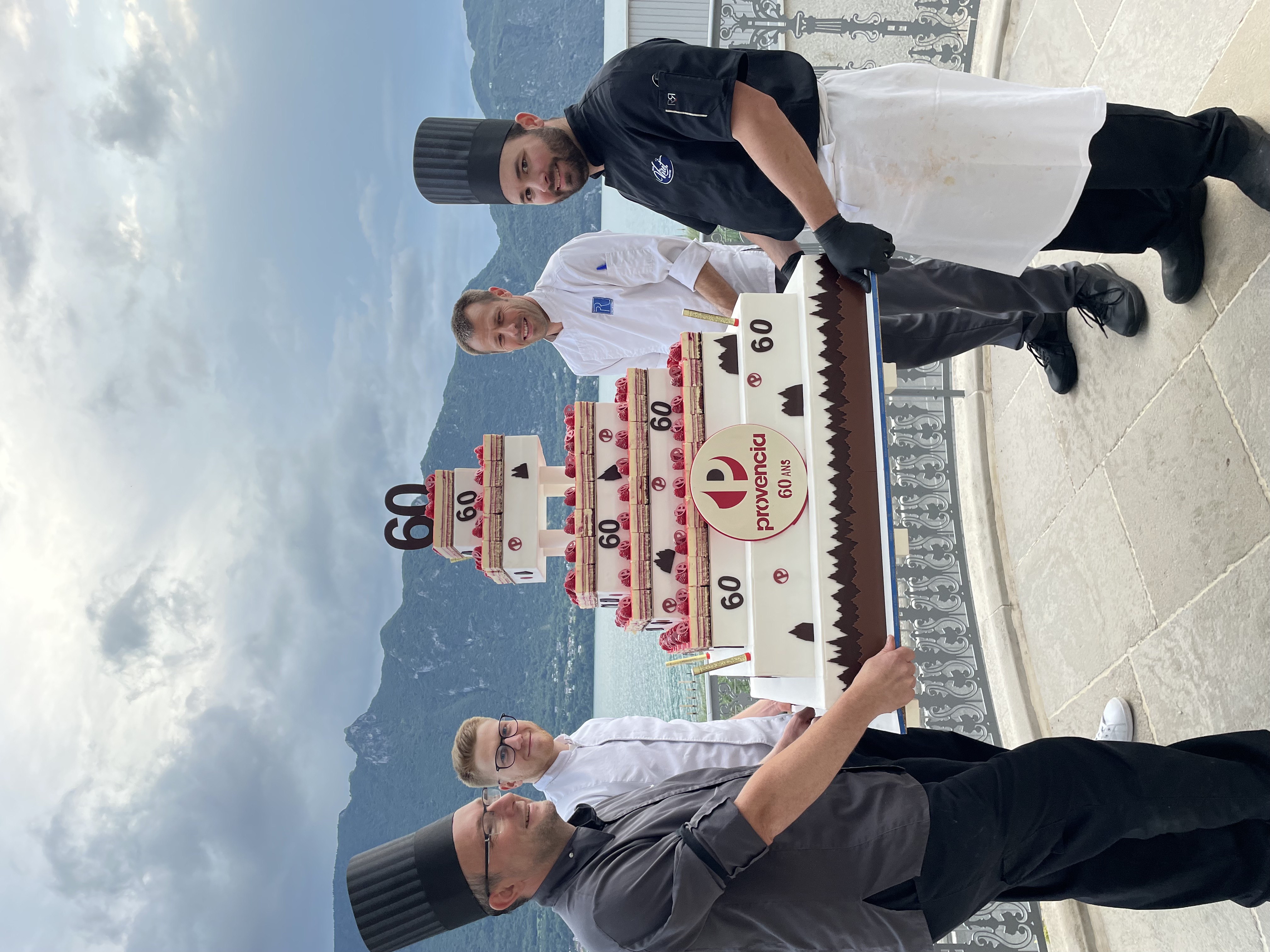
Event Catering in Majorca that protects your agenda, brand, and logistics
INNOV'events supports executives, HR, and communication teams with Event Catering for Majorca-based corporate events from 30 to 1,500+ guests. We plan menus, staffing, permits, venue constraints, and service timing with the same discipline you expect from any corporate project.
From board dinners in Palma to offsites in the Tramuntana, we secure the supplier chain and the run-of-show so your teams can focus on outcomes, not operational firefighting.
Table of contents
In a corporate event, catering is not “just food”: it governs guest flow, networking quality, timing, and how your brand is perceived. When service is slow, dietary needs are missed, or bar management is weak, senior guests remember the friction—not your message.
In Majorca, organizations typically expect a high hospitality standard, but also strict punctuality, discretion, and clear control of noise, access, and service rhythm—especially in venues with residential neighbors or limited loading areas.
As INNOV'events, we operate locally with a vetted network of caterers, chefs, rental partners, and venue managers. We coordinate tastings, staffing ratios, logistics windows, and contingency plans so delivery is predictable even in peak season.
INNOV'events figures that matter for Majorca operations
10+ years delivering corporate events across Spain with repeat clients and audited supplier processes.
1,000+ events produced nationally (meetings, incentives, product launches, gala dinners, and multi-site offsites).
30 to 1,500+ attendees covered with scalable catering models (plated, cocktail, food stations, hybrid formats).
48–72h typical turnaround for first proposal options in Majorca once the brief is validated (venue, format, headcount, service style).
How to organize a professional event in Majorca?
- Define the objective (cohesion, announcement, fidelity, performance).
- Set date, format and size (20–1 000 people).
- Secure the venue and accommodation according to seasonality.
- Lock down technical, suppliers and logistics.
- Drive the day J (timing, scene, entrance, flow).
Majorca references and recurring corporate catering programs
We regularly support companies and teams operating in Majorca (Palma and across the island) with annual kick-offs, leadership offsites, recognition dinners, and press-facing brand events. Many collaborations are renewed year after year because the island has specific operational realities: seasonal supplier saturation, tight access schedules, venue sound restrictions, and a guest profile that often mixes local staff with international leadership.
We would normally cite client references here; however, no company names were provided in your brief. If you share the list, we will integrate them transparently (without exaggeration) and specify the type of formats delivered in Majorca (e.g., executive dinners, conference catering, cocktail receptions, and multi-day offsite catering).
We send you a first proposal within 24h.
Why plan corporate catering in Majorca as a management tool?
For leadership, HR, and comms, an event is a compressed moment where culture, priorities, and credibility are tested in real time. Catering is one of the few elements every attendee experiences equally—so it becomes a practical lever to support engagement, employer brand, and stakeholder confidence.
Protect senior stakeholders’ time: a well-timed catering sequence (welcome coffee, breaks, lunch, cocktail) reduces schedule drift and avoids the “conference overrun” effect that damages agenda credibility.
Increase cross-team interaction: the right food and bar layout (stations, traffic lanes, micro-zones) increases meaningful conversations versus overcrowded buffets that stall movement.
Support internal communication goals: branded menu cards, discreet signage, and a service script aligned with your tone (formal vs. relaxed) reinforces what you want people to feel about the organization.
Manage dietary and inclusion expectations: in corporate groups, you will have vegetarian/vegan, gluten-free, halal/kosher preferences, allergies, and alcohol-free needs. Handling this professionally is a risk-control topic, not a “nice to have”.
Reduce operational risk: loading windows, refrigeration capacity, power distribution for cooking, and waste management are common failure points. Proper catering planning lowers the probability of incident or reputational impact.
Improve ROI clarity: when catering is designed around attendance patterns (arrival waves, session breaks, VIP moments), you reduce waste while improving perceived quality.
In Majorca, where hospitality standards are visible and comparison is immediate, the difference is rarely the menu alone—it is the execution: punctuality, discretion, and flawless coordination with the venue’s constraints and the island’s seasonal rhythm.
What Majorca-based teams expect from corporate Event Catering
Decision-makers on the island tend to be pragmatic: they want a partner who can deliver the same standard in April as in August, with clear service timing and no surprises on access or staffing. In Majorca, the main expectations we hear from executives and HR are:
- Predictable logistics: many premium venues have limited loading access, strict time slots, and sensitive neighbors. We plan detailed delivery schedules, vehicle sizing, and backup routes when traffic peaks.
- International guest readiness: offsites often bring leadership from multiple countries. That means bilingual menu labeling, clear allergens, and service staff comfortable with professional English.
- Seasonality planning: during high season, the best caterers and rental inventories are booked early. We secure key resources (staffing, glassware, refrigeration, generators when needed) before content and decor details.
- Venue constraint awareness: some fincas and rooftops have limited power, restricted open flames, or strict noise cut-offs. We design menus and kitchen setups that respect these constraints rather than “hoping it will work”.
- Discretion for leadership: board dinners or investor moments require controlled service, minimal interruptions, and staff briefed on confidentiality and pacing.
This is why we treat Event Catering in Majorca as an operational discipline: a mix of hospitality, risk management, and schedule engineering.
Which catering formats work best for corporate events in Majorca?
In corporate contexts, “animation” around food is effective when it supports your objective: facilitate introductions, keep energy stable, or create a premium moment for VIPs. In Majorca, food-led formats also work well because they connect naturally with local identity—provided they stay professional, punctual, and aligned with your brand.
Interactive animations in Majorca
Timed tasting stations: small guided tastings (3–5 minutes per group) to create structured mixing without disrupting the agenda. Useful during networking-heavy kick-offs.
Breakout coffee bars: multiple coffee points (not one) with clear signage and pre-batched options to prevent queues during 15-minute breaks.
Smart badge-based dietary routing: discreet symbols or color codes to direct guests to suitable options without making dietary needs a public conversation.
Art animations in Majorca
Chef’s table for executives: a controlled, seated moment with a short chef introduction (scripted and timed) for leadership dinners—high impact, low disruption.
Service choreography: synchronized course drops and silent clearing for keynote dinners where speeches and awards must stay on schedule.
Innovative animations in Majorca
Majorca-inspired cocktail menu: local product focus (seasonal, clearly labeled allergens) adapted to corporate expectations—balanced flavors, not “tourist portions”, and paced to avoid fatigue.
Healthy conference fueling: protein-forward, low-mess options; controlled sugar; strong hydration strategy—designed for long plenaries and afternoon workshops.
Zero-alcohol bar: premium alcohol-free cocktails for inclusive networking, particularly appreciated in corporate settings with early schedules.
Gourmand animations in Majorca
Service data checkpoints: headcount reconciliation by zone (conference hall, terrace, VIP area) to adjust replenishment and reduce waste in real time.
Silent replenishment logistics: back-of-house restocking routes to keep guest-facing areas calm—critical in high-end venues in Palma or rural fincas with limited space.
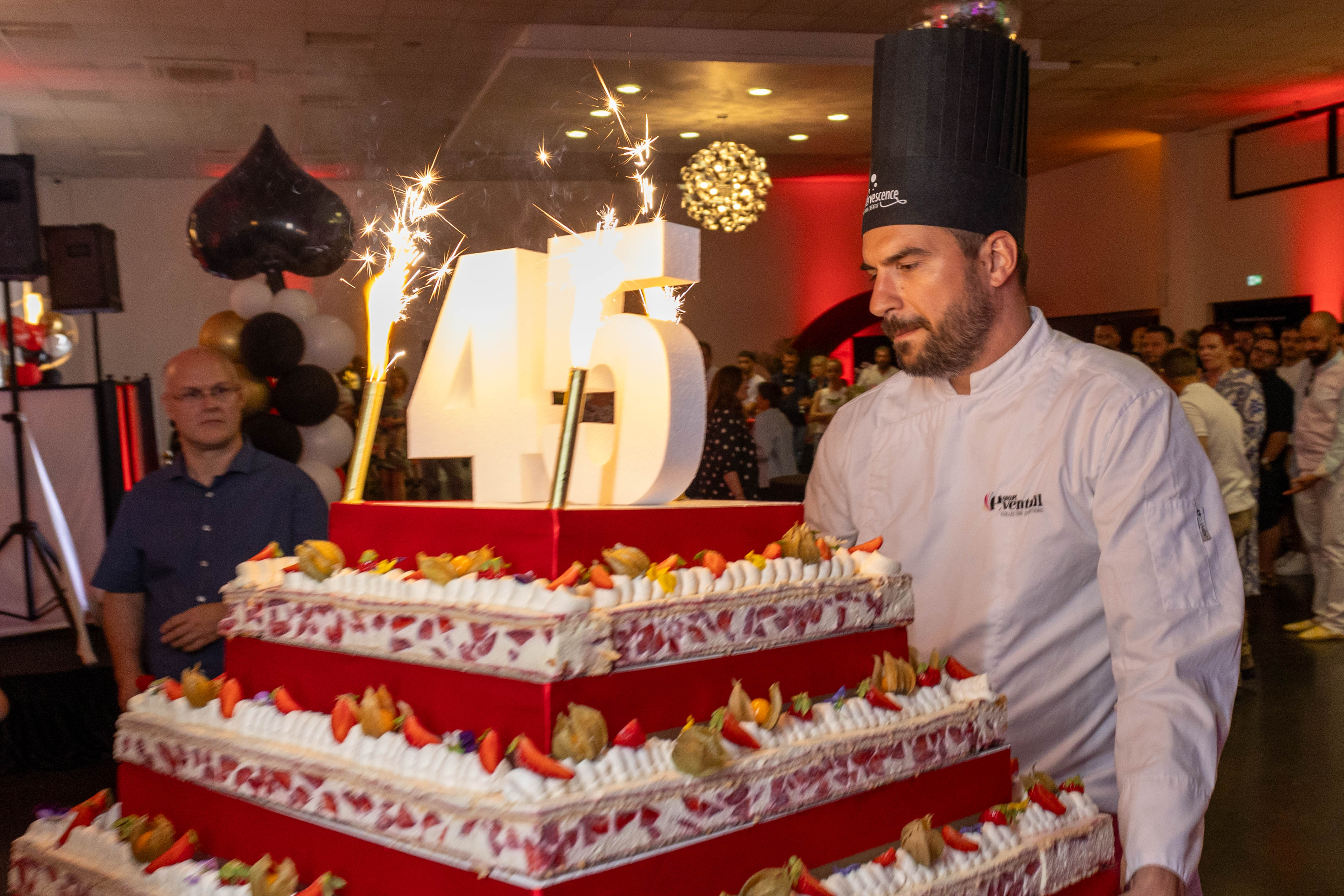
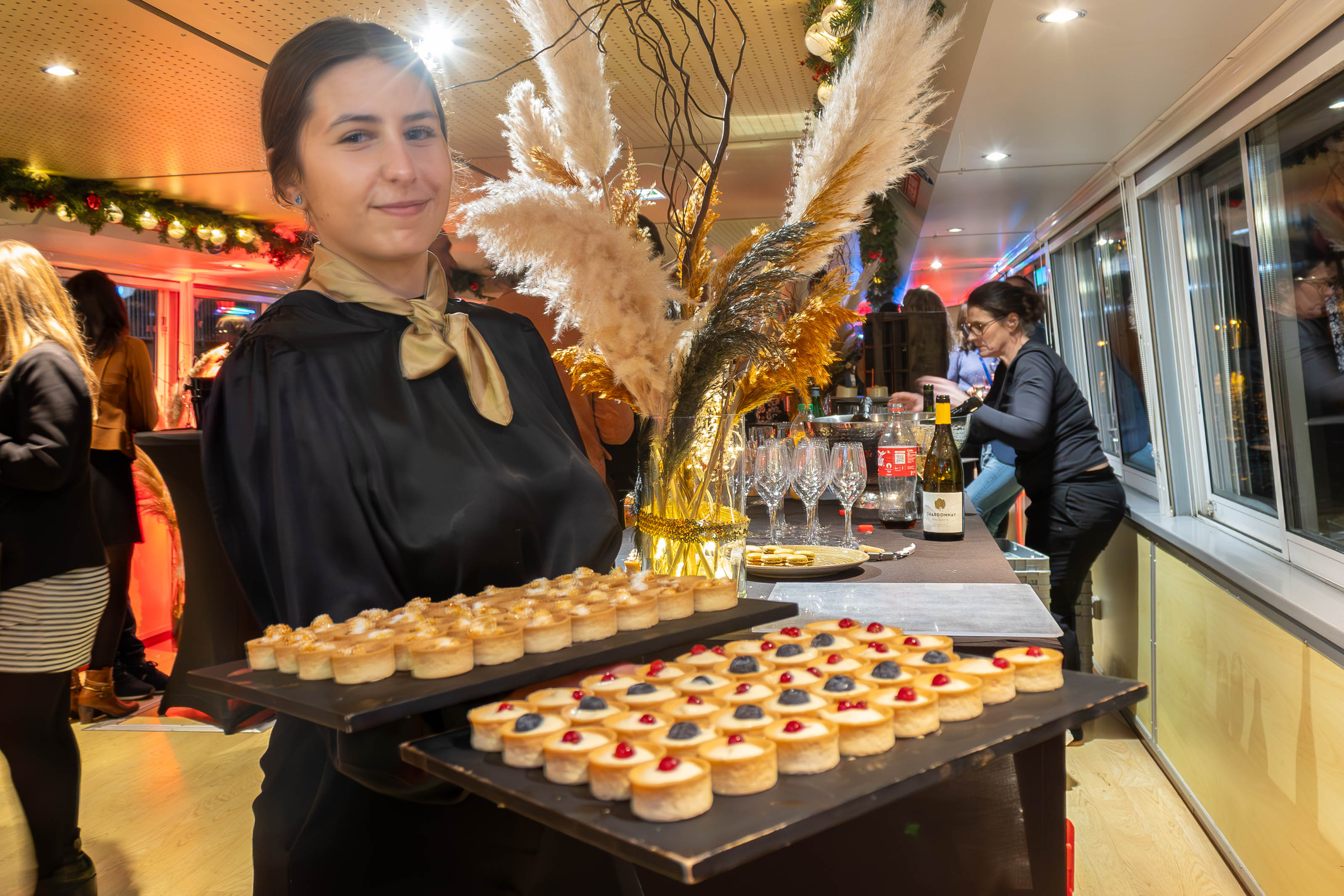
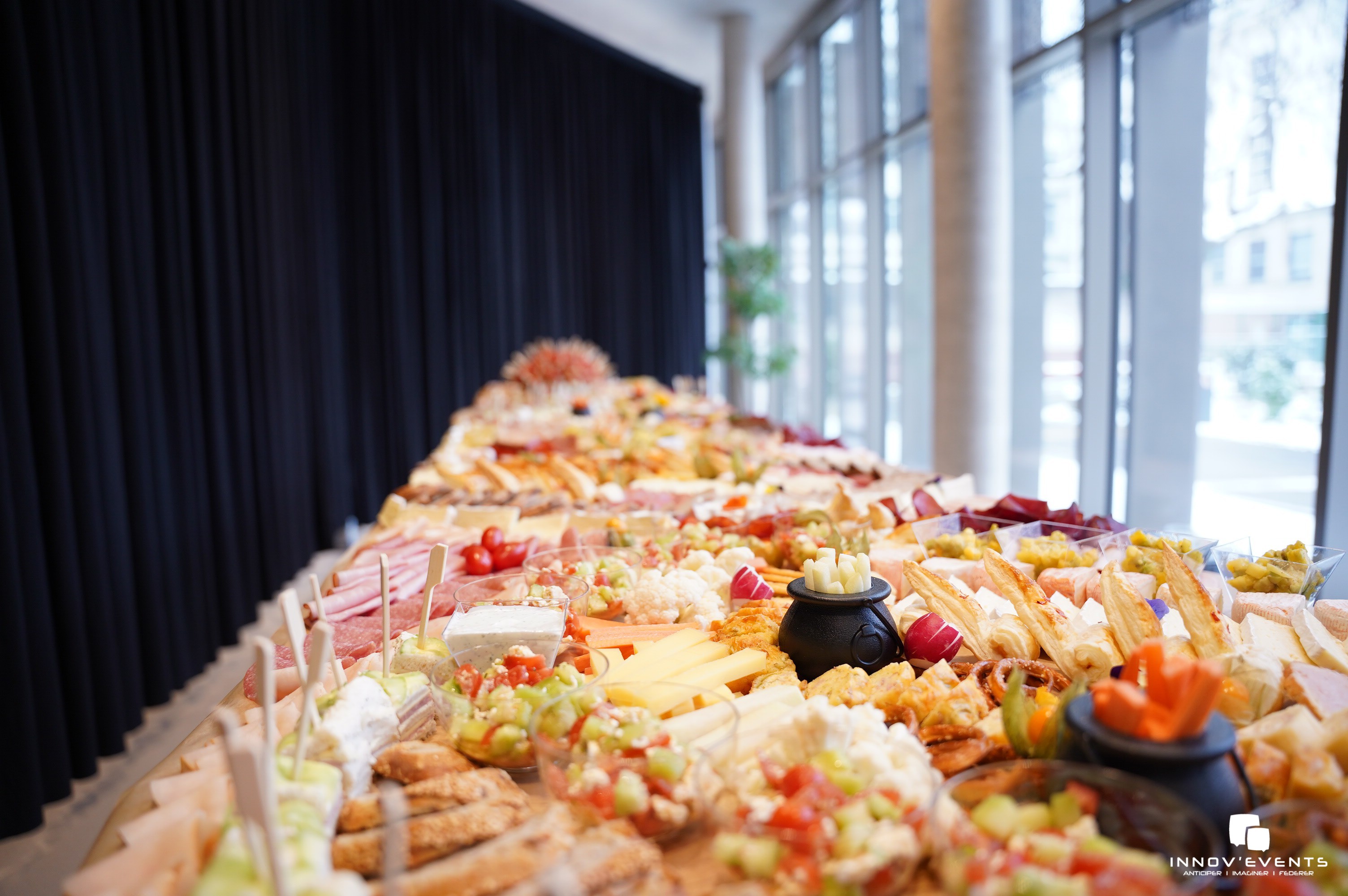
Whatever the format, we align catering choices with your brand image: a regulated company typically needs controlled service and clear compliance; a creative organization may favor more fluid stations. The point is not to be “different”; it is to be coherent and operationally reliable in Majorca.
How to choose a Majorca venue that supports catering logistics
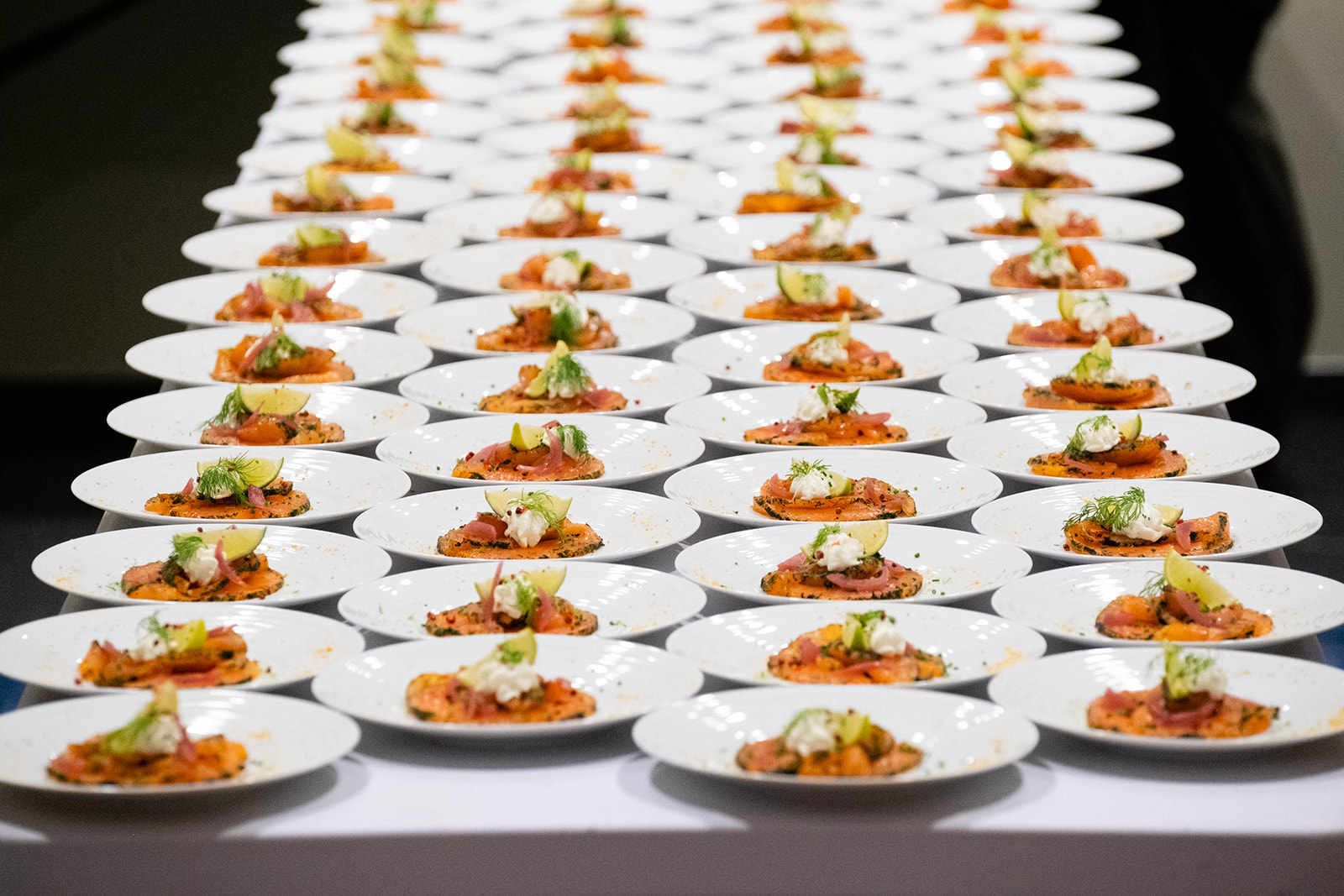
The venue determines catering feasibility more than most teams anticipate. In Majorca, venue selection must consider access roads, loading bays, power availability, kitchen infrastructure, and neighbor constraints. A beautiful space that cannot support refrigeration or a proper service flow creates risk on event day.
| Venue type | For which objective? | Main strengths | Possible constraints |
|---|---|---|---|
| Hotel conference venues (Palma area) | Conferences, sales kick-offs, leadership townhalls | Built-in kitchens, experienced staff, strong AV and back-of-house, predictable service timing | Less flexibility on external suppliers; package pricing; limited branding in some spaces |
| Private fincas / rural estates | Executive offsites, incentive dinners, brand storytelling moments | Privacy, strong perceived value, flexible layouts, outdoor cocktail potential | Access roads, limited power/water, weather exposure, stricter permitting and noise cut-offs |
| Beach clubs / coastal terraces | Networking cocktails, summer celebrations, client receptions | Atmosphere, natural flow for stations, strong bar culture | Wind, sound restrictions, seasonal saturation, transport coordination and late-hour constraints |
We recommend a site visit (or technical visit) before confirming catering style. Small details—lift size for trays, distance from kitchen to dining area, or where waste can be stored—directly impact service speed and guest perception in Majorca.
What budget to plan for Event Catering in Majorca?
Pricing for Event Catering in Majorca depends on format, service level, and operational constraints more than on menu alone. A 120-person cocktail in a hotel with existing infrastructure is fundamentally different from a 120-person dinner in a finca requiring kitchen build-out, rentals, extra staff, and transport.
Service format: coffee breaks and buffets are not comparable to plated dinners with synchronized service and wine pairing.
Headcount and timing: a short cocktail for 200 is different from feeding 200 within a 45-minute conference lunch window (more stations, more staff, faster replenishment).
Venue infrastructure: lack of kitchen, refrigeration, or power increases equipment and staffing needs (mobile kitchen, generators, cold chain reinforcement).
Staffing ratios: corporate-level pacing and discretion typically requires higher ratios (especially for VIP tables, tray service, and bar management).
Rentals and build: glassware, cutlery, linen, bars, back bars, lighting for service areas, flooring for outdoor zones.
Compliance and safety: allergen labeling, HACCP-aligned processes, permits when relevant, and documented supplier responsibilities.
Seasonality in Majorca: in peak months, supplier costs and minimums can rise due to demand and staffing scarcity; early booking protects options.
We frame budget decisions with a return-on-investment lens: reduce friction for attendees, protect leadership time, and avoid operational failures that damage credibility. The best spend is usually on service design (timing, staffing, flow) rather than on adding “more dishes”.
Why work with a local partner in Majorca for corporate catering?
On paper, many catering proposals look similar. The difference shows up on event day: supplier coordination, access timing, last-minute changes, and how calmly issues are handled. Choosing an agency with on-the-ground presence in Majorca reduces exposure to local constraints that are hard to manage remotely.
As your event agency in Majorca, INNOV'events coordinates not just the caterer, but the full operating system around them: rentals, staffing, logistics, venue rules, and the run-of-show that protects your program.
- Supplier accountability: local, vetted partners with verified staffing capacity and equipment availability in high season.
- Faster decision cycles: tastings, site checks, and technical alignment can happen quickly without long travel delays.
- Risk control: local knowledge of access limitations, neighborhood restrictions, and realistic timing between Palma and rural locations.
- Cost realism: we anticipate hidden costs (extra shuttles, additional bar points, power solutions) before they appear as last-minute add-ons.
We frame budget decisions with a return-on-investment lens: reduce friction for attendees, protect leadership time, and avoid operational failures that damage credibility. The best spend is usually on service design (timing, staffing, flow) rather than on adding “more dishes”.










What we deliver in Majorca: realistic corporate catering scenarios
Our projects in Majorca range from strict corporate settings to high-touch hospitality formats. Examples of typical assignments include: a two-day leadership offsite where we design conference breaks to keep energy stable, then pivot to a seated dinner with controlled speech pacing; a product presentation requiring precise timing between stage moments and service so press and partners remain focused; or a multi-location incentive day where lunch is served in a remote setting with a reinforced cold chain and a clear waste plan.
In practice, the complexity is rarely the menu. It is the coordination between agenda, guest flow, technical setup, and supplier operations. We build staffing plans, service maps, and contingency options so that your event remains professional even when the headcount changes late, a flight is delayed, or the wind makes an outdoor setup more fragile than expected.
Common Event Catering mistakes we prevent in Majorca
Underestimating access and loading constraints: arriving late because the venue only allows a short unloading window, or because vehicle size was not aligned with the access road.
Single-point congestion: one buffet line or one bar for 200+ guests creates queues, frustration, and schedule drift.
Weak dietary management: allergens not labeled, vegetarian options running out, or VIP dietary needs handled ad hoc.
Insufficient cold chain in warm months: product quality risk and service delays when refrigeration is not sized for the menu and headcount.
Ignoring sound and neighbor restrictions: service and breakdown plans that create noise issues, causing tension with venues and potentially cutting your program short.
Rentals not matched to the service plan: not enough glassware rotation, wrong plate sizes for the menu, or missing back-of-house tables leading to messy service.
Our role is to prevent these risks with a disciplined plan: site validation, supplier alignment, staffing ratios, and a clear run-of-show. In Majorca, this is what separates “good intentions” from controlled delivery.
Why Majorca clients renew with INNOV'events
Repeat business comes from predictability. Corporate teams return when the agency reduces workload, makes budgeting clearer, and delivers consistent outcomes across different venues and seasons in Majorca.
Single point of contact for catering, rentals, staffing, and venue coordination to reduce internal time spent chasing suppliers.
Documented operating plans: service timing, staffing lists, access schedules, and contingency actions shared in advance.
Post-event debrief: what worked, what to improve, and how to optimize budget and flow for the next edition.

Loyalty is a practical proof of quality: when teams are under pressure and have reputational exposure, they keep partners who deliver calm execution in Majorca, not just attractive proposals.
Our Majorca process for corporate Event Catering delivery
👉 Majorca brief calibration and constraints check
We start with a structured brief: objective, audience profile, headcount range, agenda, venue shortlist, dietary landscape, and brand constraints. We validate what is realistic in Majorca for your date (seasonality, supplier availability, access limits) and define the decision points to lock early.
👉 Menu and service model proposal with transparent options
We provide 2–3 service models (e.g., cocktail stations vs. plated dinner vs. hybrid) with clear implications on staffing, timing, rentals, and guest experience. We specify what is included, what is optional, and what drives cost so your internal approvals are faster and cleaner.
👉 Site visit and technical validation in Majorca
We assess kitchen/back-of-house, power, water, refrigeration, waste routes, and access schedules. If the venue is outdoors, we review wind/rain exposure and define the Plan B. This step is where we prevent most day-of issues.
👉 Supplier lock, tastings, and staffing plan
We confirm caterer, rentals, and key staff. We organize tastings where relevant (especially for executive dinners or brand-facing events) and finalize staffing ratios, bar points, service zones, and allergen protocol.
👉 Run-of-show integration and on-site production
We integrate catering timing into the master schedule: arrival waves, breaks, speeches, VIP moments, and teardown. On event day, a producer coordinates catering, venue, and technical teams, ensuring punctual service, controlled guest flow, and fast issue resolution.
👉 Debrief and optimization for next Majorca edition
Within days, we share a debrief: attendance vs. forecast, consumption patterns, queue points, and cost optimizations. This is essential for recurring programs in Majorca where leadership expects continuous improvement.
FAQ sobre la organización Event Catering en Majorca
How far in advance should we book catering in Majorca?
For Majorca high season (roughly May to September), book 8–16 weeks ahead for strong supplier choice; for large formats (500+), 4–6 months is safer. Off-season, 4–8 weeks can work, but venues with restrictions still require early technical validation.
What is a realistic staffing ratio for catering in Majorca?
As a working range in Majorca: cocktail service often needs 1 waiter per 20–30 guests plus dedicated bar staff; plated dinners typically run 1 waiter per 10–15 guests depending on course count and service speed requirements. VIP service or tight agendas require higher ratios.
Can you handle dietary needs and allergens for Majorca events?
Yes. We build a dietary matrix (allergies, preferences, alcohol-free) and implement labeled menus, discreet guest identification if needed, and a clear kitchen protocol. For corporate groups in Majorca, we recommend confirming dietary data 7–10 days before the event and locking a final update window for last-minute changes.
Do Majorca venues allow external caterers and rentals?
It depends. Hotels often require in-house catering or have preferred lists; fincas and private venues may allow external partners but enforce rules on power, waste, noise, and loading times. We confirm this during the venue check and include any mandatory fees or restrictions in the proposal.
What budget range should we expect for Event Catering in Majorca?
Budgets vary widely by format. As an indicative corporate range in Majorca: coffee breaks may start around €8–€18 per person; cocktail receptions often fall around €35–€90 per person; plated dinners commonly range €70–€160+ per person depending on venue constraints, staffing level, rentals, and beverage program. We confirm a realistic range after headcount, venue, and service style are defined.
Request a Majorca catering proposal with operational clarity
If you are comparing agencies, we suggest starting with a 20-minute scoping call: headcount range, venue shortlist, agenda, and the level of hospitality expected by your leadership or clients. From there, we can deliver a clear proposal for Event Catering in Majorca with service models, staffing assumptions, logistics constraints, and transparent budget drivers.
For peak dates on the island, early planning protects supplier availability and avoids last-minute compromises. Contact INNOV'events to secure a first set of options and a realistic production timeline.
INNOV'events Majorca Agency
Cyril Azevedo is the manager of the INNOV'events Majorca office. Reach out directly by email at cyril@innov-events.es or via the contact form.
Contact the Majorca agencyAll our services & entertainment Majorca
Discover our event services
Discover our event entertainment available in the España
- Event Hostess Majorca
- Escape Game Majorca
- MasterChef Cooking Workshop Majorca
- Magician Majorca
- Marquee Rental Majorca
- Color Analysis Workshop Majorca
- Inflatable Games Majorca
- Valet Parking Service Majorca
- Football Simulator Majorca
- LED Furniture Rental Majorca
- Light Branding Majorca
- Unique Dining Experience Majorca
- Light Painting Majorca
- Murder Mystery Party Majorca
- Prize Contest Majorca
- Promotional Displays (POS) Majorca
- Virtual Reality Majorca
- Molecular Gastronomy Workshop Majorca
- Halloween Entertainment Majorca
- Fireworks Show Majorca
- Giant Games Challenge Majorca
- Event Host / MC Majorca
- Photo Booth Animation Majorca
- Santa Claus Entertainment Majorca
- Kids Entertainment Majorca
- Guided Tour Majorca
- Urban Rally Majorca
- Ball Pit Majorca
- Flight Simulator Majorca
- Food Truck Rental Majorca
- World Record Challenge Majorca
- Surf Simulator Majorca
- Wine Casino Majorca
- Makeover Workshop Majorca
- Perfume Creation Workshop Majorca
- Acting Workshop Majorca
- CSR Activities Majorca
- Archery Majorca
- Security Staff Majorca
- Wine Tasting Majorca
- Mime Performer Majorca
- TV Game Show Majorca
- Funfair Majorca
- Crisis Management Workshop Majorca
- Crisis Negotiation Workshop Majorca
- Arcade Games Majorca
- Indoor Skydiving Simulator Majorca
- Ski Simulator Majorca
- Racing Circuit Experience Majorca
- Introductory Flight Experience Majorca
- Tasting Experience Majorca
- Build Your Own Foosball Workshop Majorca
- 2CV Rally Majorca
- LEGO Challenge Majorca
- Casino Night Majorca
- Interpreter / Translator Majorca
- Promotional Giveaways Majorca
- Shuttle Transport Majorca