
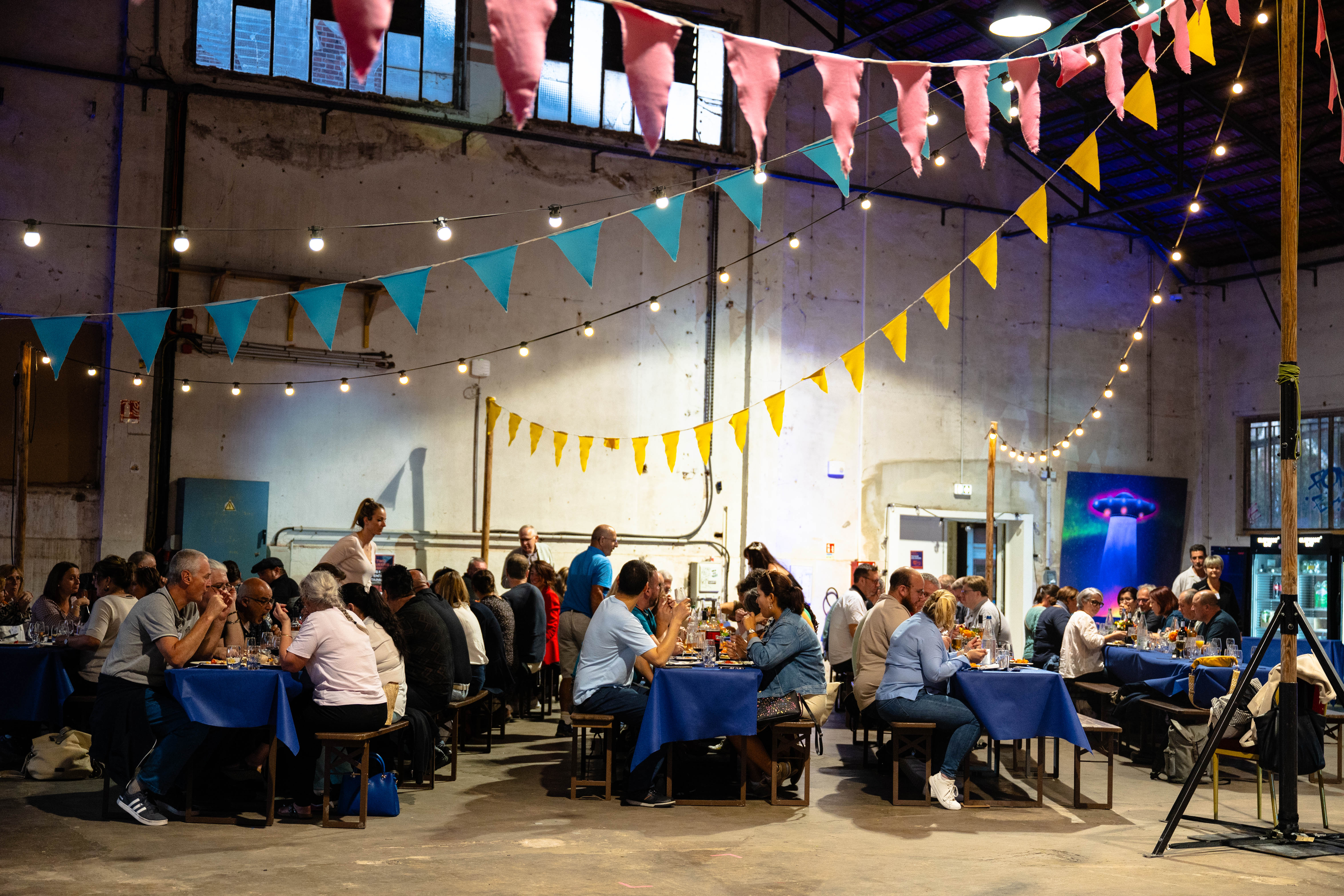
Team Dinner in Majorca that executives can approve with confidence
INNOV'events designs and delivers Team Dinner formats in Majorca for executive committees, HR and internal comms, typically from 20 to 500 attendees. We secure the venue, run-of-show, suppliers, transport, and on-site production so your leadership team stays focused on people and message—not operational risk.
From airport arrivals and rooming lists to AV, timing, and guest flow, we manage the details that make a corporate dinner feel effortless for guests and safe for decision-makers.
Table of contents
In a corporate context, entertainment is not “extra”; it is a management lever. A well-structured Team Dinner creates shared reference points, accelerates cross-team trust, and gives leaders a controlled moment to reinforce priorities without forcing a formal plenary.
In Majorca, organisations expect operational precision: clear timings around flights, venues that respect noise regulations, and supplier coordination that anticipates seasonal pressure. The bar is high because the island is a premium destination—your employees notice quickly when logistics are improvised.
INNOV'events operates with local production partners on the island and an executive-level methodology: risk mapping, budgeting by line item, and tight run-of-show management. You get one accountable project lead and an on-site team sized to your headcount and complexity.
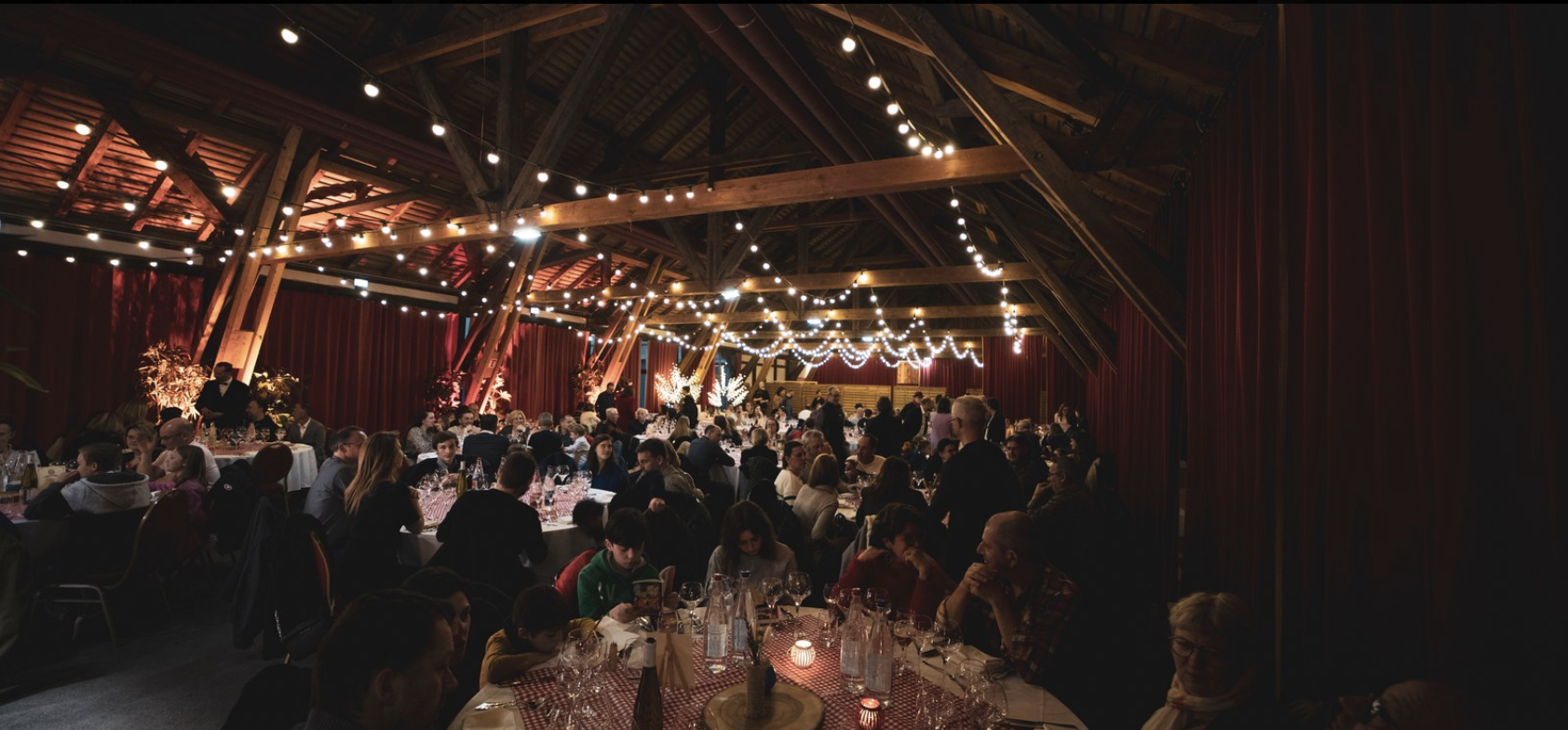
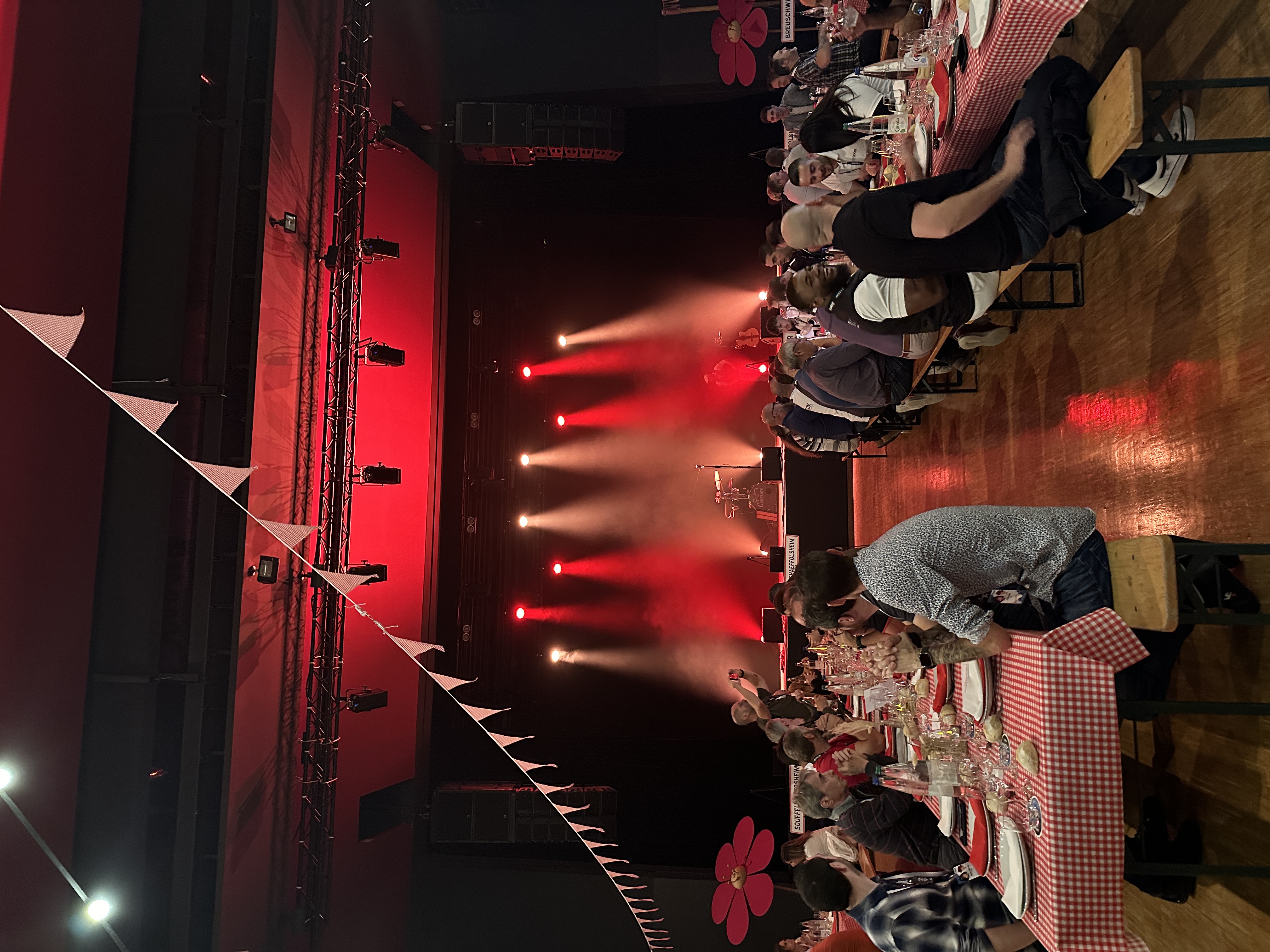
INNOV'events figures that matter for a Majorca corporate dinner
12+ years delivering corporate events across Spain, with recurring programmes for HR and internal communication departments.
300+ corporate events produced within our network (dinners, incentives, kick-offs, leadership offsites), including complex multi-supplier productions.
20–500 guests is our typical range for a Team Dinner in Majorca, with scalable staffing (project lead, production, host/MC, AV supervision, transfers coordination).
1 run-of-show, 1 budget, 1 accountable owner: governance designed for executives who need clarity and traceability.
How to organize a professional event in Majorca?
- Define the objective (cohesion, announcement, fidelity, performance).
- Set date, format and size (20–1 000 people).
- Secure the venue and accommodation according to seasonality.
- Lock down technical, suppliers and logistics.
- Drive the day J (timing, scene, entrance, flow).
Companies organising team dinners in Majorca: what we see on the ground
We support organisations that choose Majorca to bring distributed teams together—often after a growth phase, an acquisition, or a transformation programme. In practice, many groups return year after year because the island combines strong air connectivity, varied venue options, and a “change of context” effect that helps teams engage.
Typically, the sponsors we work with are HR directors needing measurable cohesion outcomes, communication teams protecting brand tone, and executive assistants under pressure to deliver a flawless evening with limited internal bandwidth. The requests are rarely vague: they want certainty on timings, controlled guest experience, and suppliers who can operate at corporate standards even during peak season.
If you share your internal constraints (procurement rules, approval cycles, brand guidelines, duty-of-care), we translate them into a workable production plan with local suppliers and clear accountability on the island.
We send you a first proposal within 24h.
Why organise a Team Dinner in Majorca for leadership and HR outcomes
A Team Dinner in Majorca is a strategic moment when it is designed around a business intention: integration, retention, leadership visibility, or a culture shift. It becomes a measurable management tool when the format, timing, and interactions are engineered—rather than leaving “team bonding” to chance.
Accelerate integration after change: post-merger or rapid hiring periods often create “parallel cultures.” A structured dinner with seating strategy, guided interactions, and leadership framing helps prevent siloing that later shows up in project friction.
Increase leadership credibility: executives can use a short, well-timed intervention (6–8 minutes) supported by sound/lighting and a clear script to anchor priorities without turning the evening into a conference.
Improve cross-functional collaboration: curated seating and interactive sequences create new connections between teams that rarely work together (sales/ops/product). We design it so it feels natural to guests, not “forced networking.”
Reinforce employer brand internally: in talent-competitive sectors, employees compare internal events to external standards. A well-produced Team Dinner signals organisational maturity and care—especially when dietary needs, accessibility, and duty-of-care are handled properly.
Protect time and attention: when travel is involved, the dinner is often the only moment with 80–90% attendance. Using it intelligently reduces the need for extra sessions and improves overall programme ROI.
Majorca adds a strong “shared memory” effect, but it also raises expectations: if the logistics are weak, the island context amplifies disappointment. Our role is to convert the destination into a controlled business advantage, aligned with your culture and the local operational realities.
What Majorca changes in your dinner planning and risk profile
Planning in Majorca is not the same as planning on the mainland. The island is highly professional, but it runs on seasonal capacity constraints and strict local rules that directly affect corporate events.
Seasonality and supplier availability are the first constraints. From late spring to early autumn, top venues and technical providers can be fully booked weeks in advance, and prices increase. If you are organising for 120–250 guests, the difference between “good” and “excellent” suppliers is often availability, not intention. We typically recommend locking the venue first, then catering/AV/transport as a coordinated package to avoid mismatched standards.
Noise regulations and curfews are another point decision-makers underestimate. Some sea-facing or rural properties have strict sound limits and time windows; others can host a DJ but require specific placement of speakers, sound checks at certain hours, or an indoor fallback plan. We factor this in early so you don’t discover constraints after invitations are sent.
Transfers and guest flow matter because many groups mix hotel zones (Palma, Playa de Palma, Calvià, Portals, Alcúdia). The operational question is not only “bus or taxis,” but: staging points, timing buffers, luggage handling if arrivals are close to dinner, and contingency for delayed flights. We plan the evening around real flight patterns and realistic transfer times, not theoretical maps.
Finally, there is a perception challenge: for some audiences, an island dinner can be seen as “reward,” for others as “expense.” Communication framing, CSR elements, and transparency on objectives help HR and comms defend the event internally.
Which entertainment works best for a team dinner in Majorca?
Entertainment is effective when it supports your objective: cohesion, recognition, integration, or leadership communication. In Majorca, the island setting can easily dominate; our job is to make the entertainment feel coherent with your company tone and operational constraints (sound limits, timing, venue layout, audience mix).
Interactive animations in Majorca
Guided table challenges (15–20 minutes, low-pressure): ideal for mixed seniority groups. We use short prompts linked to company values or project realities, facilitated discreetly so it stays natural. Works well between starter and main to avoid energy dips.
Live polling + “culture snapshots”: a host collects anonymous inputs (e.g., “one behaviour to stop, one to start”) and turns them into a short on-stage moment. Useful when HR wants signals without running a workshop.
Recognition sequences: structured awards that avoid embarrassment. We propose categories grounded in business contribution (customer impact, reliability, innovation) and control timing so it does not become a long internal ceremony.
Art animations in Majorca
Acoustic welcome set (guitar/voice or small trio): supports networking and brand tone, especially for executive audiences. Lower sound footprint than a DJ at the start.
Contemporary dance or percussion with corporate pacing: short, high-impact performances (6–8 minutes) between courses, coordinated with service and lighting cues.
Local-inspired but corporate-appropriate moments: we can integrate Majorcan cultural references in a respectful way (music, storytelling, gastronomy) without turning it into a tourist show. The rule: subtle, high quality, and aligned with your audience.
Innovative animations in Majorca
Chef’s station with controlled throughput: for example, a dessert finishing station or a pairing bar that avoids long queues. We calculate service capacity based on guest count and venue constraints.
Majorca product tasting with narrative: small-format tasting led by a professional (olive oil, local wines, non-alcoholic pairings). Works well for senior groups and supports CSR when sourced responsibly.
Dietary & allergen management as an experience: not an afterthought. We implement clear labelling, pre-identified special meals, and service briefing so guests feel cared for—critical for employer brand.
Gourmand animations in Majorca
Audio guest journey: discreet sound design across spaces (welcome, dinner, after-dinner) with cues matched to the run-of-show, avoiding “random playlist” effect.
Micro-content capture for internal comms: a lightweight content plan (interviews, key quotes, short team messages) captured without disrupting guests. Useful when comms needs proof of engagement.
CSR-linked dinner elements: for example, a short on-stage moment tied to a local Majorca initiative, with a transparent donation mechanism and a post-event report. Done correctly, it helps HR defend the budget internally.
Whatever the format, we align entertainment with brand image, leadership posture, and risk constraints. A finance audience does not expect the same energy as a sales convention; an acquired company may need inclusion over hype. Our proposals always specify timing, space needs, sound requirements, staffing, and contingency options.
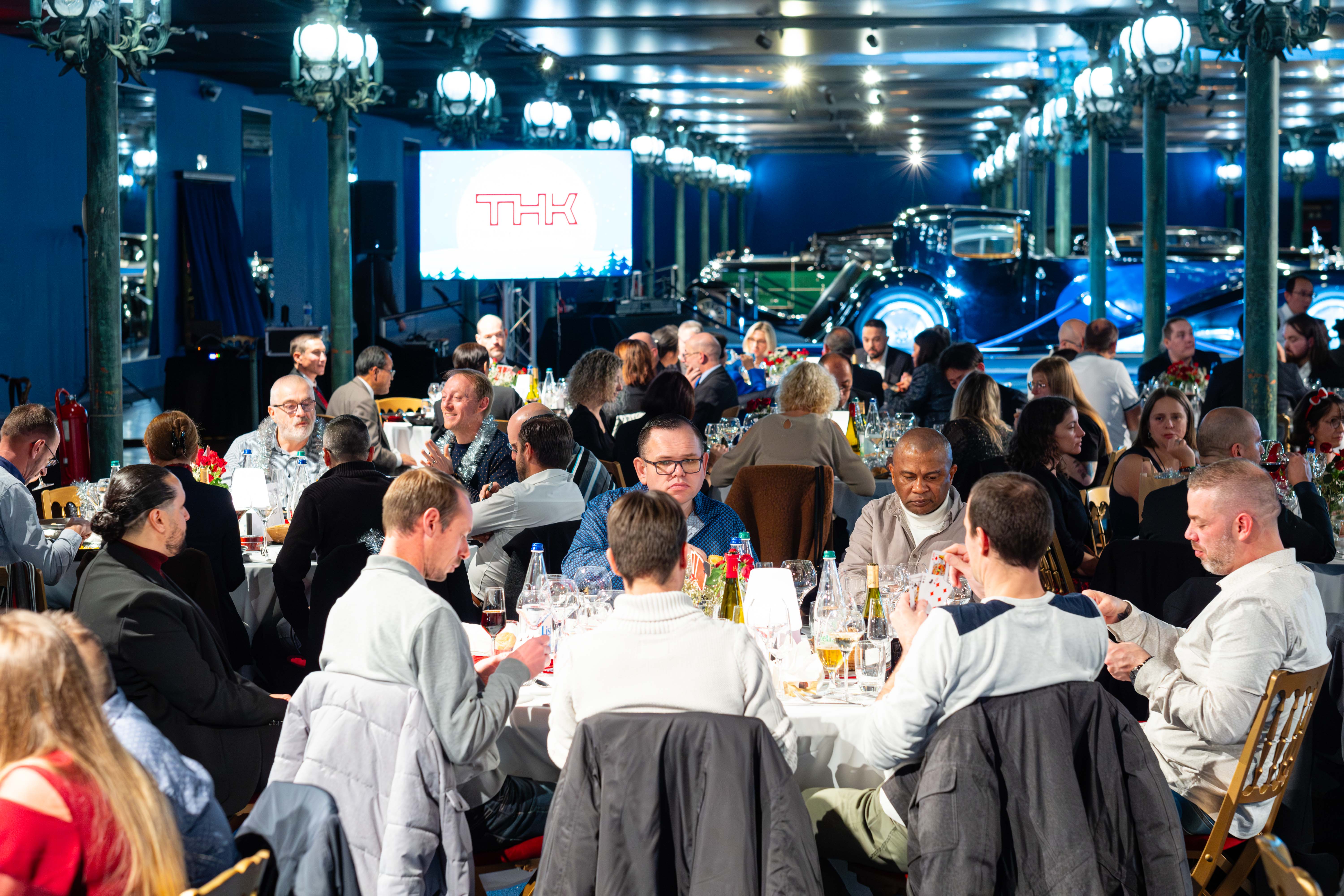
How to choose a venue in Majorca for a corporate team dinner
The venue sets the entire perception: quality standard, comfort, privacy, and operational feasibility. In Majorca, the best decision is rarely the most scenic option—it is the one that fits your guest flow, sound constraints, and service capacity.
| Venue type | For which objective? | Main strengths | Possible constraints |
|---|---|---|---|
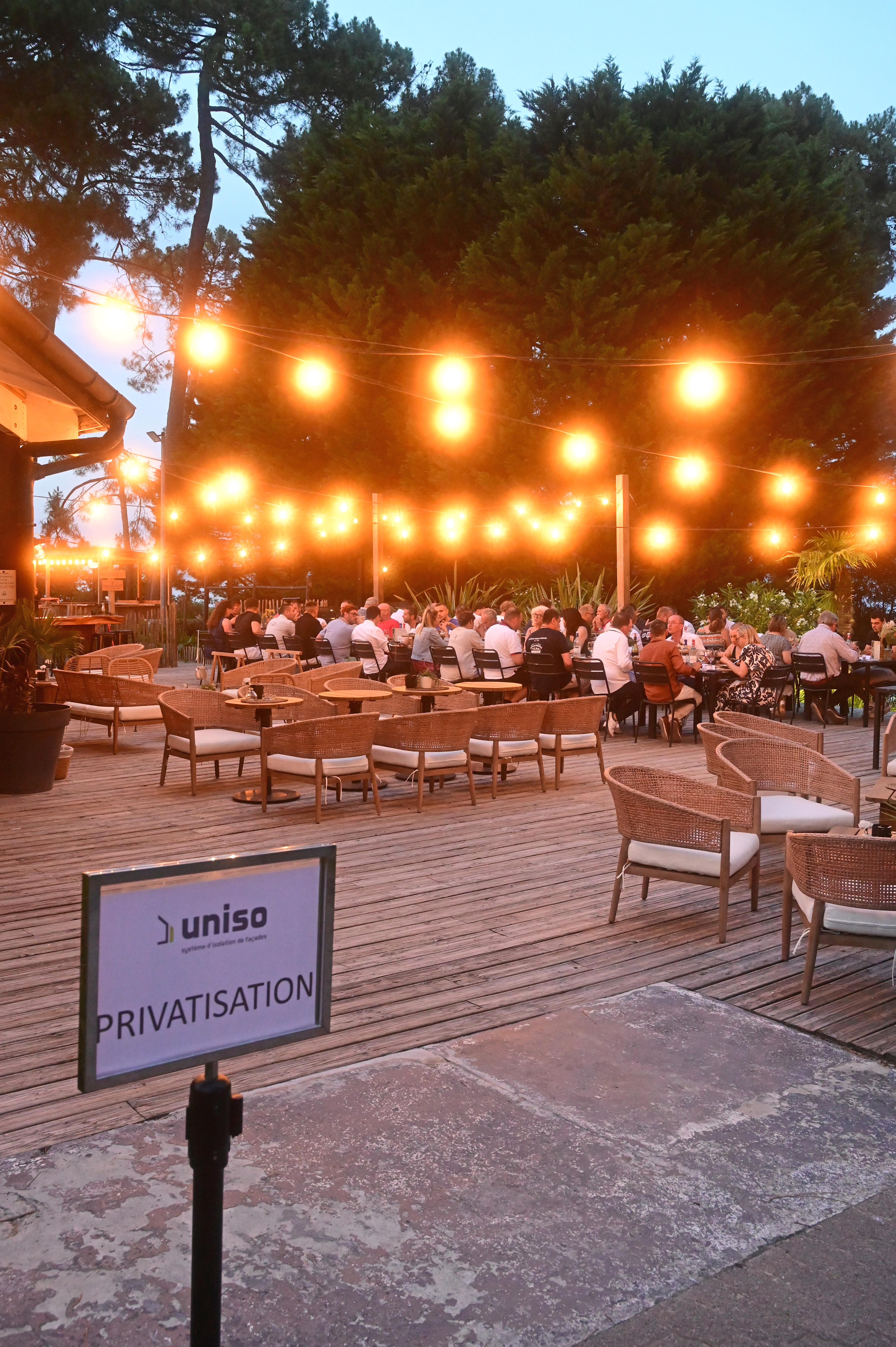
| Seafront restaurant with private terrace | Executive hosting, partner dinners, recognition moment | Strong setting, easy guest buy-in, high perceived value with minimal staging | Noise restrictions, wind exposure, limited AV rigging, parking/transfers to manage |
| Hotel ballroom / dedicated event space (Palma area) | Large groups (150–500), speeches, awards, controlled production | Built-in AV infrastructure, weather-proof, consistent service pace | Can feel “conference-like” without design work; need careful zoning for networking |
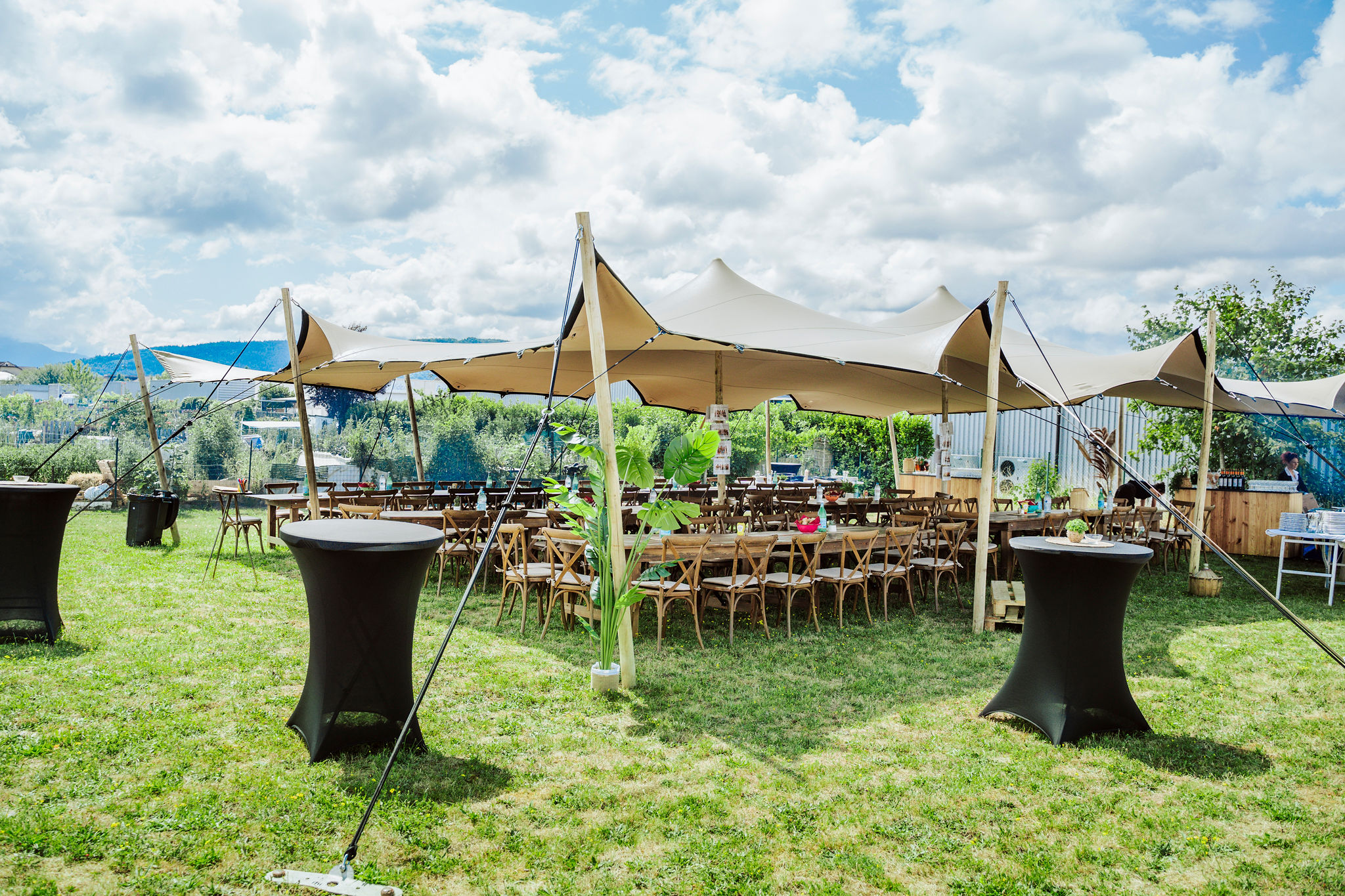
| Private finca (countryside) | Culture & cohesion, immersive dinner with storytelling | Exclusive use, flexible layout, strong team experience away from the city | Access roads, power limits, curfew constraints, higher transport complexity |
| Rooftop venue in Palma | Modern brand positioning, shorter dinner + cocktail format | Urban convenience, strong afterwork feel, good for mixed international teams | Capacity limits, weather dependency, sound limitations, tight load-in windows |
We insist on site visits (or a documented technical recce when time is tight): access for suppliers, loading points, power availability, indoor fallback, acoustics, and guest circulation. These checks prevent the classic “beautiful venue, impossible logistics” scenario that creates last-minute costs and reputational risk.
What budget to plan for a Team Dinner in Majorca
The cost of a Team Dinner in Majorca depends on guest count, seasonality, venue strategy, and production level. We build budgets with clear line items so finance and procurement can validate with confidence and no hidden operational gaps.
Headcount and format: seated dinner vs. cocktail + stations changes staffing, furniture, and service timing. A 200-guest seated dinner requires a different service ratio than a 200-guest cocktail.
Seasonality in Majorca: peak months increase venue minimum spends and supplier rates. Planning outside peak can widen options and improve negotiating leverage.
Venue exclusivity and privacy: private buyouts and fincas add costs (minimum spend, security, additional staff) but reduce brand risk and improve control.
Technical production: microphones, lighting, DJ/band, staging, and sound design must match venue constraints. Under-specifying AV is a common false economy for leadership messages.
Transfers and duty-of-care: coach shuttles, staggered departures, meet-and-greet at hotels, and contingency vehicles are essential when alcohol is served and teams are spread across the island.
Content & comms deliverables: if internal comms needs photos/video within 24–72 hours, it changes staffing and editing workflows.
As an order of magnitude, many corporate dinners on the island land between €120–€250 per person for a professionally produced evening (venue + F&B + basic entertainment), and higher when exclusivity, premium venues, complex transfers, or high-end production are required. We help you arbitrate spend where it actually impacts perception and outcomes—then document the ROI in terms that management understands (attendance, engagement signals, leadership visibility, retention narrative).
Why choosing a Majorca event agency reduces risk
In a destination context, the main risk is not creativity—it is execution. An event agency in Majorca brings local supplier leverage, real-time troubleshooting, and an understanding of island constraints (permits, curfews, access, seasonality). That is how you protect your brand and your internal sponsors.
With INNOV'events, you have a structured corporate approach (briefing, validation gates, budget control) combined with local production capacity. When a flight is delayed, when wind forces a terrace plan change, or when a venue imposes a last-minute sound constraint, local presence and established supplier relationships make the difference between a small adjustment and a visible failure.
For teams comparing options, you can review our island capability here: event agency in Majorca.
- Supplier accountability: vetted partners used to corporate expectations (timing discipline, invoicing standards, compliance).
- Faster problem resolution onsite: production decisions made in minutes, not through remote back-and-forth.
- Cost realism: budgets aligned to Majorca market conditions and seasonal availability, reducing rework during procurement.
- Compliance and duty-of-care: transport planning, safety checks, and contingency design integrated from the start.
As an order of magnitude, many corporate dinners on the island land between €120–€250 per person for a professionally produced evening (venue + F&B + basic entertainment), and higher when exclusivity, premium venues, complex transfers, or high-end production are required. We help you arbitrate spend where it actually impacts perception and outcomes—then document the ROI in terms that management understands (attendance, engagement signals, leadership visibility, retention narrative).













Examples of team dinner formats delivered in Majorca settings
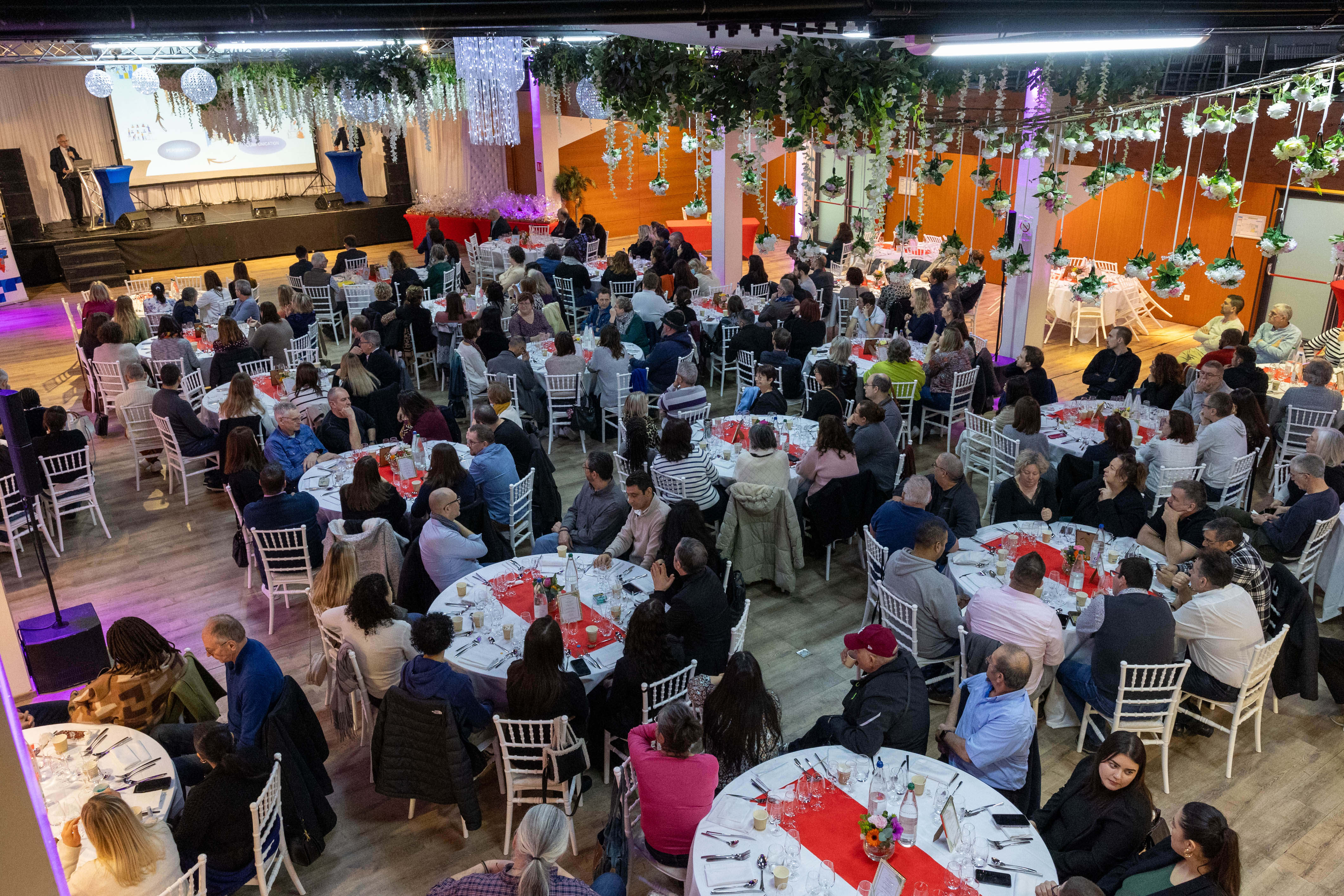
Our projects vary because company realities vary. A leadership offsite dinner for 35 people requires discretion, flawless service pacing, and a setting where private conversations can happen. A 220-person annual team gathering needs controlled guest flow, strong AV for messages, and entertainment that energises without diluting brand tone.
In Majorca, we frequently deliver formats such as: a cocktail welcome with acoustic set and structured seating to mix teams; a short CEO message supported by clean AV; then an after-dinner moment (DJ or live act) calibrated to venue constraints and audience profile. We also manage multi-language hosting when teams are international, and we can integrate internal comms capture without turning the evening into a content shoot.
Operationally, our adaptability shows in the details: staggered coach schedules by hotel zone, pre-assigned dietary meals, weather-proof layouts, and supplier briefs that prevent “interpretation gaps.” These are the elements that executives feel immediately—because nothing looks improvised.
Mistakes we help you avoid when planning in Majorca
Booking the venue before validating sound and curfew rules: this is how companies end up with a DJ they cannot use, or a forced early finish that frustrates teams.
Underestimating transfer logistics: when 150 guests leave at once, taxis are not a plan. Without a transport matrix and dispatch, departures become chaotic and brand-damaging.
AV as an afterthought: a poor microphone mix or weak lighting makes leadership messages feel amateur and reduces attention—especially in large rooms.
No clear responsibility split: when HR, comms, and an assistant each “own a part,” gaps appear between suppliers. We establish one governance structure and one decision chain.
Ignoring dietary and accessibility needs: these issues are not marginal; they create negative stories that spread internally fast. We use a traceable process from RSVP to service.
Over-programming the evening: too many speeches or activities kills networking. We balance structure and breathing space to fit executive objectives.
Our role is to prevent these risks with pre-production discipline and on-site control. You should not be “managing suppliers” on the night; you should be hosting your teams and protecting leadership time.
Why clients repeat with INNOV'events in the Balearic Islands
Repeat business in corporate events is rarely about novelty; it is about reliability under pressure. Clients come back when they know the agency will protect internal stakeholders, anticipate operational friction, and deliver the same standard even when the context changes (new leadership team, different hotel, tighter budget, higher headcount).
Multi-year programmes: many clients return annually for team gatherings because we document learnings and improve the format each edition (timings, seating, supplier performance, comms deliverables).
Reduced internal workload: HR and comms teams typically regain significant time because we provide ready-to-approve documents (budget, run-of-show, supplier briefs, risk plan).
Stable supplier ecosystem: in Majorca, knowing who can deliver at corporate standard during peak season reduces uncertainty and protects procurement cycles.

Loyalty is the most concrete proof of quality in events: it means the client experienced real control, not just a good-looking proposal.
Our process to deliver a Team Dinner in Majorca on time and on budget
👉 Step 1 (Majorca) — Brief, constraints, and success criteria
We start with a working session with the sponsor (HR, comms, EA, or leadership) to define objective, audience, sensitive topics, brand tone, and constraints: procurement rules, accessibility needs, languages, confidentiality, duty-of-care, and budget range. We also confirm the operational reality: hotel zones, flight patterns, and the true time available for the dinner.
👉 Step 2 (Balearic Islands) — Venue short-list and feasibility checks
We propose a venue short-list based on objective and guest flow, then validate feasibility: curfews, sound limits, load-in, power, indoor fallback, capacity by configuration, and privacy. We avoid “pretty but risky” venues and provide a decision grid executives can approve.
👉 Step 3 (Majorca) — Budget build and supplier locking
We build a line-item budget (venue/F&B/AV/entertainment/transport/staffing/contingency) and secure suppliers in the correct order to avoid gaps. We also align invoicing and payment milestones to your internal process to prevent last-minute procurement issues.
👉 Step 4 (Majorca) — Content, entertainment, and run-of-show
We design the dinner sequence: welcome, seating, service pacing, leadership interventions, and entertainment moments. We deliver scripts and timing guidance for speakers, and we coordinate with AV so messaging is clear and short. The goal is a rhythm that feels natural while remaining fully controlled.
👉 Step 5 (Majorca) — Production dossier and risk plan
You receive a complete production dossier: supplier contacts, timings, floor plans, staffing plan, transport matrix, guest management, dietary list process, and contingency scenarios (weather, delays, technical issues). This is what makes the event predictable for executives.
👉 Step 6 (Majorca) — On-site delivery and post-event reporting
On the day, we run supplier load-in, sound checks, guest flow, and timing control. After the event, we close with a debrief: budget reconciliation, supplier feedback, and recommendations for next edition. If internal comms is involved, we deliver agreed assets within the defined SLA.
FAQ sobre la organización Team Dinner en Majorca
How far in advance should we book a Team Dinner in Majorca?
For 80–250 guests in peak season, plan 8–12 weeks ahead to access the best venues and AV teams. For off-peak, 4–6 weeks can work, but availability still depends on day of week and buyout requirements.
What is a realistic per-person budget in Majorca?
Most corporate dinners fall around €120–€250 per person (venue + F&B + basic entertainment). Add budget for exclusivity, premium locations, complex transfers, or higher production levels. We can also structure the evening to prioritise spend on the moments that impact perception most (welcome, leadership message, after-dinner energy).
Can we manage noise limits for entertainment in Majorca venues?
Yes—by validating constraints before signing and adapting the plan: acoustic sets during dinner, DJ indoors after a certain hour, speaker placement, and a timed entertainment window. We include sound checks and a clear cutoff plan in the run-of-show so the venue and your company stay protected.
How do you organise transfers across Majorca for 150 people?
We create a transport matrix by hotel zone and departure waves, typically using 2–5 coaches depending on distances and timings, plus contingency vehicles. We also plan dispatch points, buffer times for delayed flights, and a safe return strategy when alcohol is served.
How do you handle dietary requirements at a corporate dinner in Majorca?
We manage it as a traceable process: RSVP data collection, consolidation with the caterer, labelled place settings or discreet service notes, and a service briefing. For groups above 100 guests, we recommend a dedicated point person to prevent errors and ensure VIP needs are handled properly.
Request a Majorca proposal with clear options and a controlled budget
If you are planning a Team Dinner in Majorca, we can respond with a structured proposal: 2–3 venue options, a recommended run-of-show, entertainment scenarios aligned to your culture, and a transparent line-item budget with contingencies.
Share your dates, estimated headcount, hotel area(s), and the objective you want the evening to achieve (integration, recognition, leadership visibility, culture). We will come back with a feasible plan you can validate internally—and deliver on the night with full accountability.
INNOV'events Majorca Agency
Cyril Azevedo is the manager of the INNOV'events Majorca office. Reach out directly by email at cyril@innov-events.es or via the contact form.
Contact the Majorca agencyAll our services & entertainment Majorca
Discover our event services
Discover our event entertainment available in the España
- Event Hostess Majorca
- Escape Game Majorca
- MasterChef Cooking Workshop Majorca
- Magician Majorca
- Marquee Rental Majorca
- Color Analysis Workshop Majorca
- Inflatable Games Majorca
- Valet Parking Service Majorca
- Football Simulator Majorca
- LED Furniture Rental Majorca
- Light Branding Majorca
- Unique Dining Experience Majorca
- Light Painting Majorca
- Murder Mystery Party Majorca
- Prize Contest Majorca
- Promotional Displays (POS) Majorca
- Virtual Reality Majorca
- Molecular Gastronomy Workshop Majorca
- Halloween Entertainment Majorca
- Fireworks Show Majorca
- Giant Games Challenge Majorca
- Event Host / MC Majorca
- Photo Booth Animation Majorca
- Santa Claus Entertainment Majorca
- Kids Entertainment Majorca
- Guided Tour Majorca
- Urban Rally Majorca
- Ball Pit Majorca
- Flight Simulator Majorca
- Food Truck Rental Majorca
- World Record Challenge Majorca
- Surf Simulator Majorca
- Wine Casino Majorca
- Makeover Workshop Majorca
- Perfume Creation Workshop Majorca
- Acting Workshop Majorca
- CSR Activities Majorca
- Archery Majorca
- Security Staff Majorca
- Wine Tasting Majorca
- Mime Performer Majorca
- TV Game Show Majorca
- Funfair Majorca
- Crisis Management Workshop Majorca
- Crisis Negotiation Workshop Majorca
- Arcade Games Majorca
- Indoor Skydiving Simulator Majorca
- Ski Simulator Majorca
- Racing Circuit Experience Majorca
- Introductory Flight Experience Majorca
- Tasting Experience Majorca
- Build Your Own Foosball Workshop Majorca
- 2CV Rally Majorca
- LEGO Challenge Majorca
- Casino Night Majorca
- Interpreter / Translator Majorca
- Promotional Giveaways Majorca
- Shuttle Transport Majorca